


When Billie Eilish told Grammy audiences that “no one is illegal on stolen land,” she ignited a small firestorm that went beyond celebrity discourse, revealing deep fault lines in how America confronts its own history.
Critics accused her of hypocrisy, pointing out that her multimillion-dollar Los Angeles home sits on Tongva land. Republican Senator Ted Cruz of Texas invoked her line in a Senate hearing, calling the entertainment world “deeply corrupt.” Meanwhile, pundits and commentators spawned online backlash and memes. And The Washington Post published an op-ed defending property law and dismissing land restitution.
“No, Billie Eilish, Americans are not thieves on stolen land,” op-ed authors Richard Epstein and Max Raskin wrote on Thursday. Only days before, Eilish responded to ongoing Immigration and Customs Enforcement raids and killings by pointing to America’s history of violent colonialism and genocide directed at Indigenous peoples. The Washington Post authors argue “it’s time to put Eilish’s theory of property out to pasture,” arguing, “it is easy to call land stolen, but what about the innocent purchasers who acquired in good faith in the interim? Are they thieves?”
This language, these arguments, are reasonably predictable. They appear when Indigenous dispossession is pushed into the public eye.
But there are countless examples throughout history of Indigenous peoples being forced to cede land under threat of violence, take for example, what is currently Washington State. Between 1854 and 1855, territorial governor Isaac Stevens pressured tribes in the region into ceding much of the West Coast to the United States. His warning to Yakama Chief Kamiakin was explicit: “if you do not accept the offer … you will walk in blood knee-deep.” The threat was not rhetorical — less than a decade earlier, the California gold rush brought settlers west and culminated in what California Governor Gavin Newsom would later call genocide. “No other way to describe it,” Newsom said in 2019. “That’s the way it needs to be described in the history books.”
The U.S. frequently combined economic pressure, unequal bargaining power, and the threat of military force in treaty negotiations, and establishing Minnesota was no different. The federal government withheld rations promised to tribes after previous land cessions, and allowed settlers to violate previous treaties — which are federal law — in order to hunt and claim land in agreed-upon Indian territory. With the treaties of 1851, signed at Mendota and Traverse des Sioux, the Dakota Nation was forced to cede 35 million acres — nearly the entire bottom half of what later became Minnesota. Tensions eventually led to the Dakota War, a five-week conflict that forced the removal of nearly all Indigenous peoples from the state. Those actions, that war, have also been called genocide by Holocaust and Genocide scholars, as well as the act’s direct beneficiaries: the Minneapolis and St. Paul City Councils.
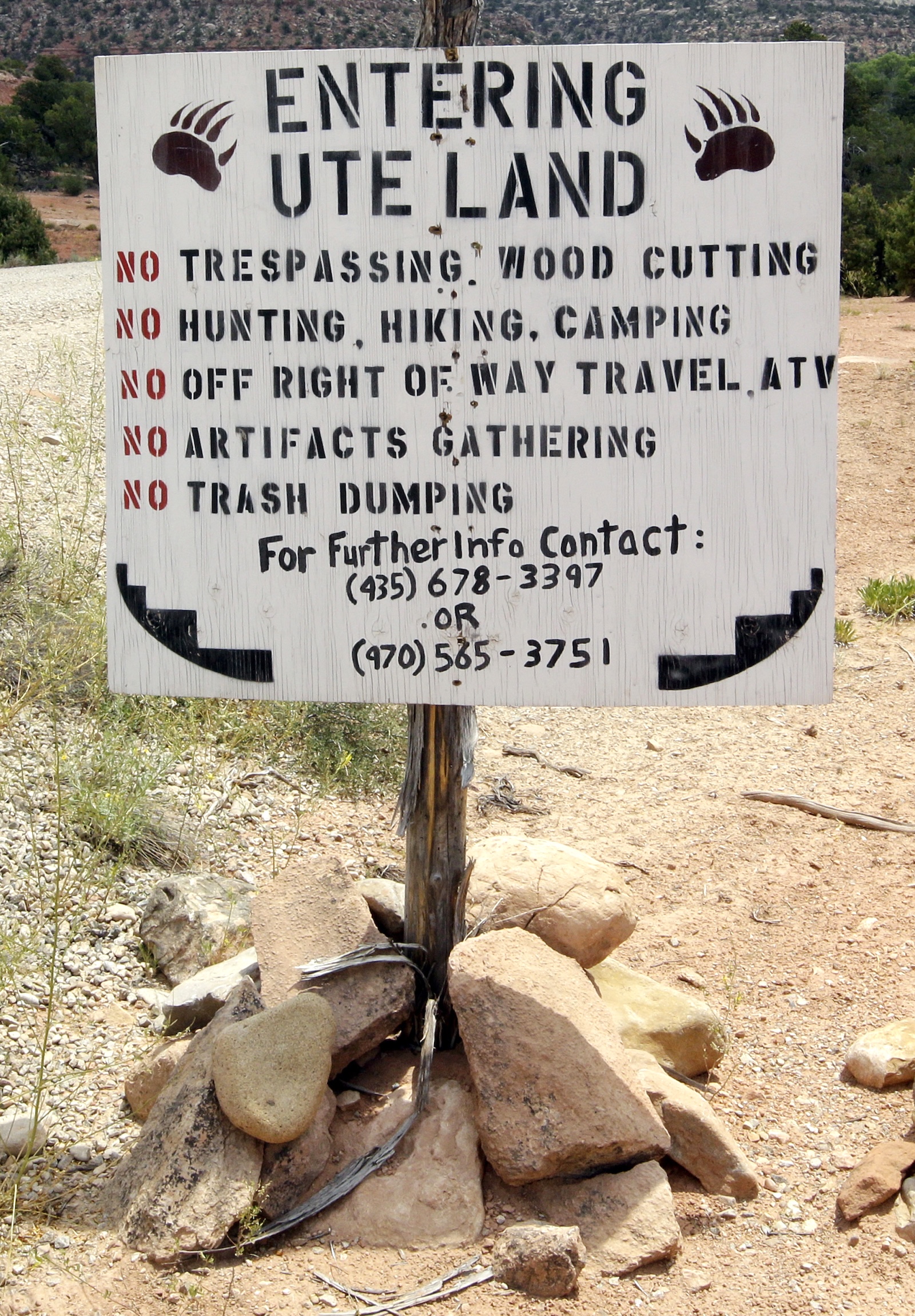
A handmade sign marking Ute land stands near Blanding, Utah in June 2016. Rick Bowmer / AP Photo
In The Washington Post, Epstein and Raskin refer to the land acknowledgements that spring from these histories as “accepting generational guilt,” adding that statements of apology, like those by the state of California, “thankfully” don’t transfer title backward to the original owners, “for if they did, civilization would collapse.”
Scholars of settler colonialism have long documented how the U.S. has framed whiteness as synonymous with “civilization,” while casting Indigenous peoples as obstacles to progress — a racist framework where owning property becomes the key marker to civilization. Epstein and Raskin’s argument operates squarely within this tradition. By treating property titles as the foundation of civilization, it obscures the history that made them possible: war, forced removal, forced assimilation of children, and policies that historians and government officials have described as genocide.
Take for instance the Morrill Act of 1862, which used land taken from tribal nations to fund the land-grant university system: nearly 11 million acres taken from more than 250 tribes to establish 52 universities.
Read Next
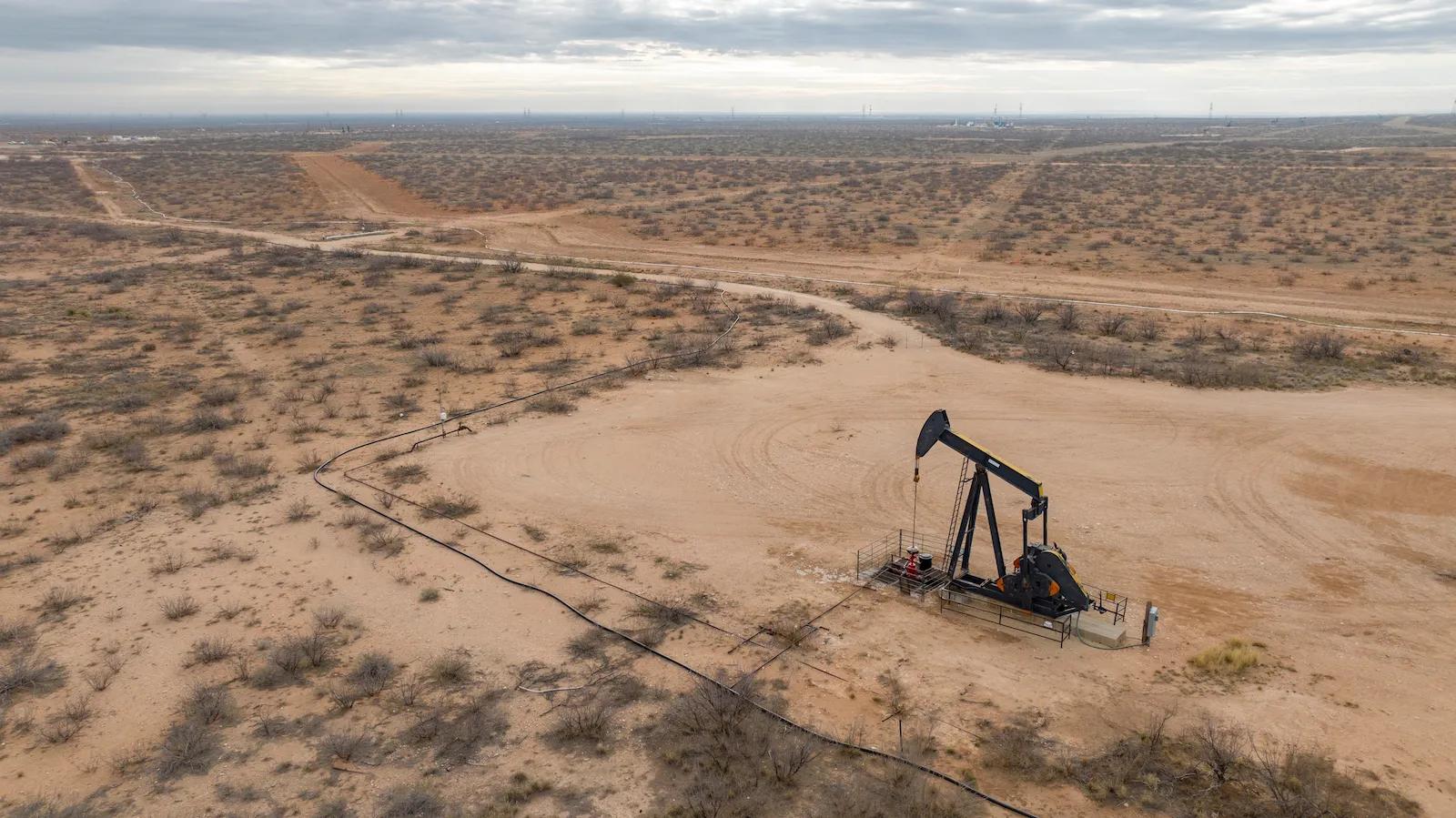
The extractive industries filling public university coffers on stolen land
Tristan Ahtone, Robert Lee, Amanda Tachine, An Garagiola, Audrianna Goodwin, Maria Parazo Rose, & Clayton Aldern
Then there are state Enabling Acts, laws passed by Congress that authorized the formation of a state government and allowed for admission to the Union. As Indigenous homelands became territories and territories became states, newly-formed state governments carved land out of their newly acquired “public domain” through their enabling acts to fund state institutions, services, and public works. Those lands are now known as state trust lands.
The primary purpose of state trust lands was education and has remained so to this day. Land-grant colleges, for instance, opened their doors with the help of the Morrill Act, then states stepped in with more income from state trust lands. Grist investigations have since identified 14 land-grant universities still benefiting from more than 8 million acres of land taken from 123 Indigenous nations through 150 Indigenous land cessions. This land generated approximately $6.6 billion in profit between 2018 and 2022.
Nearly 25 percent of state trust lands that benefit land-universities are designated for mining or fossil fuel production. In Montana, oil and gas extraction, timber, grazing, and other activities on state trust lands generated $62 million for public institutions, with a majority of that cash going to K-12 schools. Ten states use nearly 2 million acres of state trust lands to fund state prison systems. In 2024, those lands disbursed an estimated $33 million in funding to carceral facilities. At least 79 reservations in 15 states have state trust lands within their boundaries, an estimated 2 million acres, that provide revenue to support public institutions and reduce the financial burden on taxpayers. “Every dollar earned by the Land Office,” said New Mexico Commissioner of Public Lands Stephanie Garcia Richard in 2019, “is a dollar taxpayers do not have to pay to support public institutions.”
In at least four states, tribal nations pay states for access to those lands despite being within their own territorial boundaries — an estimated 11,000 acres. The Ute Tribe paid the State of Utah more than $25,000 to graze on those trust lands in 2023 alone. While critics have been quick to point out that institutions like K-12 schools benefit everybody, it’s important to remember that many tribal members don’t attend state-run schools at all, they enroll in Bureau of Indian Education schools that receive funding from the federal government.
But return of those lands remains mired in bureaucracy. In 2024, Grist reported that more than 90,000 state trust lands inside the Yakama reservation — the reservation created under threat of walking knee deep in blood — were mistakenly carved from the Yakama Nation due to a federal filing error. The tribe has fought for its land to be returned for nearly seven decades, but Washington has refused to let them go: American property law says the state’s ownership over those lands is legal because the state holds the deed.
Read Next
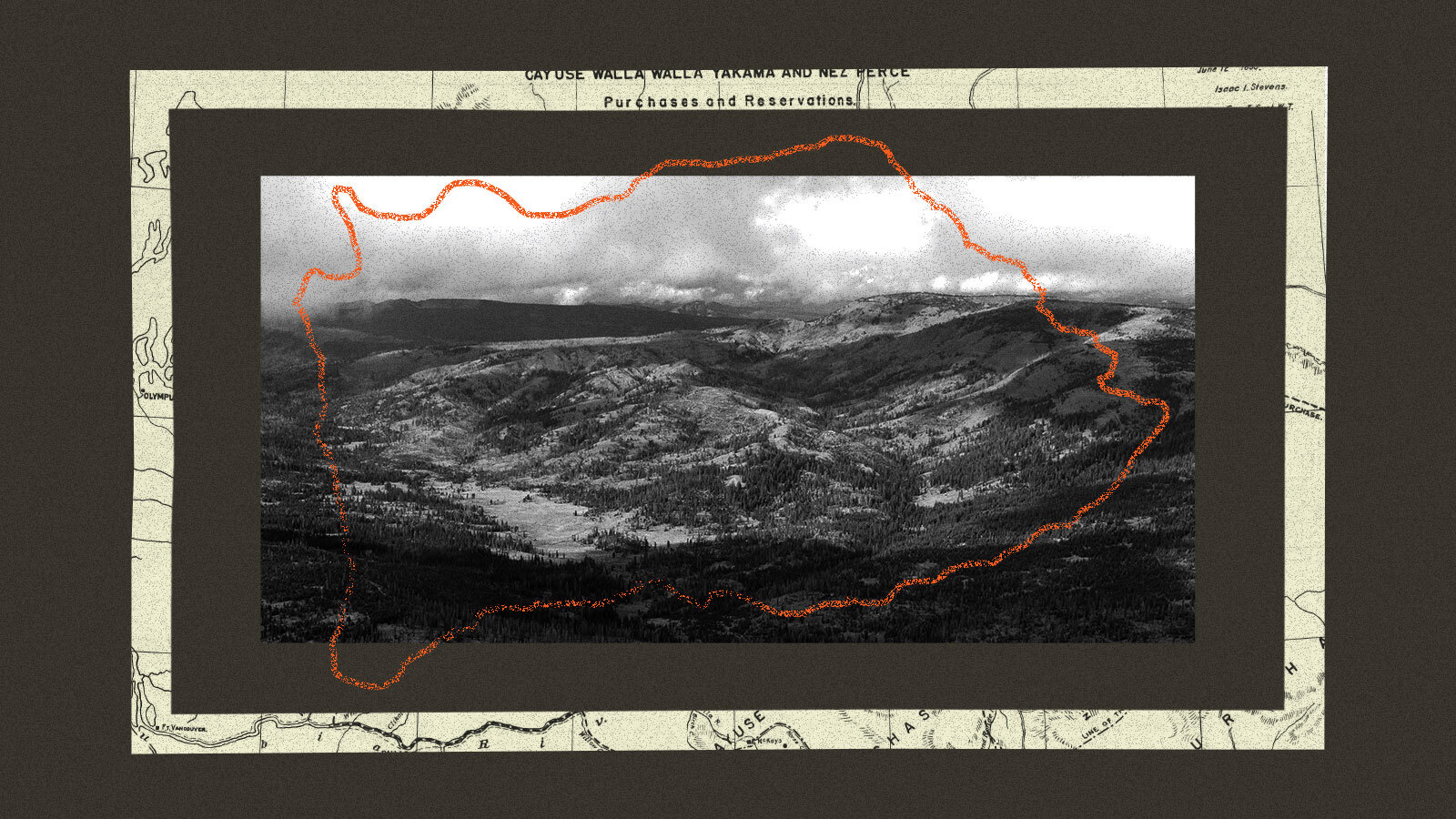
A filing error put more than 90,000 acres of Yakama Nation land in the hands of Washington state
But Washington acknowledges that this is an injustice, and that that land should be returned to the tribe. However, then-Commissioner of Public Lands Hilary Franz, argued that righting that wrong would take revenue away from beneficiaries like K-12 schools. The state, therefore, would need to be compensated for their loss of revenue, even though those lands were wrongfully taken in the first place. Between 2021 and 2023, those state trust lands generated about $573,000 for state beneficiaries — less than 1 percent of all revenue from all trust lands across Washington state.
In The Washington Post op-ed, the writers say that “the effort to undo the past would involve trillions of dollars in transfer payments and coerced title shifts that would unsettle every home mortgage, every mining and oil lease.” They are correct. To return land to tribal nations would be to unsettle — pun intended — the very foundations that drive climate change and threaten life on the planet. A fact echoed by more than 600 scientific and conservation studies over the past 20 years that say Indigenous land return offers significant environmental returns with serious implications for tackling climate change.
Ultimately, the controversy surrounding Eilish’s remark reveals less about celebrity or even property than the limits of America’s moral imagination, including at influential media outlets. Democracy may die in darkness, but America was built in daylight, and in America, oppression and injustice don’t need shadows to thrive — they need champions.
This story was originally published by Grist with the headline Billie Eilish, stolen land, and the climate cost of America’s dispossession on Feb 6, 2026.
From Grist via This RSS Feed.