

ALBAY — The Institute for Climate and Sustainable Cities (ICSC) has urged more careful planning in the country’s power procurement, warning that dependence on imported liquefied natural gas (LNG) is driving up electricity costs for households and businesses.
Meralco’s temporary supply extension with First Gen’s Sta. Rita plant now runs until June 2026, with Sta. Rita, Ilijan, and Excellent Energy Resources providing most of its gas. ICSC’s analysis shows natural gas accounts for more than half of Meralco’s supply but at the highest cost, averaging P8.82/kWh.
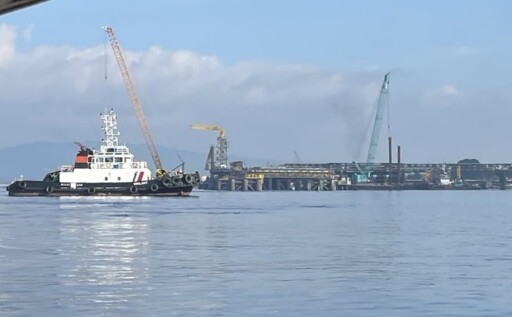
With Malampaya reserves declining, Ilijan began securing LNG via import terminals in June 2023, while Sta. Rita and other First Gen plants commissioned regasified LNG in early 2024. The latter converts imported LNG back into usable gas for power generation. These shifts pushed Meralco’s generation costs from about P6/kWh in 2023 to P8/kWh in 2025.
Since generation makes up roughly 60 percent of electricity bills, consumers are directly bearing the increase. A household consuming 200 kWh a month now pays P1,600–P1,800, nearly three days’ wages for a Metro Manila worker earning P550 daily after inflation.
The January 2026 report showed inflation rising to 2.0 percent, the highest in almost a year, as electricity and utility costs went up. Prices for housing, water, power, gas, and other fuels also climbed to 3.3 percent from 2.5 percent in December, showing how higher power rates are adding to daily expenses.
A 2023 Philippine Institute for Development Studies (PIDS) report likewise found the country’s power rates structurally higher than neighbors’, citing reliance on imported fuels and pass-through pricing. Consumer groups have asked regulators to delay new renewable energy charges, saying households already burdened by high costs need immediate relief while the Just Energy Transition bill is pending.
ICSC warned LNG contracts carry automatic pass-through clauses, leaving households exposed to global price shocks. “LNG is even more volatile than coal,” the group said.
This warning comes as a separate global analysis highlights broader energy risks.
A new analysis by 350.org and Zero Carbon Analytics, drawing on the Energy Institute’s 2025 Statistical Review of World Energy, found that 79 percent of oil production lies within U.S. and Russian spheres of influence, exposing markets to sanctions and geopolitical shocks. “Dependence on oil has never made us more vulnerable and unsafe,” said Andreas Sieber of 350.org, contrasting fossil fuels with renewables that do not require military protection or trigger geopolitical conflict.
Analysts argue that accelerating renewables and battery storage can deliver stable prices and stronger energy security. In the Philippines, with Meralco’s Sta. Rita contract set to expire in 2026, ICSC said policymakers have a clear opportunity to shift procurement toward renewables and shield consumers from fuel price shocks. (RTS, RVO)
The post Philippines urged to rethink reliance on liquefied natural gas as power costs rise appeared first on Bulatlat.
From Bulatlat via This RSS Feed.