

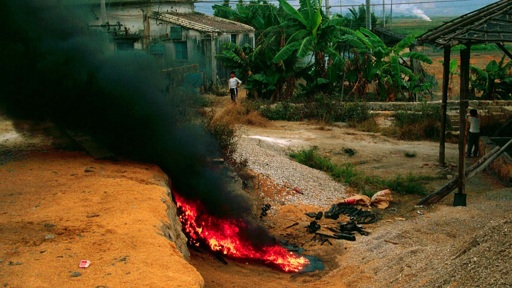
Burning plastic waste for household fuel, or to manage household waste, may be far more prevalent in poor urban areas in developing countries than previously thought, raising serious environmental pollution and public health concerns for individuals, families and communities. That’s according to a new global study that surveyed more than 1,000 “key informants,” including researchers, government workers and community leaders, in 26 countries across the Global South. The researchers found that one-third of respondents are aware of households that are burning plastic, while 16% stated they’ve burned plastic in their own household. Burning plastic “has been integrated into household energy practices in numerous and diverse ways in many urban communities,” the authors write. Bishal Bharadwaj, lead author of the study and a researcher at the University of Calgary, says the issue has been largely overlooked, as it is occurring in marginalized and largely out-of-sight neighborhoods within cities. “The practice is more widespread than we thought,” he says. Bharadwaj published a paper in 2025 outlining how this practice is growing in the Global South, but this new paper adds in-depth data. The current research also comes against a backdrop of experts warning that the regular practice of open burning of plastic represents an “urgent global health issue” as communities increasingly resort to burning plastic as a fuel source and to tackle a rapidly growing plastic waste disposal crisis. Plastic and other waste in a cooking stove in Guatemala. Household burning of plastic raises health concerns due to close and prolonged exposure…This article was originally published on Mongabay
From Conservation news via This RSS Feed.
Burning plastics at less than 1200°C releases dioxin… AKA Agent Orange.