

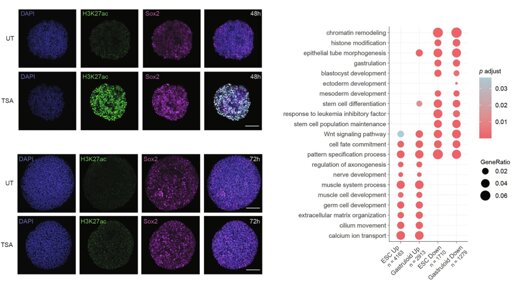
A French research team led by CNRS scientists has discovered that cells are able to retain a memory of a previous perturbation within the 3D structure of their genome, independently of their DNA sequence. When they are exposed to a transient stimulus that induces changes in the proteins that compact DNA—thereby altering chromosome architecture—cells retain this modified architecture even after the initial cellular conditions have been restored. Moreover, this cellular memory is amplified if the cells are exposed to the same stress again. These findings were published in Nature Genetics on February 4.
From Biology News - Evolution, Cell theory, Gene theory, Microbiology, Biotechnology via This RSS Feed.
not to be rude. that was known for a long time. there’s a whole epigenetics field about that. don’t have time to see what exactly they found. but the concept that epigenetics (including genomics 3d structure) change when stressors a and act as a memory system (even though generations) is well established science already
