

Erin In The Morning is a reader-supported publication. To receive new posts and support my work, consider becoming a subscriber.
It’s Black History Month, and despite what the Trump regime wants you to believe, Black trans and gender nonconforming people have always been at the forefront of change in this country—sometimes waging these battles from the most marginalized of spaces, and other times, doing so in the highest halls of power.
Not all of them may have used the word “transgender” to identify themselves, given that labels and notions about gender are specific to time and place. But today, we can look back at all of these trailblazers and recognize reflections of our own experiences of gender diversity.
To kick off Black History Month, we’ll be honoring the legacies of just a few of these heroes who have shepherded the struggle for the liberation of Black people, trans people, and all Americans.
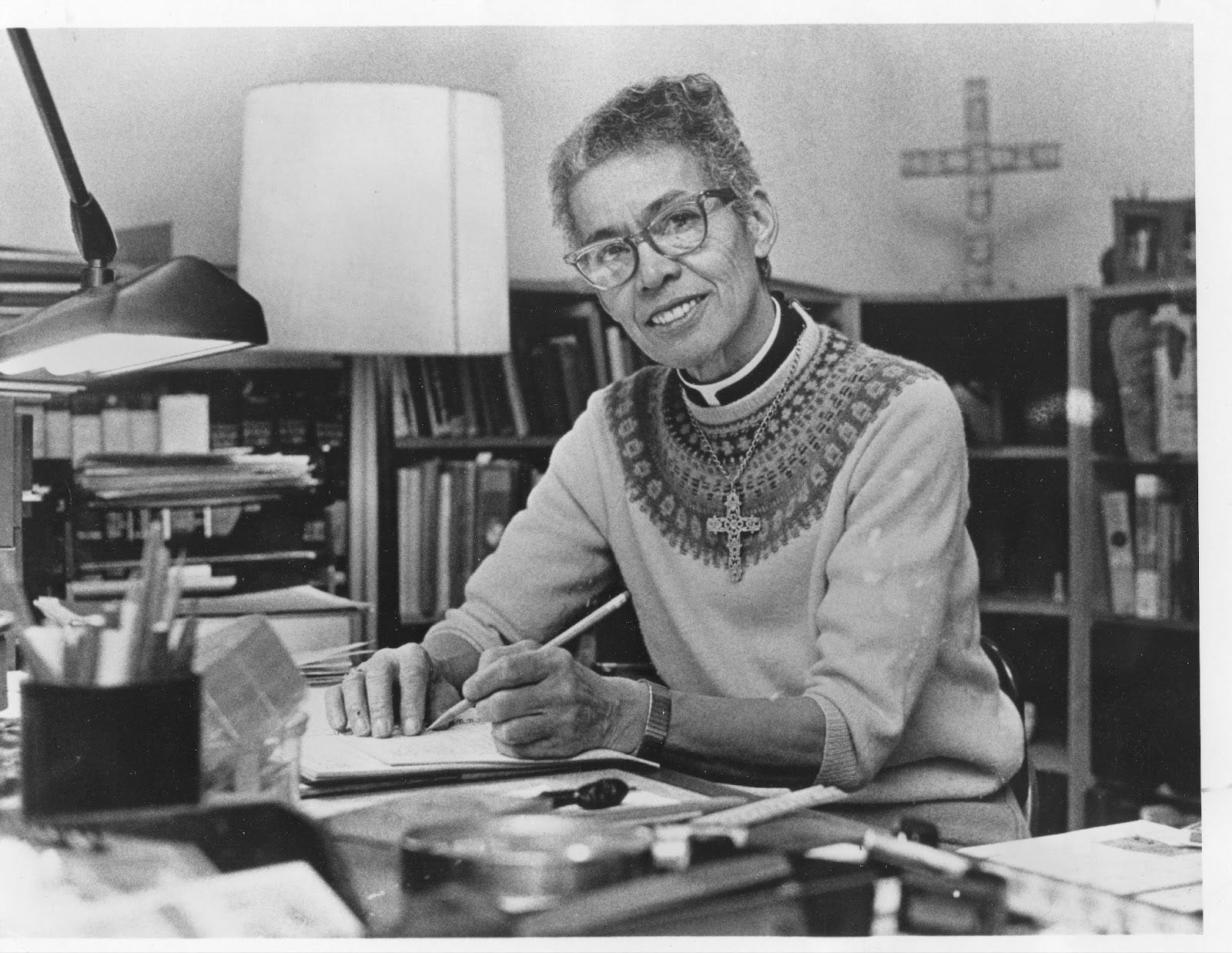
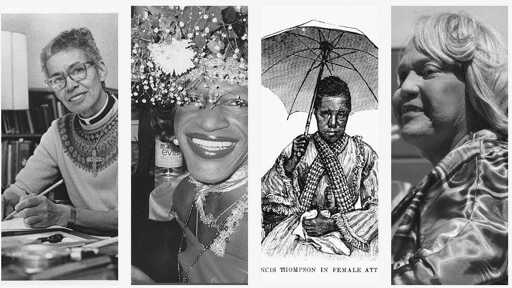
Pauli Murray // Flickr
1. Pauli Murray (1910 - 1985)
Perhaps the most underappreciated Black TGNC icon is Pauli Murray. Like many queer people who lived in an earlier era, Pauli did not, as far as public records show, use the word “transgender” to describe themself. Many modern day institutions still reference the civil rights leader using “she/her” pronouns.
While Pauli did indeed use she/her pronouns in public writings, in private, they expressed themself more nebulously. Pauli, who grew up in North Carolina, wrote that they believed themself to be “a girl who should have been a boy.” They sought out testosterone for hormone replacement therapy, and even begged doctors to perform exploratory surgeries with the belief they would find undescended testes.
They were also known to wear a seahorse broach on their lapel—and indeed were “obsessed” with seahorses due to their “genderless” nature. It was a symbol, Murray felt, of their own gender ambiguity.
Regardless of what word Pauli would have used today, they were passionate about the crux of gender liberation and racial justice. They were known as the first African-American “woman” ordained as an Episcopal priest and the first Black person to graduate with a JSD from Yale Law. Alongside Betty Friedan, Pauli also co-founded the National Organization for Women.
But Pauli’s most significant contribution to American life might be their role in ending segregation. They initially pioneered the legal theory that was used by civil rights lawyers in Brown v. Board of Education, which outlawed racial segregation in American public schools.
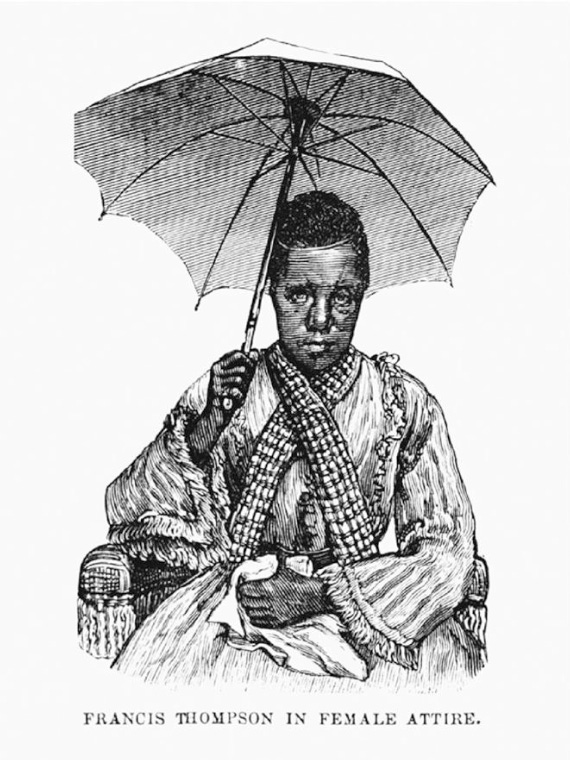
Frances Thompson // Wikimedia Commons

2. Frances Thompson (1840 -1876)
Historian Channing Joseph described Frances as “one of the linchpins” who propelled Reconstruction forward after the Civil War.
Frances was born into slavery on a Southernplantation. It was here that she transitioned—the family that claimed to own her recognized her gender identity and gave her feminine clothes to match.
Frances was liberated during an uprising and began her life as a free woman in Memphis, Tennessee, where she witnessed one of the most consequential post-War atrocities against Black Americans—the Memphis Massacre of May 1866.
Countless Black Tennesseans were murdered, robbed or raped by an angry mob of white men, most of whom were police. Thompson was one such victim.
In the aftermath, Frances was one of five brave Black women who recounted their stories of survival before a congressional committee. Their testimony helped reinvigorate Reconstructionist efforts. Congress adopted the Fourteenth Amendment just a few weeks later, in June of 1866.
“To check the brutal violation of black Memphians’ rights by agents of the state, the federal government would guarantee citizenship, equal protection, and due process,” writes historian Jules Gill-Peterson. “At the heart of this historic transformation of the Constitution lay the testimony of five women who told Congress of being raped by white men, asserting that they must be protected from such violence like any white woman would have been [and…] their claim to equal protection included a woman who had become one through transition.”
“Thompson had once been enslaved, and she knew as well as anyone that her testifying under oath to white congressmen was unprecedented,” Gill-Peterson continued. “In much of the country, black women could not legally be raped because the legal system developed during slavery did not consider them persons.”
The entire Memphis police force was fired in the aftermath, largely in thanks to Frances and the women who testified, Gill-Peterson writes. For a while, she returned to life in Memphis as a renowned spiritualist and fortune teller. But after nearly a decade of police harassment, a neighbor outed her, and law enforcement arrested her for “crossdressing.”
Frances was sentenced to forced labor in a men’s chain gang, and died shortly after her release, likely due to health conditions exacerbated by the brutality of her incarceration.
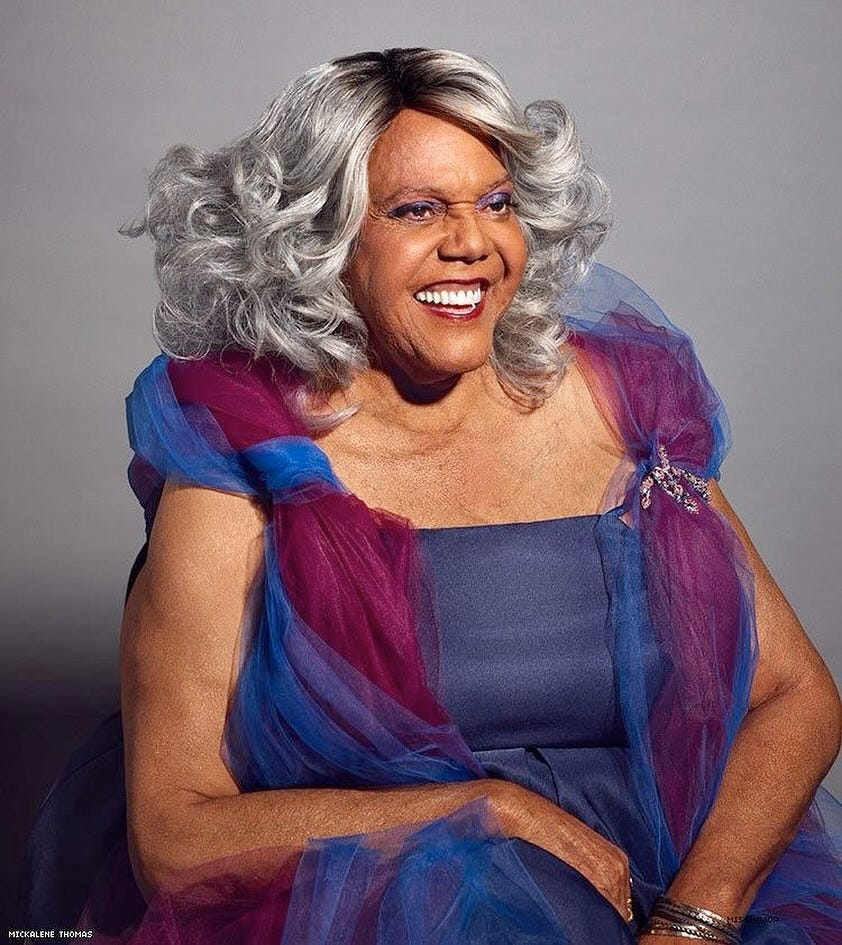
Miss Major // Mickalene Thomas via Facebook
3. Miss Major Griffin-Gracy (1946 - 2025)
We would be remiss not to mention that we’re celebrating the first Black History Month since the passing of the magnanimous Miss Major.
Known to many as “Mama,” Major was a dedicated community organizer who refused to abandon the most marginalized among us.
“Major’s fierce commitment and intersectional approach to justice brought her to care directly for people with HIV/AIDS in New York in the early 1980s, and later to drive San Francisco’s first mobile needle exchange,” her obituary via House of gg reads.
“As director of the TGI Justice Project, she’d return to prisons as a mentor to her ‘gurls’ inside. In 2019, she would be powerfully guided by spirit and her vision in search of a family gathering property. House of gg was born out of her dream to build a center that would empower, heal and be a safe haven for Black trans people and movement leaders in the Southern US—a space for our community.”
In Miss Major’s own words:
“We used to accept this crap of: ‘We’re not worthy,’ and ‘We shouldn’t exist,’ like this government is trying to push down our throats,” she told VICE in 2018. “We’ve got to revolt, and we’ve got to reclaim who the fuck we are […] If this world is going to get its act together, they have to support and put in the front to lead this revolution the people who are the most oppressed, which is my Black transgender community.”
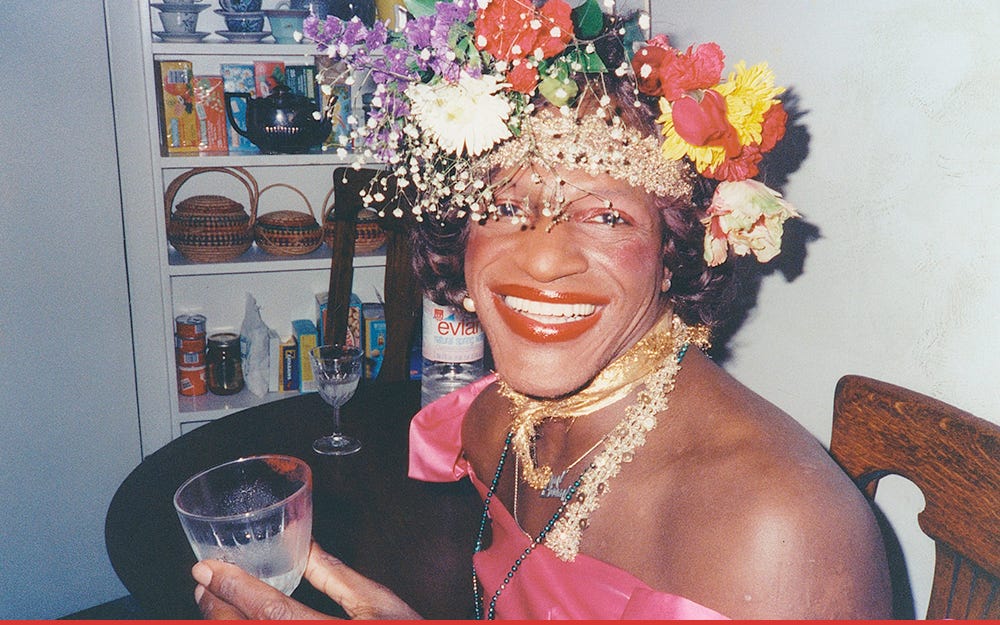
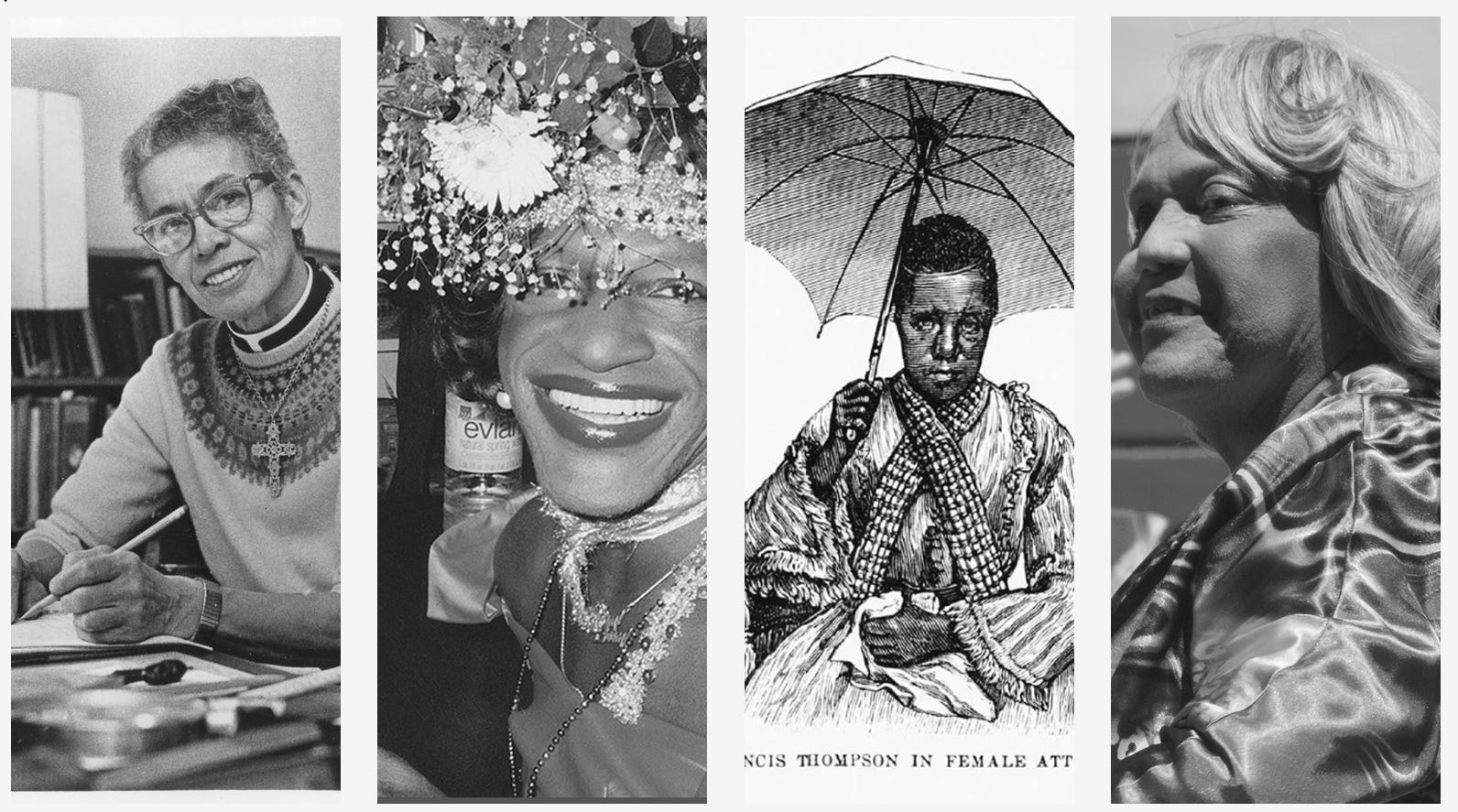
Marsha P. Johnson // British Online Archives
4. Marsha P. Johnson (1945 - 1992)
Marsha “Pay It No Mind” Johnson is perhaps the most recognizable figure in Black trans American history. In the early years post-Stonewall, many mainstream gay and lesbian organizations sought to distance themselves from their trans counterparts. Today that inclination is making a nasty comeback as mentions of trans people and trans life are removed from Stonewall Monument materials.
Marsha was a prolific organizer and drag queen whose radiant joy and humor was a fixture of Manhattan’s queer nightlife scene. She mobilized her community in the aftermath of the Stonewall Uprising. Alongside Sylvia Rivera and others, she founded Street Transvestite Action Revolutionaries (STAR), a group that waged direct actions against anti-trans violence and police brutality.
Most importantly, however, STAR established deep networks of mutual aid and care for the trans street kids and sex workers either abandoned by the state or actively targeted by it.
In her own words:“We want to see all gay people have a chance, equal rights, as straight people have in America,” Marsha said in an interview from 1970. “Our main goal is to see gay people liberated and free and have equal rights that other people have in America. We’d like to see our gay brothers and sisters out of jail and on the streets again.”
The circumstances around Marsha’s death remain unclear—we only know she was pulled from the Hudson in 1992, off of the historic Christopher Street Piers.
But Marsha’s legacy lives on, and her name has become synonymous with the spark that ignited the LGBTQ liberation movement as it is known today. A floral archway adorns the Marsha P. Johnson State Park in Brooklyn, and every Pride, homages to Marsha are plentiful—indeed, her rallying cry of “For All of Us” is the theme of this year’s Pride Parade in New York City.
Erin In The Morning is a reader-supported publication. To receive new posts and support my work, consider becoming a subscriber.
From Erin In The Morning via This RSS Feed.