

Drop Site is a reader-funded, independent news outlet. Without your support, we can’t operate. Please consider making a 501©(3) tax-deductible donation today.
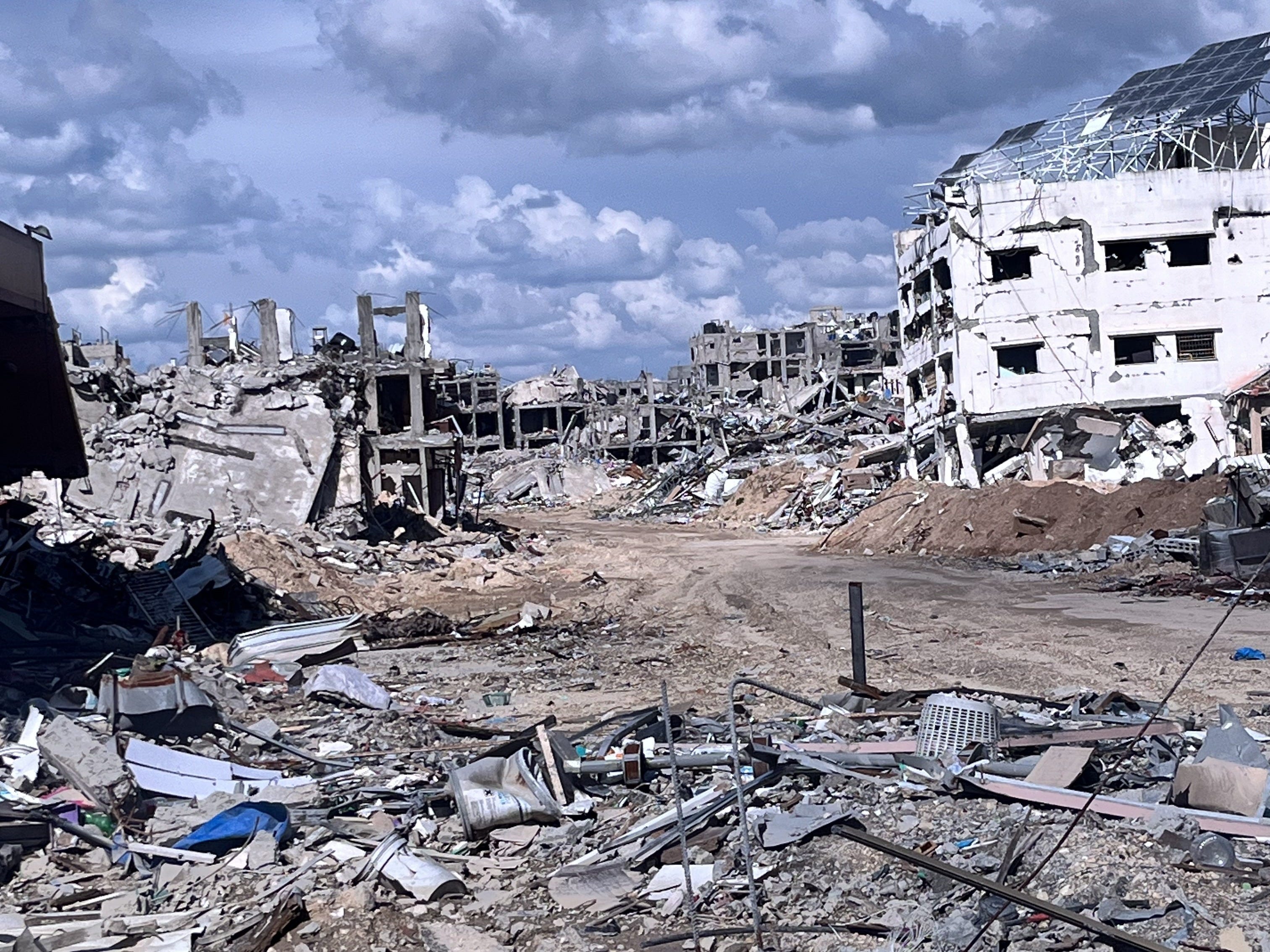
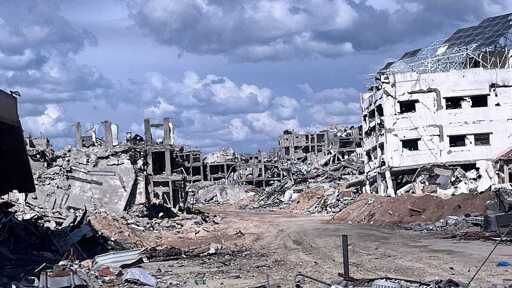
Destroyed buildings in Beit Hanoun. February 1, 2024. (Photo by Jonathan Whittall.)
In February 2024, just over three months into Israel’s war on Gaza, U.S. ambassador to Israel, Jack Lew, and his deputy, Stephanie Hallett, blocked an internal cable intended for wider distribution among senior officials in the Biden administration that warned northern Gaza had turned into an “apocalyptic wasteland,” according to Reuters. Lew and Hallett reportedly blocked the cable, which described the consequences of Israel’s assault in harrowing detail, because they believed it lacked balance.
The cable was drafted by U.S. Agency for International Development staffers and was based on a two-part humanitarian fact-finding mission by a small United Nations team that visited the area on January 31 and February 1, 2024.
I was part of that mission.
Northern Gaza had been under a total siege for over three months when we were eventually allowed to enter in January 2024. We moved through Gaza City, Beit Lahia, Jabaliya, and Beit Hanoun.
What we found was an endless horizon of destruction. People were living under plastic sheeting or in the rubble of buildings. Schools had been destroyed. In parts of Beit Hanoun, the entire area had been depopulated and decimated. There was a deadly shortage of clean drinking water, food and access to healthcare.
Mass starvation had already set in. Everyone we spoke to asked us for food. People gestured to us in the street for something to eat. Israeli authorities continued to deny the entry of any supplies despite our warnings of the deadly conditions.
We found bodies of people that had been killed for getting too close to Israeli checkpoints. Their remains were being eaten by cats and dogs. On a wall that was still standing in someone’s destroyed home we found the word “Revenge” graffitied in Hebrew, with the date of October 7, 2023, written below.
The purpose of a fact finding mission like this one is to report back on the humanitarian situation on the ground. The goal is to accurately reflect reality, not political balance. The images I captured during that trip are raw evidence of the conditions in northern Gaza at that time. Some, depicting bodies that were left to decompose in open air, are too gruesome to show. A selection is being published here for the first time. Many of these scenes had already been captured by Palestinian journalists, but they too had been dismissed as biased.
Almost exactly two years later to the day, the situation has been made far worse. The Israeli assault has destroyed, flattened and emptied northern Gaza even more—the UN estimates that over 81% of all buildings in the Gaza Strip have been destroyed or damaged. Much of the little that is depicted here is now gone.
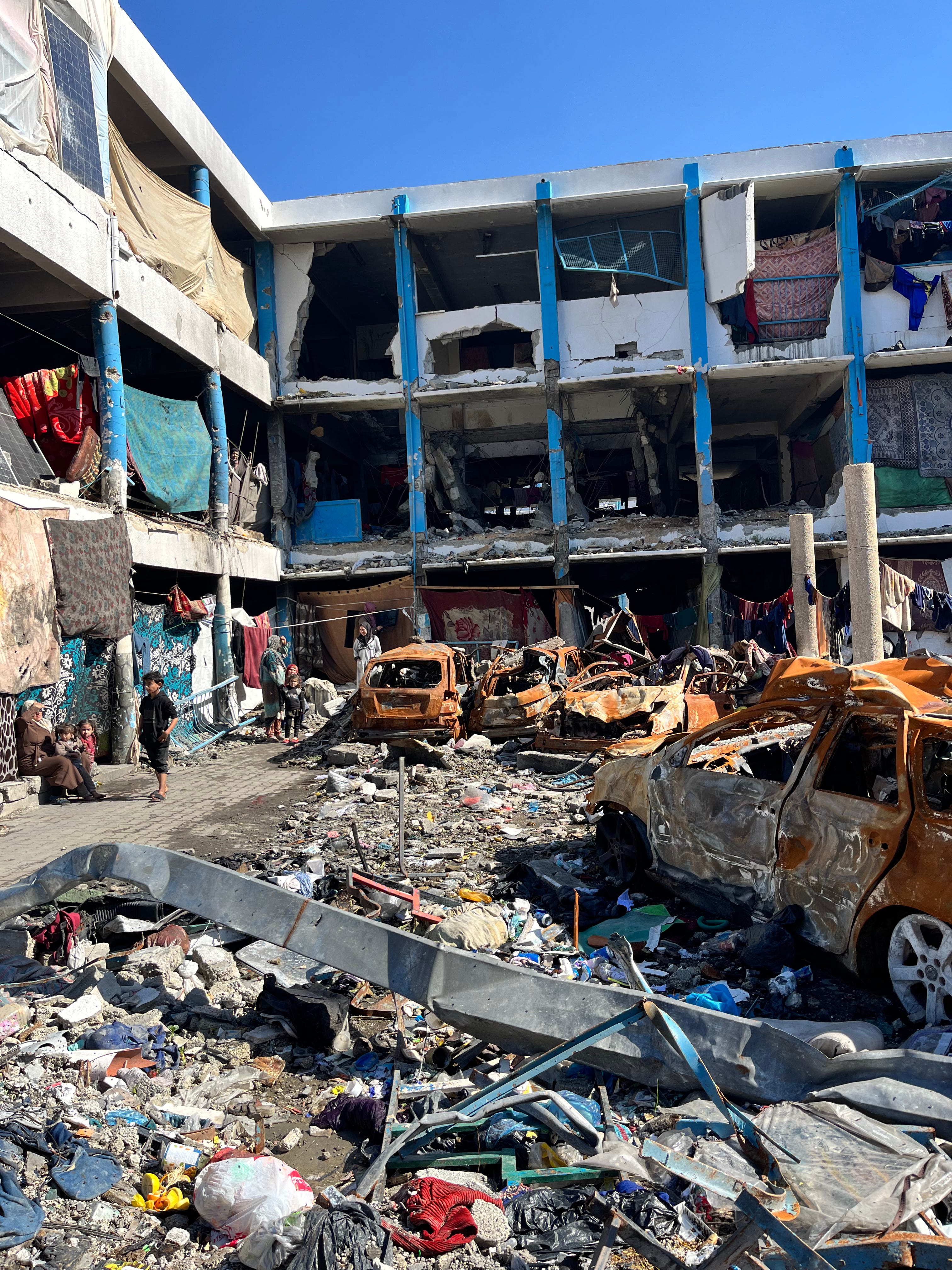
The inside of a school in Jabaliya with burnt out vehicles and rubble in the courtyard. The school which had recently been attacked by Israeli forces was still being used as an emergency shelter. There was no clean water or sanitation available in the school. January 31, 2024. (Photo by Jonathan Whittall.)
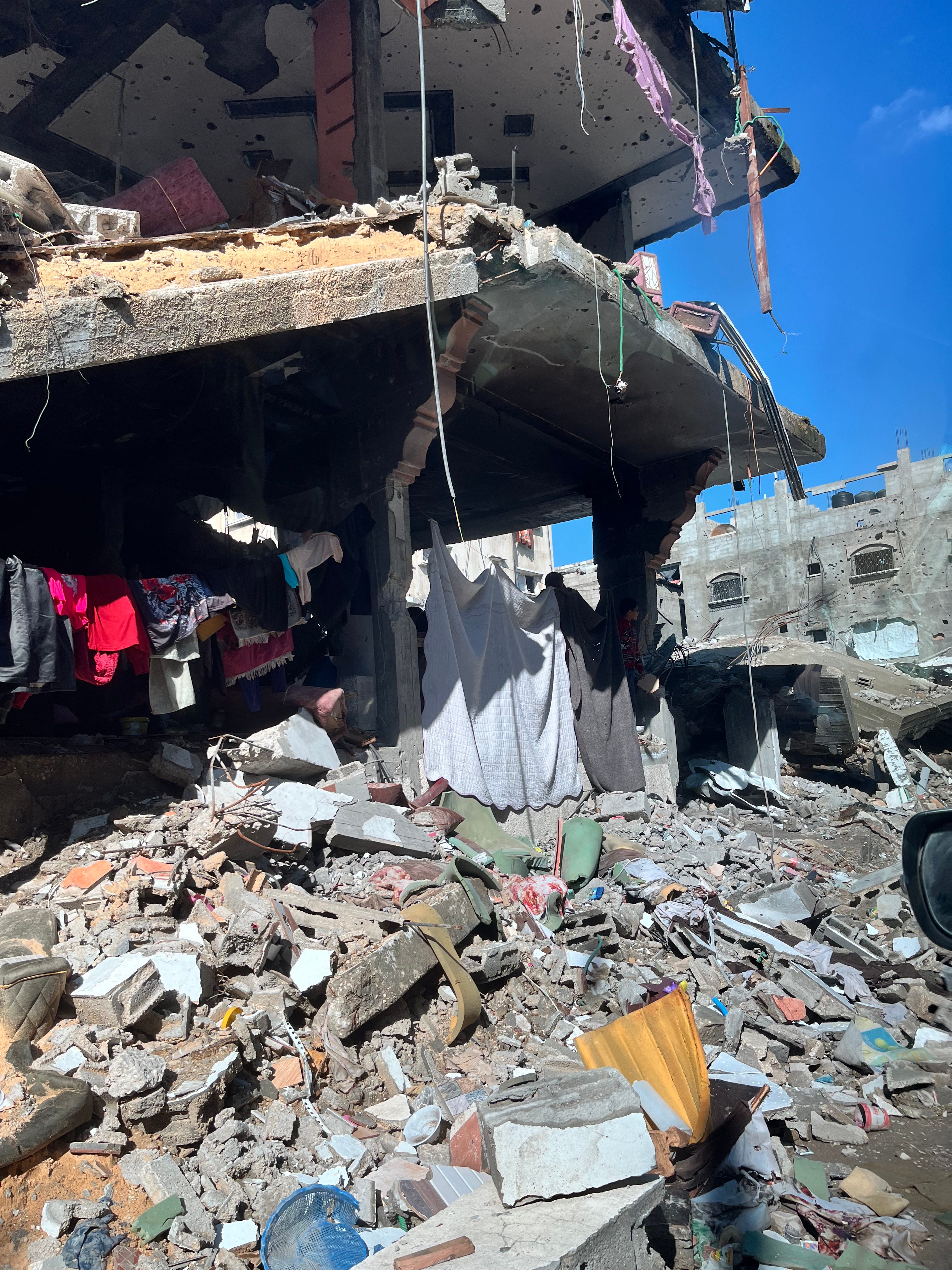
Displaced families use pieces of cloth and plastic sheeting to protect themselves from the cold in the rubble of their destroyed homes in Jabaliya. January 31, 2024. (Photo by Jonathan Whittall.)
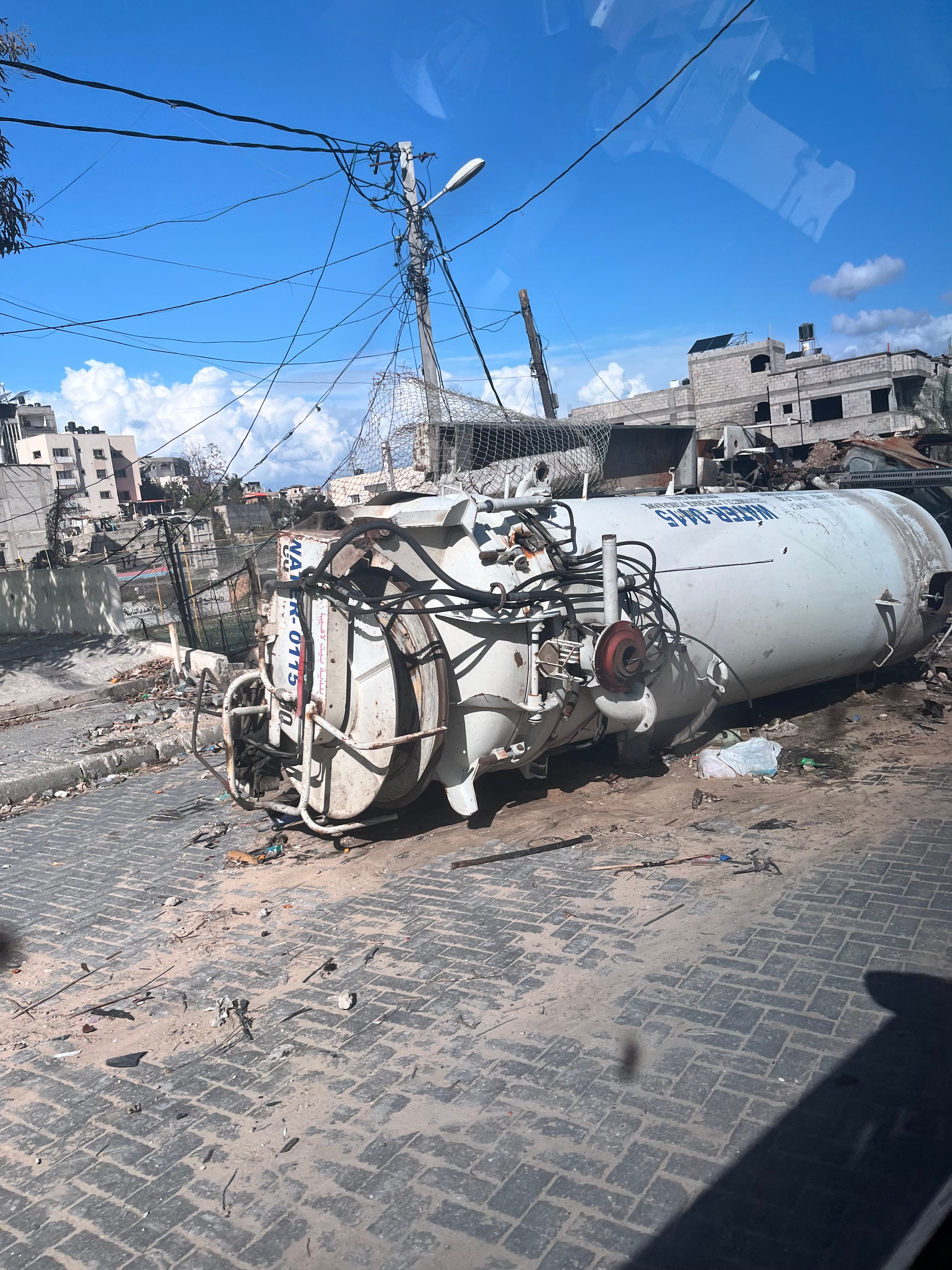
A destroyed water tanker on a street in Beit Lahia. January 31, 2024. (Photo by Jonathan Whittall.)
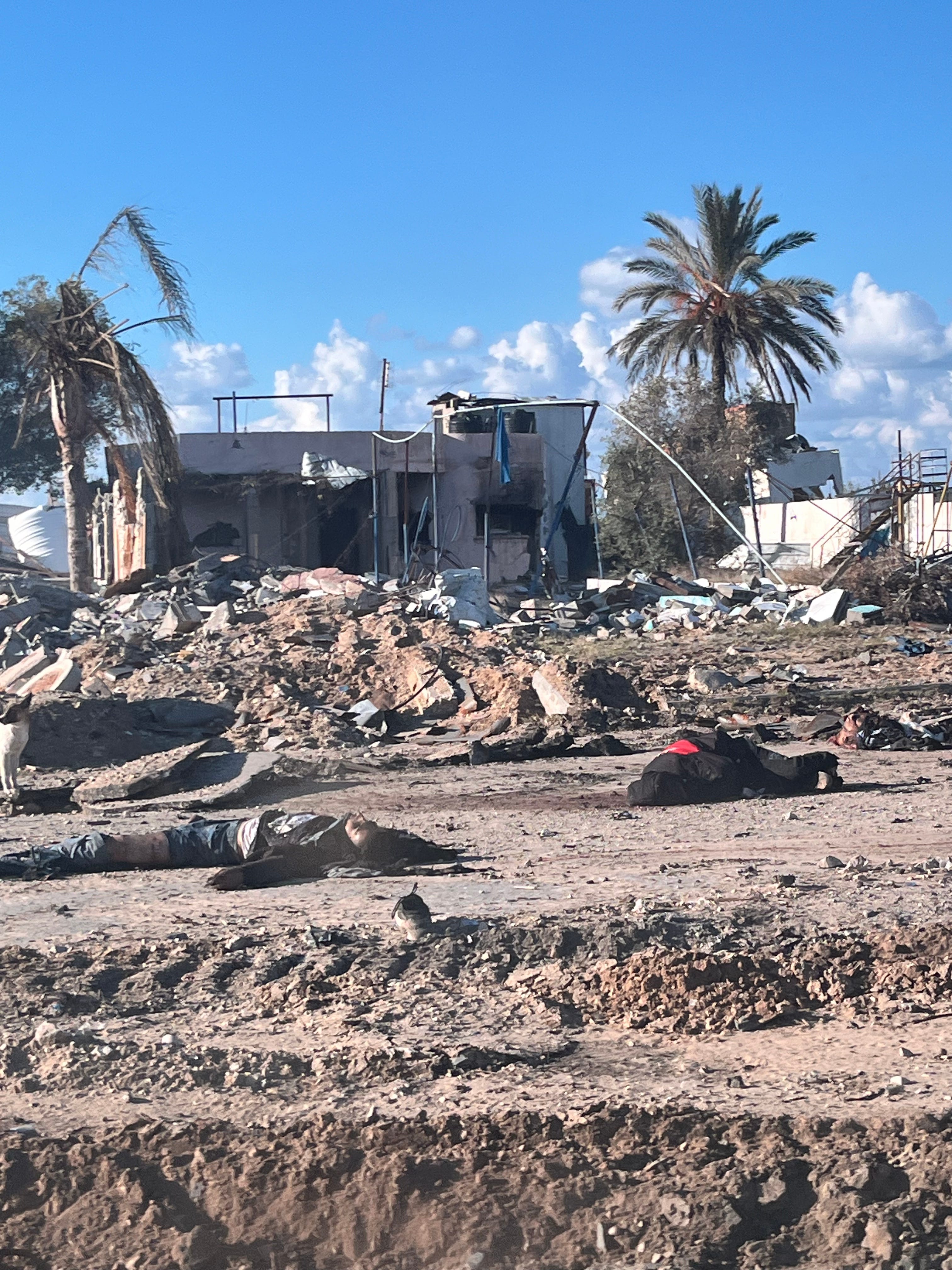
The bodies of two Palestinians killed by Israeli forces lie next to tank tracks close to the Netzarim corridor dividing northern and southern Gaza. The bodies are partially eaten by dogs and cats. January 31, 2024. (Photo by Jonathan Whittall.)
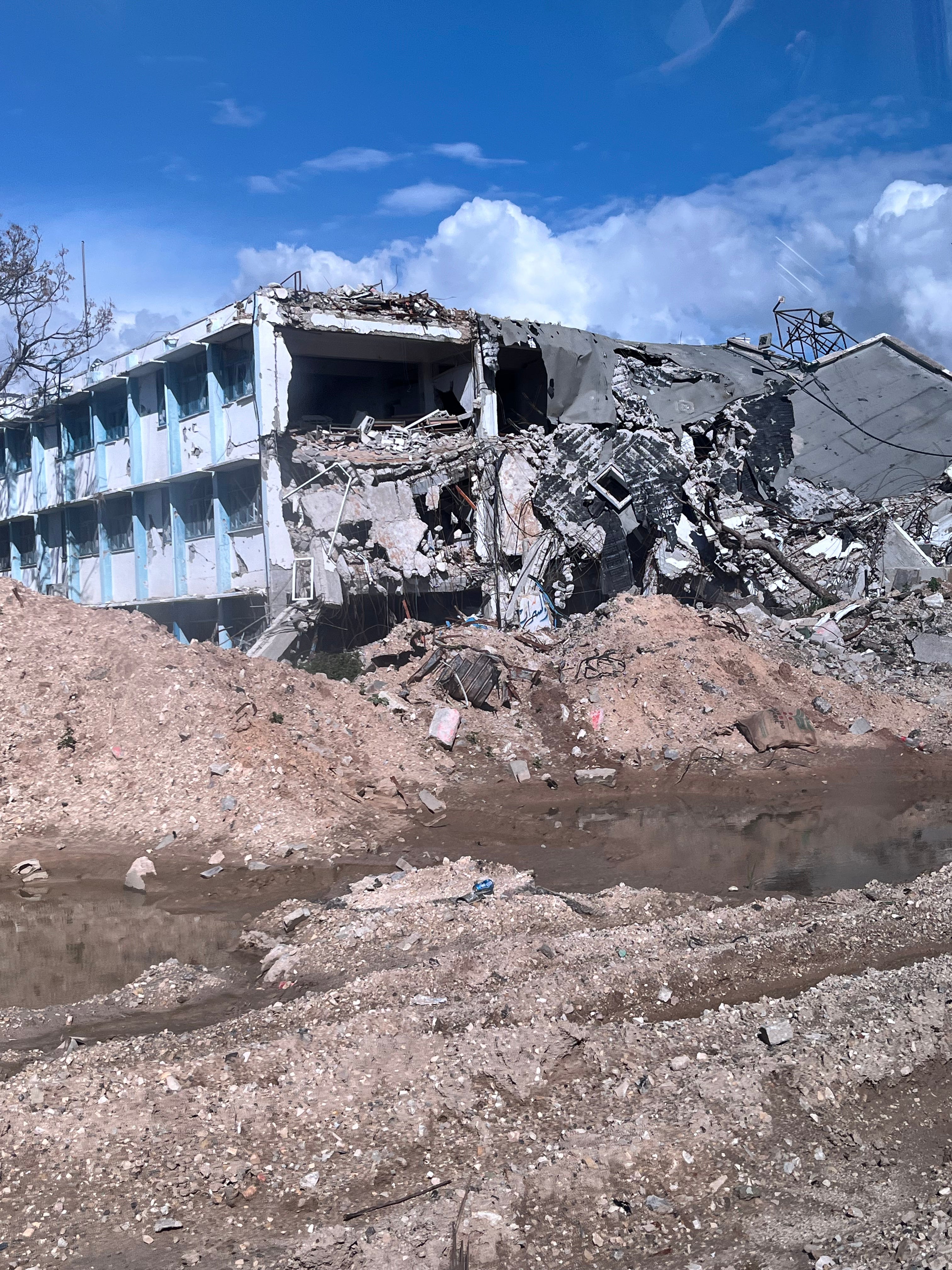
A partially destroyed school in Beit Hanoun. February 1, 2024. (Photo by Jonathan Whittall.)
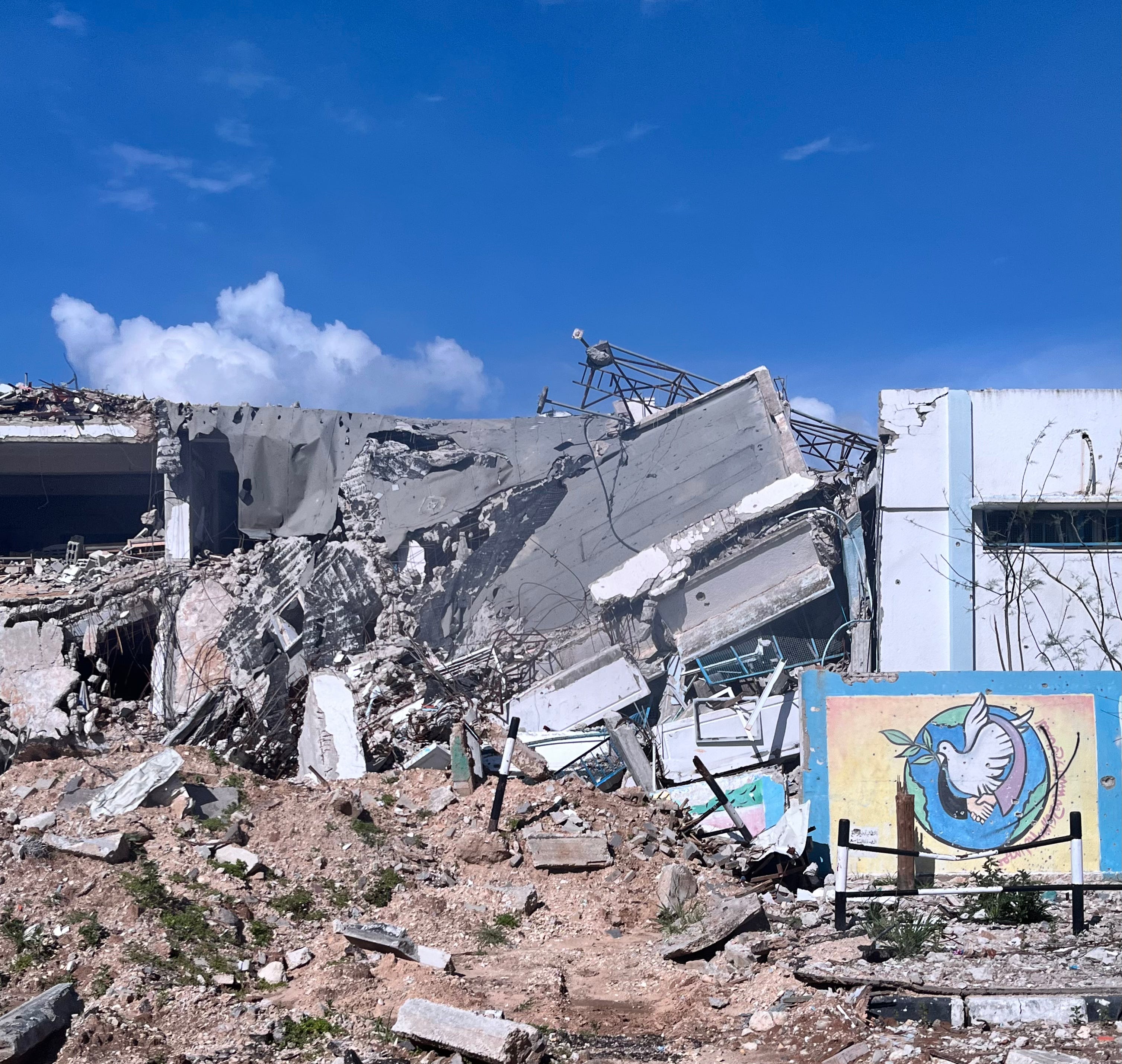
A destroyed school with a mural of a white dove still standing in Beit Hanoun. February 1, 2024. (Photo by Jonathan Whittall.)
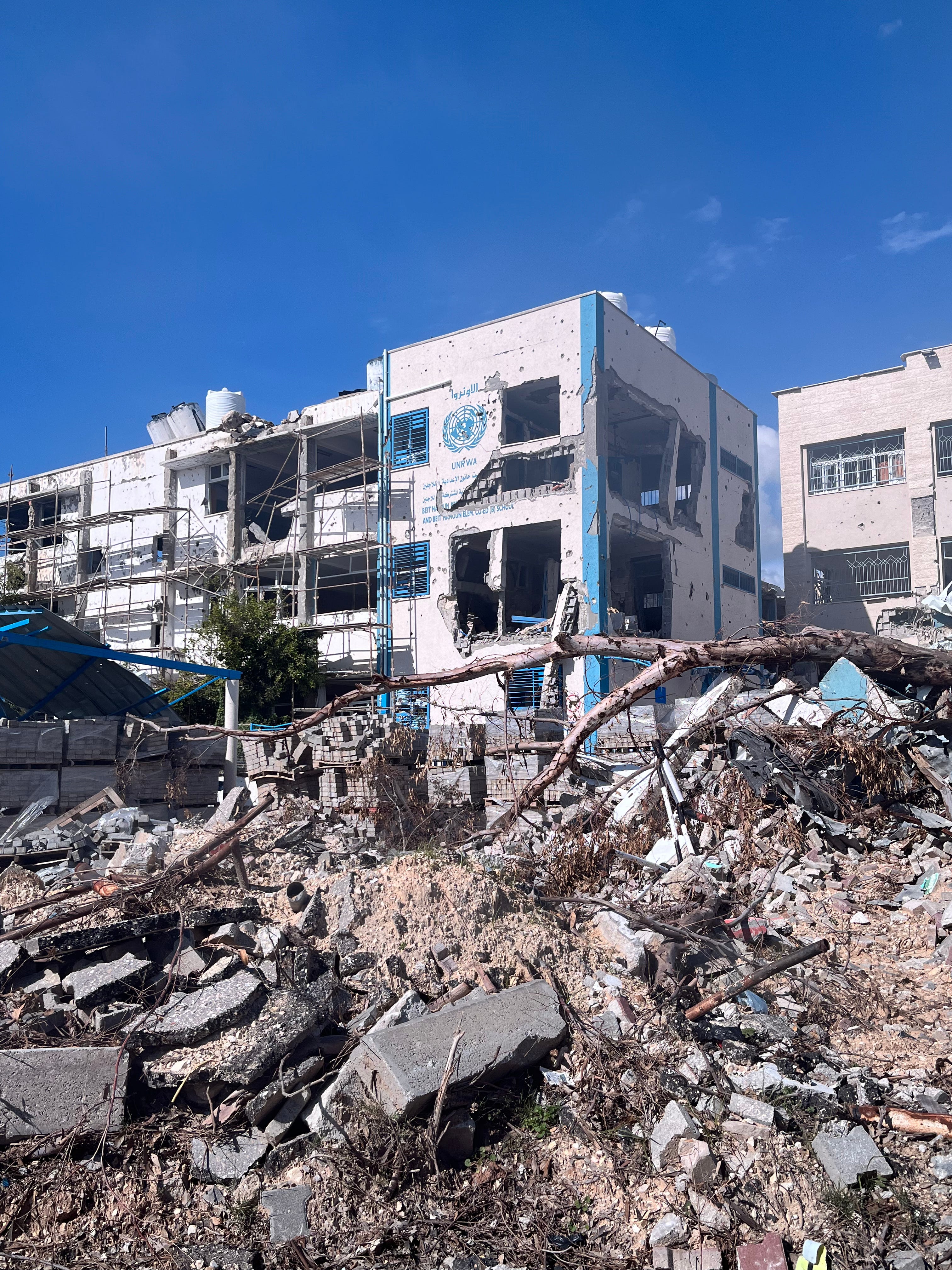
A partially destroyed school surrounded by rubble in Beit Hanoun. February 1, 2024. (Photo by Jonathan Whittall.)
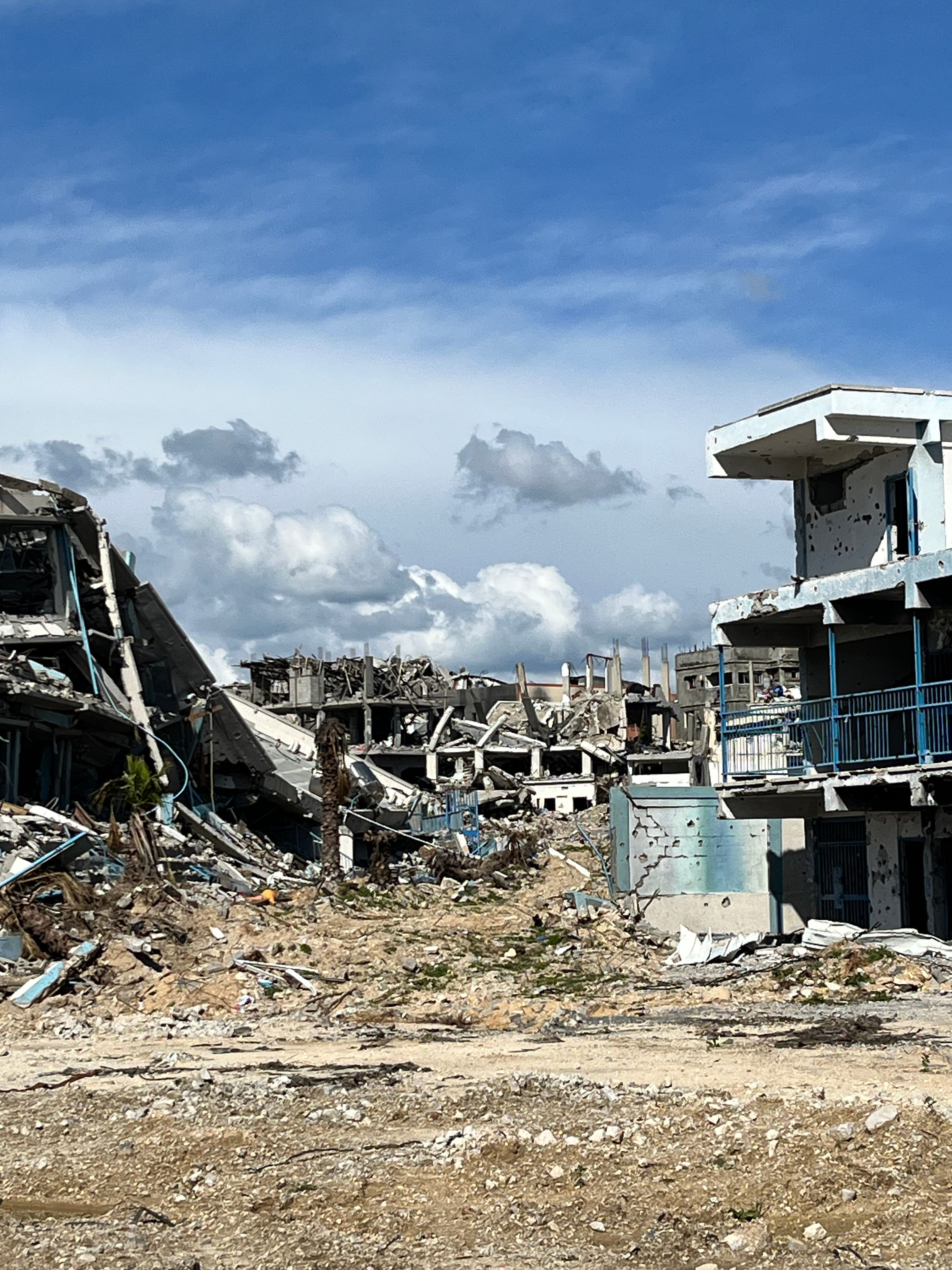
Destroyed buildings in Beit Hanoun. February 1, 2024. (Photo by Jonathan Whittall.)
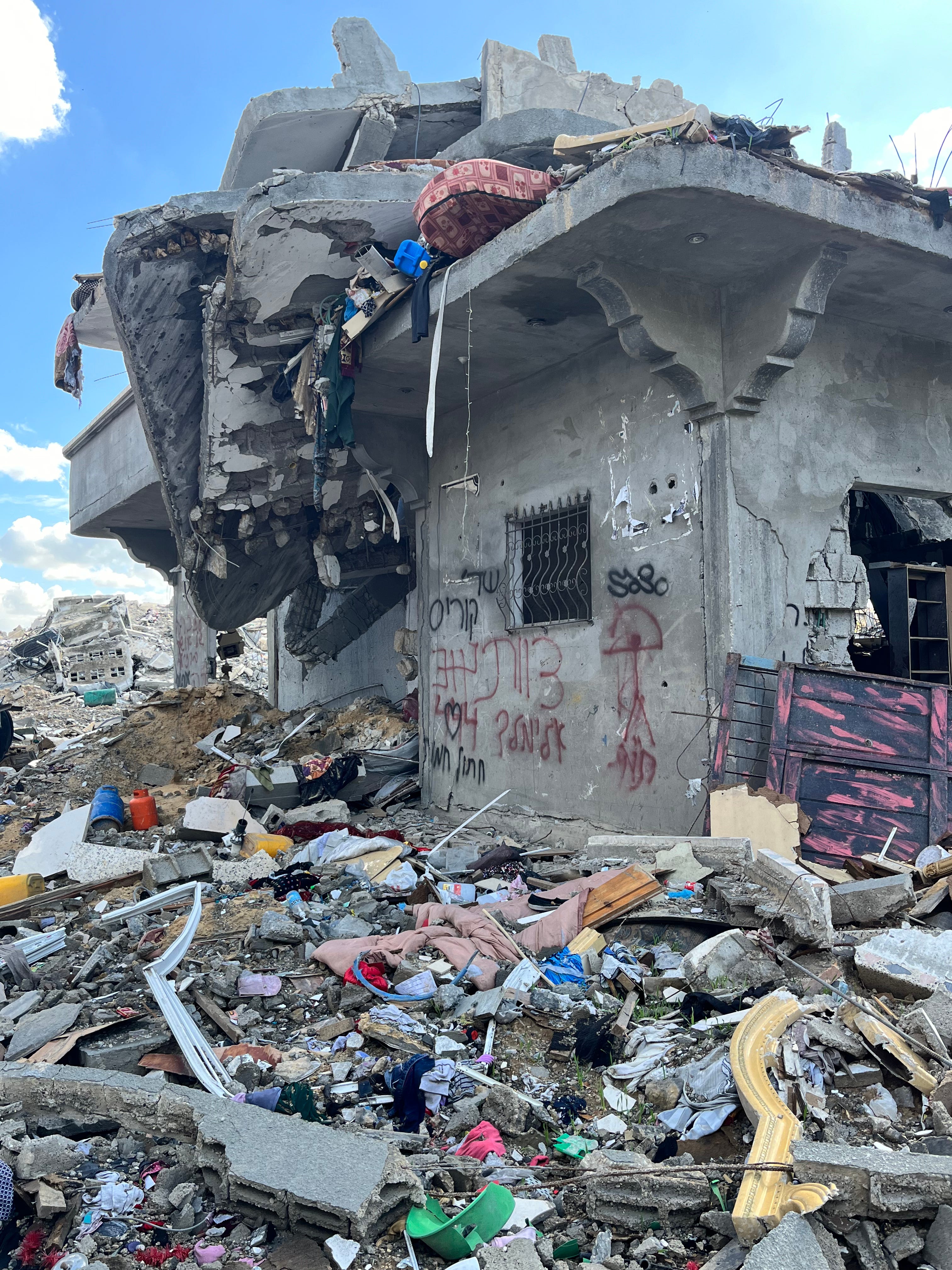
A partially destroyed building in a depopulated neighbourhood of Beit Hanoun. February 1, 2024. (Photo by Jonathan Whittall.)
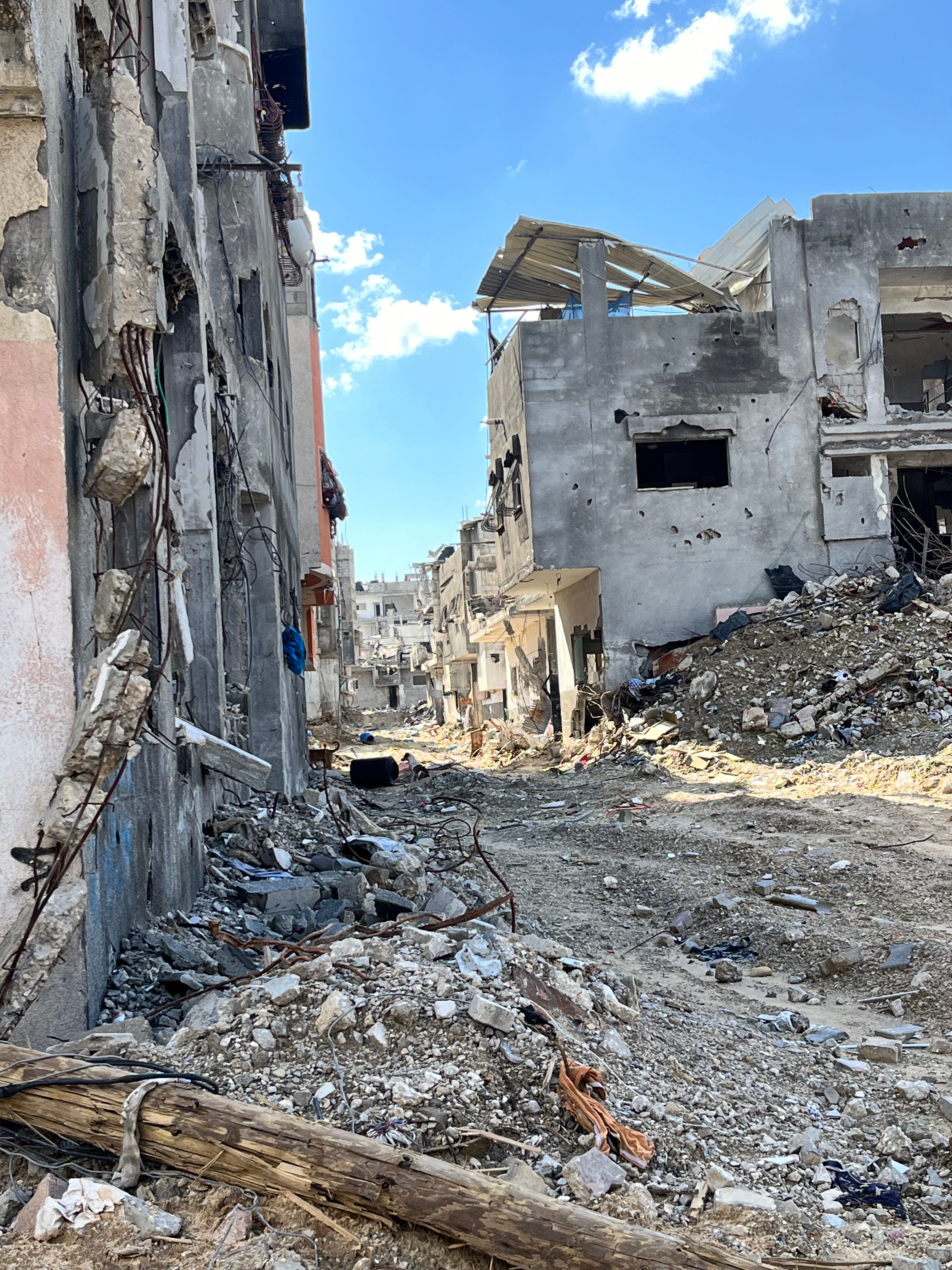
A destroyed neighbourhood in Beit Hanoun where street dogs were roaming the bombed-out buildings looking for bodies. February 1, 2024. (Photo by Jonathan Whittall.)
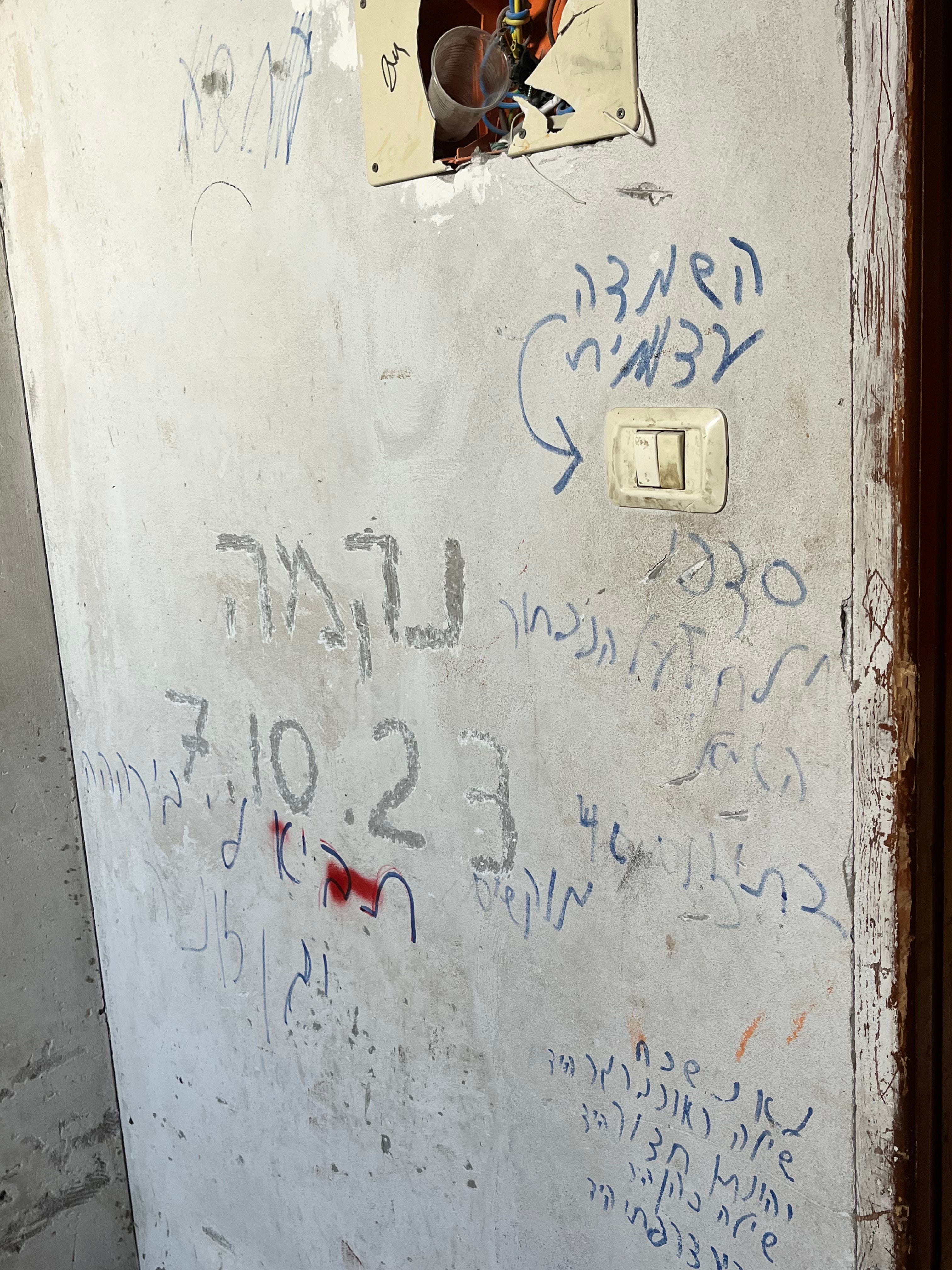
A wall in a Palestinian home in Beit Hanoun that soldiers from the Golani brigade had used as a base. On the wall, written in Hebrew, is the word “Revenge” with the date October 7, 2023 below it. February 1, 2024. (Photo by Jonathan Whittall.)
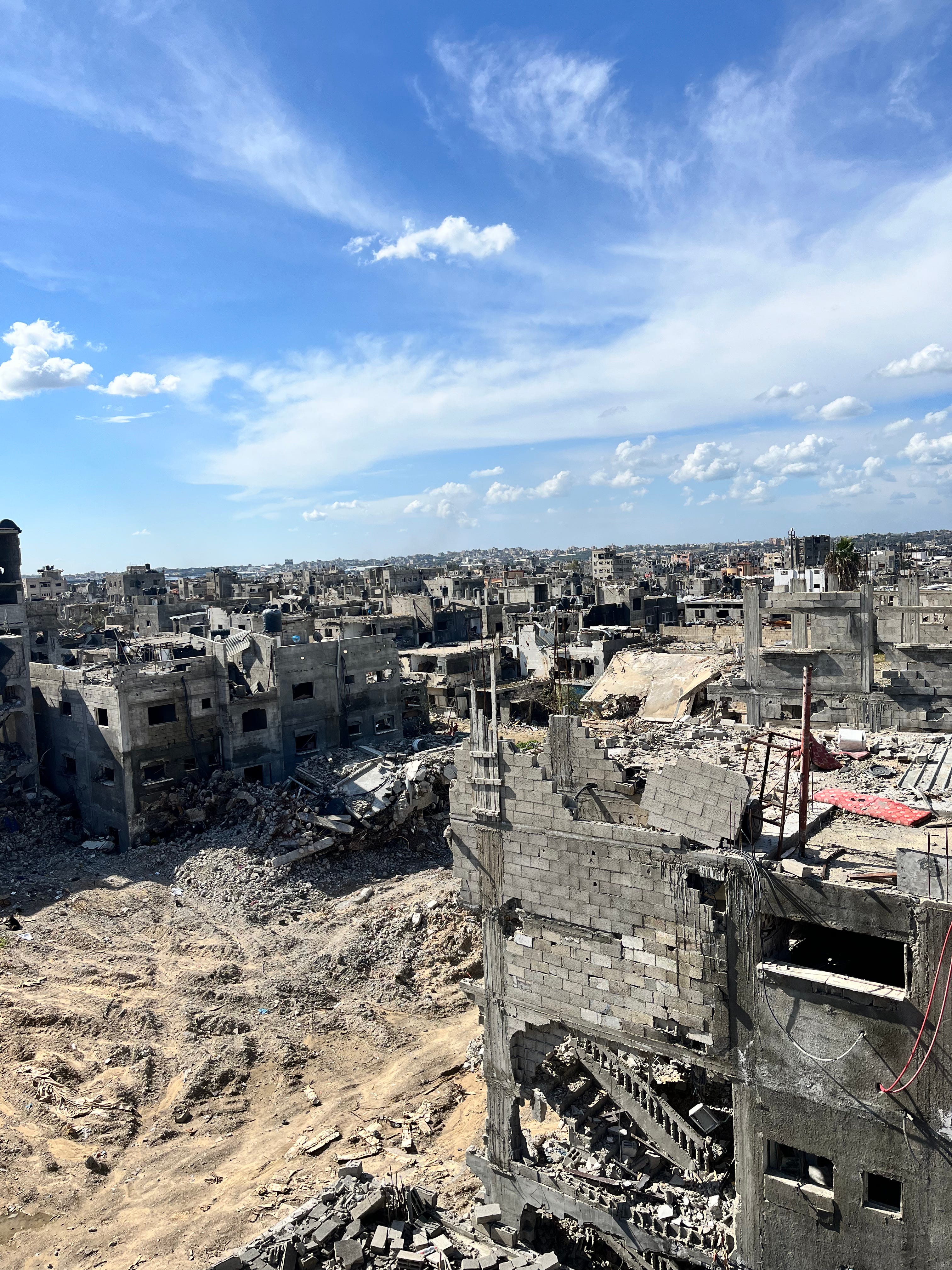
Destroyed buildings as far into the horizon as visible in Beit Hanoun. February 1, 2024. (Photo by Jonathan Whittall.)
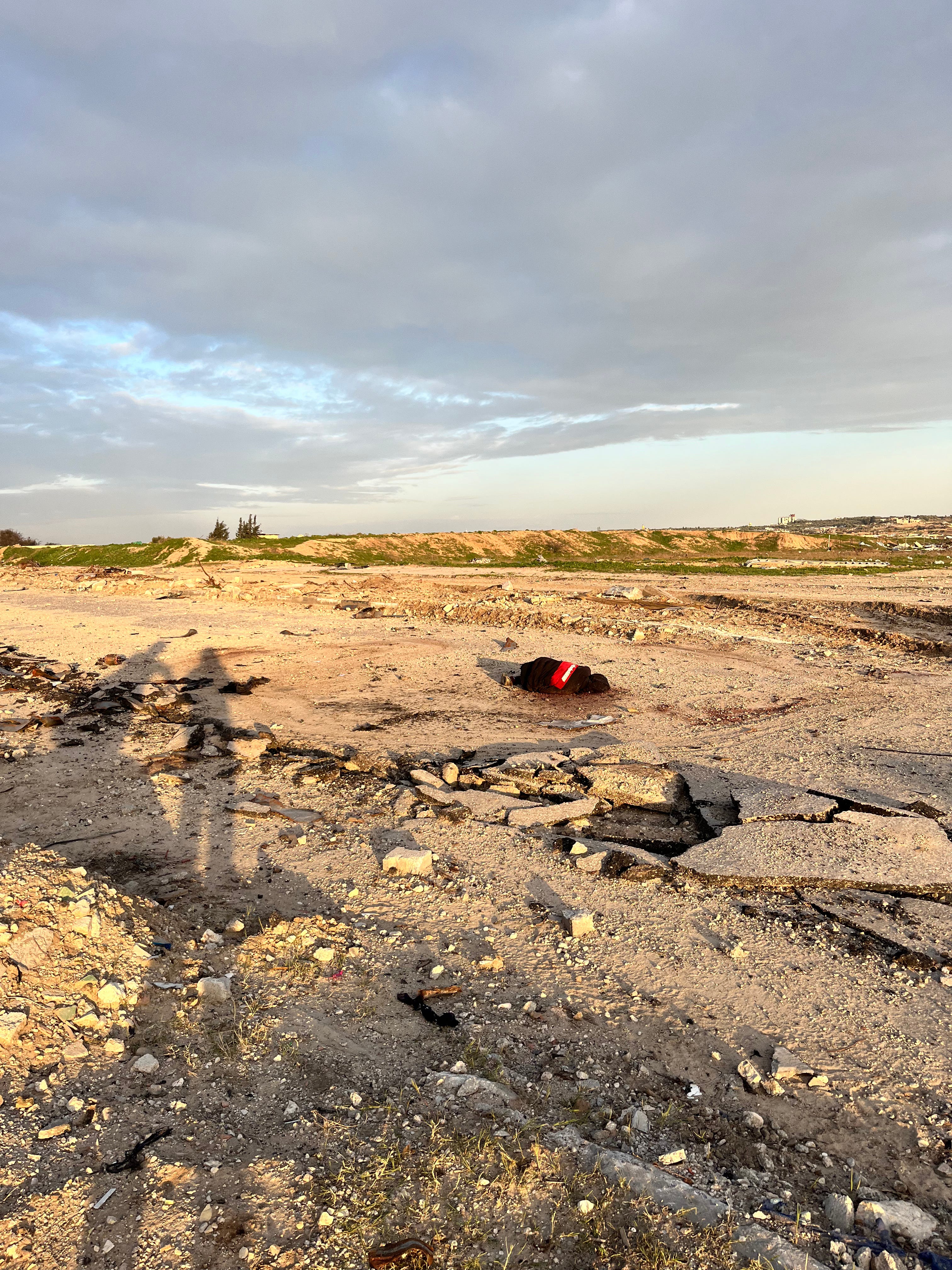
The body of a man killed close to Nitzarim crossing. February 1, 2024. (Photo by Jonathan Whittall.)
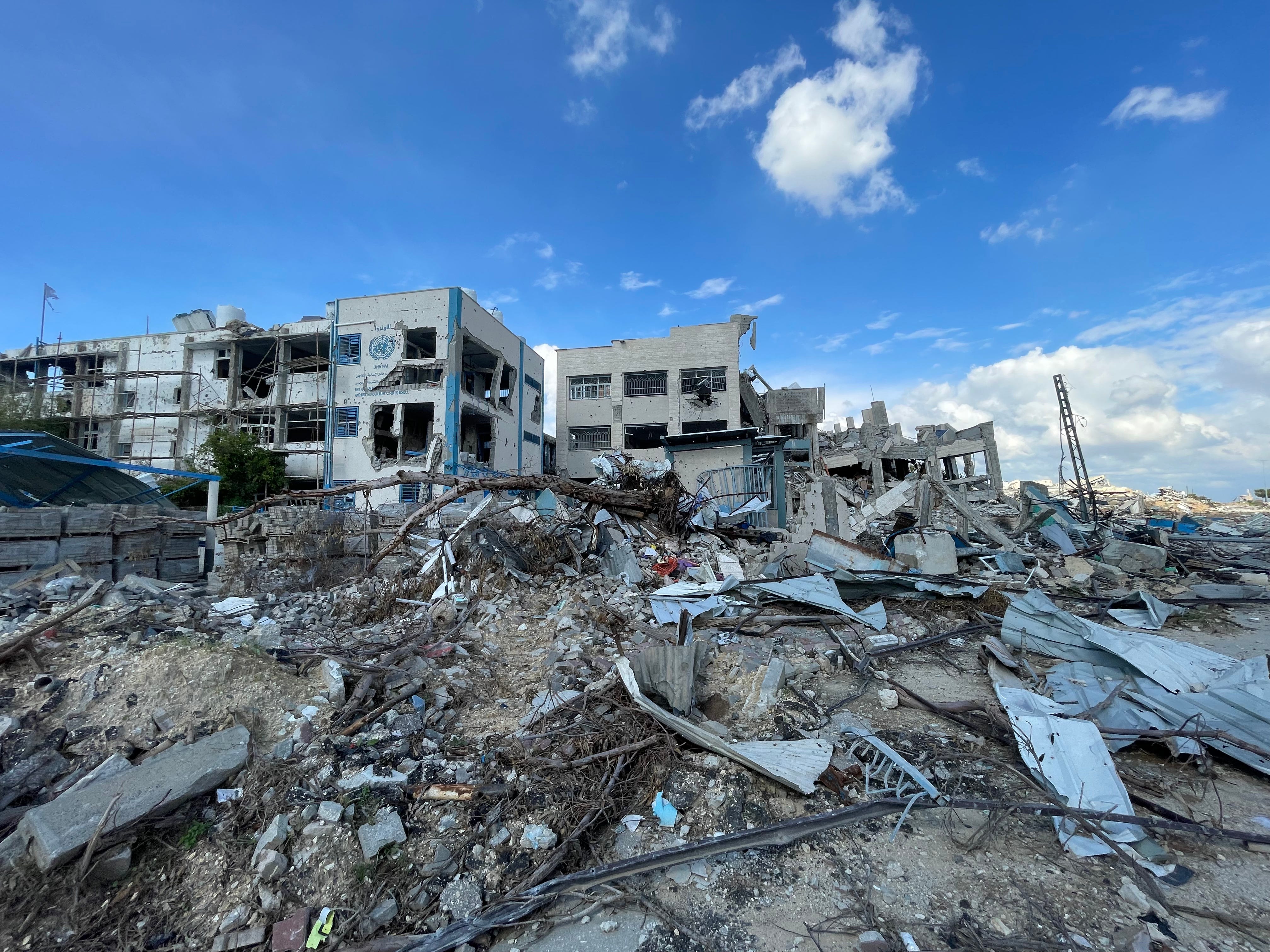
A partially destroyed school surrounded by rubble in Beit Hanoun. February 1, 2024. (Photo by Jonathan Whittall.)
From Drop Site News via This RSS Feed.