

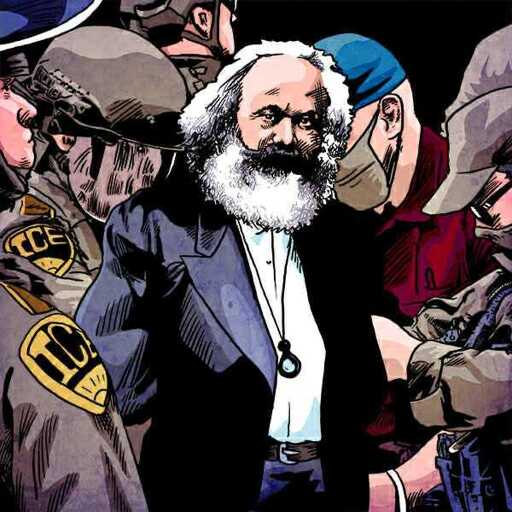
One of the most annoying things about online political discourse in the 2020s is that it’s become totally dominated, on all sides, by hypocrisy-baiting. Something happens in the world, and every ideological combatant’s first response is to find ways to accuse his or her enemies of inconsistency or hypocrisy for what they think about what happened. You either find some previous event that those guys actually reacted differently to, or you just help yourself to the assumption that they would have felt differently under equivalent circumstances. Either way, you focus on pointing out the inconsistency. It’s so much easier than reflecting on what you think and why you think it.
Sometimes, gesturing at the idea that some sort of irony or hypocrisy is at play when your enemies come to whatever conclusion they come to can even feel like it adds up to a positive argument for your position. That’s when things get especially dumb. I’m a very adamant death penalty abolitionist, for example, but it drives me up the wall when people I agree with about the underlying issue express their position by shaking their heads at the folly of death penalty supporters wanting to “murder murderers to show that murder is wrong.”
Like…what are the rules here? Can we punish kidnappers by putting them in prison, or is that unacceptably ironic? Is we reduced the punishment for larceny to paying a fine, would that actually be too harsh because we can’t show that stealing is wrong by stealing from thieves?
Similarly, last year when Trump was terrorizing Los Angeles with increasingly flashy and cruel ICE raids (and then by sending in the military), I saw a lot of smirking takes along the lines of “gosh, I sure hate to see Mexicans invading Los An-ha-lees.” This was a way of owning immigration restrictionists while also vaguely gesturing in the direction of what kinda sorta looked like an anti-restrictionist argument. But, if California having been stolen from Mexico actually contributed in some meaningful way to the wrongness of the raids in LA—in other words, if they were more objectionable because of that than they would have been otherwise—then it would pretty well follow that ICE raids in, say, Minneapolis are at least somewhat less objectionable. Does anyone, anywhere, actually believe that?
A popular way of generalizing from California to the rest of the country is to say that “no one is illegal on stolen land.” So, while Minnesota was never Mexican territory, and it thus can’t be unacceptably ironic to specifically stop Mexicans from moving there, various bits of it were Sioux, Ojibwe or Chippewa territory, and this is supposed to make it unacceptably ironic for a nation whose citizens are mostly descended from European settlers or later immigrants to pass laws restricting which new people get to come live there.
But hold on. Imagine something closely analogous to what’s going on in Minneapolis happening in Berlin or Düsseldorf or Hamburg. It shouldn’t be hard. There’s been plenty of immigration in Germany in recent decades, and the far-right anti-immigrant party “Alternative für Deutschland” (AfD) has been thriving.
The first Germanic tribes showed up in what’s now Germany thousands of years before the first white settlers arrived in Minnesota. Many aspects of America’s culture wars have been imported to Europe, but land acknowledgments have never really caught on among German liberals, presumably because a ritualistic statement of whose “ancestral land” a meeting was being held on would, in a German context, sound like it was written by a member of the AfD’s most radical fringe.
Nevertheless, I suspect (and hope!) that everyone who says that “no one is illegal on stolen land” or “the only people who get to complain about immigrants are Native Americans” or etc. would be every bit as repulsed by this story if it were playing out in Germany.
To put my own cards on the table, I’m very much a border dove, though for reasons that would apply equally well in Los Angeles, Minneapolis, or Hamburg.
My own view, at least in the long term, is that there’s a pretty obvious moral case for more or less completely open borders. “More or less” in the sense that you don’t have to let in spies or contraband or serial killers on the run from foreign police forces, but short of that, yeah, people should pretty much be allowed to move where they want to move. “At least in the long term” because, as long as we’re living under capitalism, we’ll be faced with ugly tradeoffs between the interests of different groups of workers, and there’s tremendous potential for the politics of this to play out very badly for the Left.
So, there’s probably an order of operations that would need to be followed here. But in a global socialist future? Absolutely. And in the meantime, we should acknowledge that having any restrictions in place on the ability of peaceful people to move around as they see fit is a moral compromise that shouldn’t be taken lightly. We certainly shouldn’t go even further in a restrictionist direction without having a very good reason.
Out of the standard reasons offered by right-wing “populist” types, the only one that’s at all credible is that too much immigration from poorer countries undermines the wage levels of the rest of the working class. I don’t find that argument particularly compelling. (We’ll get to why not in a minute.) But even if you do buy it, you should think long and hard about what you’re willing to do to who in the name of protecting wage levels.
Turning someone away at the border, or deporting someone whose immigration status comes up when they’re apprehended for other crimes, is one thing. But what Trump is sending ICE to do in American cities is something else entirely. And commentators who excuse the current crackdown on right-populist grounds seem remarkably uninterested in drawing those distinctions.
A classic illustration of the problem with pure consequentialism (the view that all of morality can be boiled down to maximizing good consequences and minimizing bad ones) comes from the Ursula K. Le Guin’s short story “The Ones Who Walk Away from Omelas.” The story starts with a description of a summer festival in the fictional city of Omelas. As the story goes on, we hear more and more about how wonderful life is in Omelas, how rich and varied its pleasures are, how peaceful and even utopian its social arrangements are, and on and on until we get to:
Do you believe? Do you accept the festival, the city, the joy? No? Then let me describe one more thing.
In a basement under one of the beautiful public buildings of Omelas, or perhaps in the cellar of one of its spacious private homes, there is a room. It has one locked door, and no window. A little light seeps in dustily between cracks in the boards, secondhand from a cobwebbed window somewhere across the cellar. In one corner of the little room a couple of mops, with stiff, clotted, foul-smelling heads, stand near a rusty bucket. The floor is dirt, a little damp to the touch, as cellar dirt usually is.
The room is about three paces long and two wide: a mere broom closet or disused tool room. In the room, a child is sitting. It could be a boy or a girl. It looks about six, but actually is nearly ten. It is feeble-minded. Perhaps it was born defective, or perhaps it has become imbecile through fear, malnutrition, and neglect. It picks its nose and occasionally fumbles vaguely with its toes or genitals, as it sits hunched in the corner farthest from the bucket and the two mops. It is afraid of the mops. It finds them horrible. It shuts its eyes, but it knows the mops are still standing there; and the door is locked; and nobody will come. The door is always locked; and nobody ever comes, except that sometimes–the child has no understanding of time or interval–sometimes the door rattles terribly and opens, and a person, or several people, are there. One of them may come in and kick the child to make it stand up. The others never come close, but peer in at it with frightened, disgusted eyes. The food bowl and the water jug are hastily filled, the door is locked; the eyes disappear. The people at the door never say anything, but the child, who has not always lived in the tool room, and can remember sunlight and its mother’s voice, sometimes speaks. "I will be good, " it says. “Please let me out. I will be good!” They never answer. The child used to scream for help at night, and cry a good deal, but now it only makes a kind of whining, “eh-haa, eh-haa,” and it speaks less and less often. It is so thin there are no calves to its legs; its belly protrudes; it lives on a half-bowl of corn meal and grease a day. It is naked. Its buttocks and thighs are a mass of festered sores, as it sits in its own excrement continually.
They all know it is there, all the people of Omelas. Some of them have come to see it, others are content merely to know it is there. They all know that it has to be there. Some of them understand why, and some do not, but they all understand that their happiness, the beauty of their city, the tenderness of their friendships, the health of their children, the wisdom of their scholars, the skill of their makers, even the abundance of their harvest and the kindly weathers of their skies, depend wholly on this child’s abominable misery.
Le Guin takes it for granted that none of these benefits would justify the treatment of that child.
There are a lot of things you can do to safeguard wage levels that are a hell of a lot more direct and reliable than even a successful attempt to kick out immigrants from low-wage countries (never mind a crackdown that leaves most of them in place but drives them further underground and makes it ten times harder to organize them into unions). Instead of trying to Rube Goldberg our way to higher wages by kicking out some low-wage workers in the hopes that their employers will then have to offer a better deal to whoever they find to fill their shoes, you could, say, raise the minimum wage. Only a tiny percentage of Americans make the exact minimum wage (if you’ve ever gotten a 10 cent raise, congratulations, you’re no longer counted in that stat!), but almost a third of the workforce is making close enough to it that they’d benefit from a substantial increase. And you could change labor laws to make it easier to organize unions. Better yet, do both at the same time and pursue every other reasonable path toward the same goal.
None of those options involve Omelas-style tradeoffs.
Minnesota resident Selamawit Mehari was dragged away in chains while “her 13-year-old son wailed and her older daughter produced paperwork proving her mother was in the United States lawfully.” Mehari was transported to Texas, at which point someone actually checked her status, and she was released there and left to find her own way back to Minnesota. That’s one of the happiest endings I’ve seen to any of the stories about terrifying “whoopsies” where ICE kidnaps people off the street because they think they’re undocumented and refuse to believe any evidence to the contrary. Maybe they think whatever documents desperate relatives are waving in their faces are forged. Or maybe they just don’t much care. ICE has been going out of their way to pitch recruitment ads at angry racists, and a lot of ICE agents don’t seem particularly bothered one way or the other about whether the people they’re sending off to detention hellholes have actually broken any immigration laws.
Does Selamawit Mehari’s story make you think of Omelas? If not, how about the story of 5-year-old Liam Ramos, pictured here?

ICE says that his dad left him behind while he was fleeing from them. Perhaps that’s true. Given the sheer number of times ICE has been caught lying just in the last couple of weeks, about matters large and small, I don’t think anyone should take anything they say on faith, but maybe they’re telling the truth this time. Maybe Liam’s dad was hoping to come back for him in a few minutes, and he didn’t believe that the federal agents would be heartless enough to nab an adorable 5-year-old kid. I have no idea.
Similarly, I suppose the family’s neighbors could be lying when they say ICE tried to use Liam as bait to get his mother to leave the house so they could nab her. Honestly, I’d trust the word of some random Minnesotans a lot more than I’d trust ICE right now, but again, who knows. What we know for sure is that, as of this moment, that terrified 5-year-old pictured in his bunny hat and his Spider-Man backpack is still locked in detention. So are a lot of kids whose names we don’t know.
Check out the conditions at a detention facility in Baltimore. Look at all the people packed together on that floor. Try to imagine even one day living like that, wondering what the hell is going to happen to you. And then make it another day, and another, and another one after that. Does the Omelas comparison feel reasonable yet?
How about when you read this, from journalist Ryan Grim?

Again: There are a whole lot of ways to increase wage levels without throwing little kids like Liam Ramos into detention cells or de facto murdering Wael Tarabashi. You can just legally mandate a higher wage floor for the worst-off workers. You can start changing some of America’s ludicrously anti-union labor laws to bring us closer to alignment with the rest of the developed world. Once you’ve taken these baby steps, you can get more and more ambitious with your pro-worker policies, and not kidnap one single 5-year-old in the process of doing any of it.
The absurdity of people who are just concerned enough about wage levels to brutalize defenseless migrant families but not quite concerned enough to try the rest of those strategies is obvious enough. But if we rest on just making that point, that leaves us with no response to the (admittedly rare) right-wing populists who aren’t hypocritical enough to reject the rest of those policies. What do you say if you actually meet someone who supports the PRO Act and Operation Metro Surge?
One of the very worst possible responses is to insist that low-wage immigration is an unblemished win-win. Because the other side of the coin here is that it’s really not.
In an article last year for Jacobin about the ICE raids in Los Angeles, I wrote:
We should find it repulsive when some well-meaning pro-immigration people talk about undocumented immigrants doing jobs “Americans don’t want to do.” What this really means is that citizens aren’t typically desperate enough to do those jobs for such low wages or in such awful conditions. Many such jobs once were done by American citizens, who typically got a far better deal.
Note too that, it were true that no native-born Americans were willing to, say, work on farms for any wages or in any working conditions, this would be a reason not just to import desperate people to do those jobs now, but to hope that this work force never gets comfortable enough to turn down our worst jobs. If they did, I guess we’d be reduced rooting for an outbreak of misery and desperation somewhere else in the world to generate fresh recruits to fill their shoes.
Where does all this leave us?
In the same article, I wrote:
It’s easy to imagine that every undocumented worker in Southern California is a nonunionized day laborer poised at the knife’s edge of extreme poverty and willing to accept any wage and working conditions whatsoever. And a great many of them really are undergoing experiences that closely align with this image, or ones that are almost as bad. But with nearly a million unauthorized immigrants estimated to live in Los Angeles, some are inevitably going to land union jobs. Certainly, there are plenty of unionized hotels and restaurants around the city where a significant percentage of the workforce is undocumented.
Earlier this week, I spoke to a former SEIU and UNITE HERE organizer who told me about the long conversations he used to have, sitting in the living rooms of undocumented families, convincing workers that there’s no way that the information they put on a union card would find its way to immigration authorities. Those were difficult conversations, but as eager to improve their material conditions as any other workers, many of them went for it.
These were successful campaigns. The union organizer also told me about situations in which, in workplaces that had already been organized, the union would often file grievances on behalf of undocumented workers who were fired after their Social Security numbers came back “no match,” seeking to at least buy a little time to help these workers while they worked on resolving their immigration status.
Such stories would be totally incomprehensible to those who believe this section of the working class is innately unorganizable. A common narrative on parts of the “populist” right is that the Left and the workers’ movement were once staunchly anti-immigrant (or certainly in favor of ruthless, maximalist enforcement of existing immigration laws), and that, to the extent this has changed, this has been the result of middle-class “wokeness” displacing the proletarian common sense that had previously prevailed. But this is a severe oversimplification at best and an outright distortion at worst.
In the 1930s, for example, the comparatively conservative craft unions of the AFL were restrictionist. The radical industrial unions of the CIO were not. The socialists and communists who formed some of the most reliable shock troops of the early labor movement typically were not. Even Caesar Chavez, who’s early militant restrictionism is always cited in right-populists’ canned histories of the alleged “traditional left and labor position,” later shifted his position significantly and supported amnesty. So, rather than taking our cues from some position that the workers’ movement has supposedly "always” held, we need to think through the arguments for ourselves.
This was my conclusion last year:
Once we acknowledge that the comparative desperation of undocumented workers can be used by bosses in some sectors to drive down wages, there are at least two possible solutions. One, favored by the pseudo-populist right, is to try to remove the cheap-labor competition by expelling all eleven million of these people from the country. The other is to try to make their labor less cheap. This can be done and is being done to some extent on a small-scale by the hard work of union organizers like the one I spoke to, and it can be facilitated on a national level by giving immigrants a path to citizenship so they can come out of the shadows, have far less fear of joining unions, can take their employers to court for labor law violations without worrying that ICE will be waiting outside the courthouse, and so on.
One reason to prefer the second strategy is moral. An immense amount of human suffering is being inflicted on nonviolent and otherwise law-abiding workers and their families as they simply try to keep their heads down and live their lives. Nor are they the only victims. As we’ve seen in the last week in Los Angeles, the mechanics of deportation often (and especially when, as now, authorities are looking for big splashy gestures to prove that they’re ramping things up) rely on pretty blatant racial profiling. Plenty of American citizens get swept up into immigration detention, where their insistence that they have citizenship is routinely disregarded. In some cases, immigration officials assume that their passports are fake.
People being held in immigration detention don’t have the same rights to legal counsel as Americans accused of other kinds of crimes, and there have been cases of wrongfully detained citizens sitting in detention for a very long time. There’s a closely related strategic point about trade union principles here too.
How much credibility would your union have if it stood by and did nothing as members were kidnapped from the work site by masked federal agents? There’s a reason David Huerta, for example, has been such a powerful voice for immigration reform, and it’s not identity politics trumping class solidarity. Quite the opposite.
But there’s also a purely strategic case for the second option. It’s not as if there’s a button under the desk at the Oval Office reading “remove all eleven million undocumented immigrants.” If there were, Trump most certainly would have pushed it during his first term. We could have four long miserable years of the kind of grotesqueries ICE has been carrying out in Los Angeles happening every day, and quite likely, most of the undocumented population wouldn’t be swept up.
The ones who avoided deportation, though, would be that much more terrified of being noticed, that much harder to organize, and that much more vulnerable to hyperexploitation. Imagine that Trump managed to deport a million undocumented workers around the country, for example. How much harder would that make those long living-room conversations about taking the risk of signing a union card?
The administration’s crackdown is morally grotesque, not because of the specifics of American history (“stolen land”) but because it’s a grave violation of human rights that extend to all humans everywhere, no matter what. And we don’t need to choose between the right-populist argument for sending little kids to detention cells and the grotesque libertarian argument for celebrating the presence of a caste of happy migrant serfs, oh so “willing” to do our most dirty and dangerous work. We can and should reject both in favor of a principled and strategic commitment to the solidarity of all segments of the working class.
Thanks for reading Philosophy for the People w/Ben Burgis! This post is public so feel free to share it.
From Philosophy for the People w/Ben Burgis via This RSS Feed.