

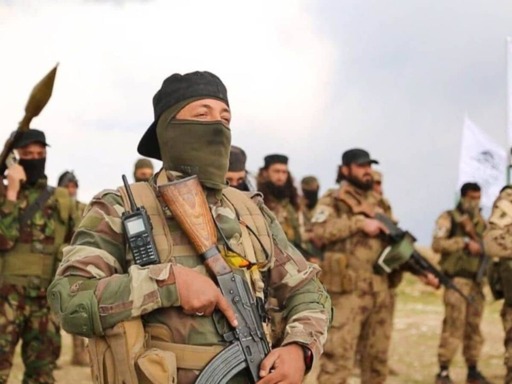

The Syrian regime under terrorist-turned-‘president’ Ahmed al-Sharaa — AKA al-Joulani — has reached a ceasefire deal with progressive Kurdish-led forces in the north of the country. But will the former al-Qaeda extremist now in charge of Syria stay true to his word and respect the country’s rich mosaic of diversity?
Syria — Not ideal, but better than no deal
The diverse but largely Kurdish north of Syria (Rojava) resisted the onslaught of Daesh (Isis/Isil) and other extremists during the country’s devastating civil war, while trying to build a “multinational, multicultural, multi-religious” democracy centring on women’s rights, environmental protection, and a co-operative economy.
Al-Sharaa’s invasion this month put Rojava’s fighters on the back foot. But it was always going to be difficult to capture all of the territory militarily without significant loss of life, due to firm resistance. Human rights abuses and fears of genocide increased global concern and a push for a peaceful resolution.
On 30 January, an agreement came. Al-Sharaa’s forces would take over “oil and gas fields”, prisons, and “administrative and civil bodies”. In return, fighters from Rojava would have three brigades within a new Syrian military division. Displaced civilians would finally be able to start returning home, and a decree said the state would protect “Kurdish cultural, linguistic and civil rights”.
Perhaps the biggest symbolic step was the:
first formal recognition of Kurdish national rights since Syria’s independence in 1946.
In particular, people who had remained stateless for decades would finally have Syrian nationality.
It seems the progressive parts of Rojava’s revolution may struggle to survive under al-Sharaa’s rule, though.
Why it’s hard to trust al-Sharaa
Rojava led the fight to defeat Daesh in Syria. And it also resisted attacks from al-Sharaa’s Jabhat al-Nusra, Syria’s al-Qaeda affiliate during the early years of the Syrian civil war. Al-Nusra and Daesh both reportedly received support from NATO member Turkey, which joined extremists attacking Rojava as an extension of its own war on Kurdish communities at home.
Turkey also supported al-Nusra’s successor, Hayat Tahrir al-Sham (HTS), whose members (including its leader al-Sharaa) now control Syria’s government. But just as al-Nusra engaged in torture, abductions, and repression of dissent, there were also “serious human rights violations” in areas under HTS rule.
HTS confiscated hundreds of properties from local Christians. And it reportedly assassinated one non-violent Syrian activist for proudly expressing sentiments such as:
I’m Druze, Alawite, Sunni, Kurdish, Ismaili, Christian, Jewish and Assyrian… I’m the Syrian Revolutionary and proud to be!
It also has a weak record on women’s rights. In areas it controlled, for example, it severely restricted women’s movement, clothing, and participation in public life.
Following the HTS takeover of Syria in late 2024, the new regime either allowed or failed to stop war crimes against Alawite citizens (with whom tensions continue today). Druze communities have also faced attacks and sexual violence.
Nonetheless, Western governments have rehabilitated al-Sharaa into Syria’s leader, and ended sanctions on the country. Al-Sharaa even reached an agreement in early January with Israel, and has just visited Russia (which he once called an enemy).
Understandings with global powers (including Turkey) may indeed have helped to greenlight al-Sharaa’s assault on Rojava.
Keep both eyes open
Al-Sharaa and his allies have power. They aren’t allies of Iran, are happy to deal with Israel, and have strong ideological connections to Western allies in Turkey and the Gulf dictatorships. For the West, that means Syria is no longer a ‘problem’.
The diverse communities of Syria, however, will hope the world keeps paying attention to the country. Because al-Sharaa’s record hardly inspires confidence for an inclusive future.
Featured image via the Canary
By Ed Sykes
From Canary via This RSS Feed.