

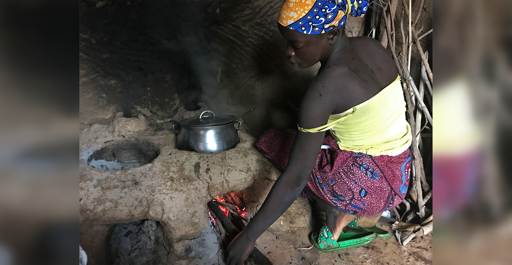
GAROUA, Cameroon — One morning during the July monsoon in Bang, a village of 3,000 in North Cameroon, people woke up to heavy rains. The Mayo Tefi, a small river which runs through the village, swelled as the water level rose. Astha Pabami, a mother of 11 in her 50s, could not go out to fetch firewood, as crossing the river would have meant being swept away. Instead, she used some of the wood stacked behind her hut, lighting a fire to prepare a meal on her new cookstove. The cookstove looks like a traditional oven, with one opening for firewood and another for the pot. But it’s a big improvement over what she used to use: an open three-stone fireside. Pabami is one of about 250 women in Bang who were using these stoves when Mongabay visited the town. They were distributed as part of a project run by the Center for International Forestry Research (CIFOR), with support from the European Union. The stoves are meant to burn cleaner and use less wood — saving forests and protecting people’s health in the process. “The open fireside consumes more firewood and dirties our pots, and we inhale smoke. We could use about 8-10 pieces of wood to cook a meal; presently, a maximum of four pieces of wood is enough,” Pabami tells Mongabay. Since the improved stoves need less firewood, she doesn’t have to collect as much during the dry season, and what she puts into storage behind her hut…This article was originally published on Mongabay
From Conservation news via This RSS Feed.