

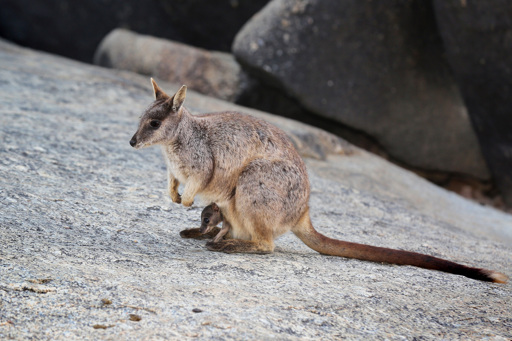
Mongabay recently launched the Australian Biodiversity Special Reporting Project, which will produce sustained, high-quality journalism on Australia’s unique wildlife, ecosystems, and the threats they face—including habitat destruction, invasive species, climate change, and extractive industries. Journalists interested in being involved can learn more via Mongabay.org. Australia likes to think of itself as a country with space to spare. On maps it is a continent with most of its people pressed into a thin coastal rim, leaving a vast interior that looks empty. Ecologically, that impression is misleading. Much of Australia’s biodiversity is concentrated in habitats that sit close to where people farm, build, log, and dig. Over the past 20–30 years, land use change has continued to reshape those places. The result has been a slow narrowing of options for wildlife, even in a nation that prides itself on its natural heritage. The basic story is not complicated. Native vegetation is cleared or degraded. Habitat becomes smaller, more fragmented, and less resilient. Populations thin out. Some disappear. Australia’s national environment reporting treats habitat loss and modification as one of the major pressures on biodiversity, alongside invasive species and climate change. A continent of fragments Australia has already lost a meaningful share of its native vegetation since European settlement, and the long-run trend is still reflected in modern landscapes. The 2021 State of the Environment report notes that native vegetation has been replaced across large areas by agriculture, cities, and infrastructure, with some vegetation groups losing a substantial portion of their original…This article was originally published on Mongabay
From Conservation news via This RSS Feed.