

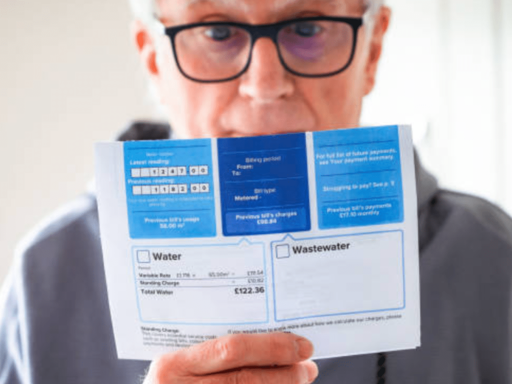

Yesterday, 28 January, industry body Water UK announced its annual bills hike for 2026. This year, from April onwards, water bills will rise by £2.70 a month — that’s £33 across the year. That’s an average increase of 5.4%, more than 2% above the most recent inflation figures.
Water UK claims that this will fund “record levels on investment” in the UK’s failing water infrastructure, including a £104bn programme stretching up to 2030.
The problem? We already paid to fix the infrastructure with our past bills. The water companies simply failed to do their job. Now, they have the bloody nerve to come demanding more money to do the work they should have been doing from the start.
‘End sewage entering our rivers’
Water UK stated that companies will begin the infrastructure investment by spending £20bn over 2026-27. According to the trade body, this comes as part of the current £104 billion investment programme to:
secure our water supplies, support economic growth and end sewage entering our rivers and seas.
Now, it’s undeniable that the UK’s water infrastructure is in a sorry state. However, the passive “sewing entering our rivers” language here is deeply disingenuous from the companies dumping the sewage.
In the latest pollution figures, for 2024, show that serious pollution incidents increased by an eye-watering 60% compared to the previous year. The Environment Agency (EA) specifically highlighted the government’s persistent under-investment in new infrastructure and poor asset maintenance as reasons for these massive failures.
Water UK also stated that:
The money raised by water bills can only be used to fund infrastructure that is independently determined to be new, necessary and value for money. There is a money-back guarantee which means that if improvements are not delivered, customer bills will automatically be refunded by the regulator.
Though, it must be said, it’s much easier to deliver tangible improvements when you’ve spent years under-performing.
‘Never welcome’
The amount that water companies can raise their prices is controlled by the Ofwat, the water regulator for England and Wales.
Between 2025 and 2030, Ofwat will allow suppliers to hike bills by 36%. Most of that total was front-loaded onto last year’s staggering price increases. Water bills in England and Wales increased by an around £10 a month in 2025, for an average total of over £600.
Given that it’s hiking bills at over-inflation levels yet again, Water UK was also quick to signpost support options for customers to pay their bills.
Over two million households already receive help paying for water through social tariffs, the WaterSure scheme, and other aid measures. Now, for 2026-27, Water UK expects that another 300,000 will add to that total, bringing it to almost 2.5 million households.
Water UK chief executive David Henderson said:
We understand increasing bills is never welcome, but the money is needed to fund vital upgrades to secure our water supplies, support economic growth and end sewage entering our rivers and seas.
While we urgently need investment in our water and sewage infrastructure, we know that for many this increase will be difficult. That is why we will help around 2.5 million households – more than ever before – with average discounts of around 40% off their water bill.
Repeated, massive failures
Whilst this ‘help’ with bills sounds terribly benevolent, it’s hiding a very simple truth. Private water in the UK is a monopoly — customers have no choice in their provider, and they have to buy water in order to stay alive. And the water companies that have a stranglehold on our lives just aren’t doing their jobs.
As we mentioned above, serious pollution incidents actually rose in the Environment Agency’s latest report. In fact, the EA found that:
81% of these serious incidents were the responsibility of just three water companies – Thames Water (33 incidents), Southern Water (15 incidents) and Yorkshire Water (13 incidents). All pollution incidents (category 1 to 3) have increased by 29%: last year water companies recorded 2,801 incidents, up from 2,174 in 2023.
Even outside of their environmental failures, some water companies are even failing in the task of delivering water to our homes. Earlier this month, 30,000 homes across Kent and Sussex were left without water, some for four days or more.
South East Water issued multiple apologies, and blamed Storm Goretti causing burst pipes and power cuts. However, Parliamentary Environment, Food and Rural Affairs committee chairman Alistair Carmichael stated that he was “deeply skeptical” of SEW’s explanation.
Paying twice
This led nationalisation campaign group We Own It, to call for Ofwat to withdraw South East Water’s licence and bring it back into public ownership. The campaigners have also made similar calls regarding Thames Water, which remains locked in talks between the regulator and its creditors over the company’s massive levels of debt.
We Own It stated that:
The way to fix our broken water system is to genuinely regulate the water companies until they deliver what is needed. If and when they become unprofitable through the process of delivering on their duties, it is your responsibility to allow this to happen, let companies fail as the consequence of appropriate regulation. Then take them into permanent public ownership.
Meanwhile, environmental pressure group River Action has taken Ofwat to High Court over its lax attitude to water bills. The group argued that:
Ofwat’s current methods could allow water companies to charge billpayers again for environmental improvement works that they have already paid for, despite its promise that customers should not pay twice. We challenged Ofwat’s failure to require water companies to demonstrate compliance with environmental regulations as part of its price control exercise, as it said it would.
Water companies plead that they haveto hike their prices to fix their infrastructure. However, our past bills were already meant to fund infrastructure investment. Instead, the private water companies have spent years letting our infrastructure crumble, dumping sewage into the environment and pocketing the money themselves.
River Action are still awaiting the results of their lawsuit. However, now that Water UK has again – with Ofwat’s permission – announced that it’s putting up water bills in 2026, the River Action verdict couldn’t come sooner.
Featured image via Unsplash/the Canary
From Canary via This RSS Feed.