

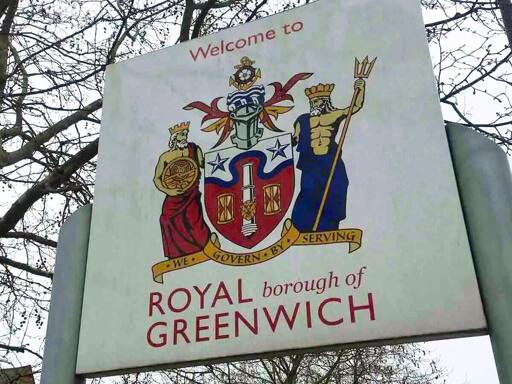

Greenwich Council has conceded, under legal pressure, that a clause in its employee pension fund investment strategy was unlawful in claiming that it:
cannot exclude investments in order to pursue boycotts, divestment and sanctions against foreign nations and UK defence industries.
It has now committed to removing the “legally erroneous” clause. The council has operated this unlawful policy since at least 2020. But it didn’t notify scheme members or the public that it had become aware of this unlawful assertion long before this legal challenge. Greenwich Council currently holds more than £61.8m in complicit investments.
Greenwich Council pension investment
The Public Interest Law Centre is acting on behalf of claimant Lubna Speitan, a founding member of Greenwich Palestine Alliance. It has instigated judicial review proceedings against Greenwich Council. These challenge the council’s failure to divest its Local Government Pension Scheme (‘LGPS’) from the crimes being perpetrated against the Palestinian people by the State of Israel. The claimant is a Greenwich resident and long-standing human rights campaigner, with family in Gaza and the West Bank.
Israel’s illegal occupation, apartheid, genocide and war crimes have been extensively documented and recognised by international and domestic courts, human rights organisations, and United Nations bodies.
Since 2023, the claimant, together with Greenwich Palestine Alliance, other community groups, pension scheme members, and unions, has been advocating for immediate, full, and permanent divestment from Israel. (Data from Palestine Solidarity Campaign shows the latest figures bring the total known complicity of LGPS funds to over £12.2bn held by 81 funds). The investments include arms companies that are notorious for the manufacture of weapons used against civilian populations, and companies active in Israel’s illegal settlement economy.
Divestment, historically and today, is a key mechanism by which the international community can act in solidarity with those oppressed by racist regimes. Local authorities took similar steps in response to apartheid South Africa.
Local authorities do hold the legal power to pursue divestment. The UK Supreme Court ruled a former government policy discouraging divestment was unlawful in R (Palestine Solidarity Campaign Ltd) v Secretary of State for Communities and Local Government (2020). The government has since removed it from official guidance.
Pension funds may consider non-financial factors where there is no significant financial risk and where scheme members are likely to support the decision.
The challenge
Greenwich Council’s Responsible Investment Policy does not currently make any reference to human rights or international law, including acts of apartheid and genocide committed by Israel.
On 9 December 2024, following extensive campaigning by residents in the borough, Greenwich agreed to look at the fund’s exposure to complicit companies, with a view to review and update its Responsible Investment Policy and to consider the need for divestment. However, on 15 September 2025 the Pension Panel voted to put to scheme members a substantially watered down commitment to “integrat[e] human rights considerations into our investment decisions”.
Campaigners believe the change fails to take into account demands for full divestment from Israel and that this will have had no impact at all on investment decisions made by the council. Legal proceedings challenging the decision were issued on 25 November 2025.
The claimant argues that Greenwich has failed to act in accordance with its constitution, its Compliance Statement and the Local Government Pension Scheme (Management and Investment of Funds) Regulations 2016, in failing to give effect to an earlier decision of the panel of 9 December 2024, or otherwise failed to give adequate reasons as to why it changed course.
The claim also argued that the council failed to conduct a lawful consultation or consider alternatives to its draft Responsible Investment Policy. It also challenged the council’s reliance on an Investment Strategy Statement containing an unlawful instruction, which stated that the Fund:
cannot exclude investments to pursue boycotts, divestment, and sanctions against foreign nations and UK defence industries.
The response
In response to the legal challenge, Greenwich Council concedes that its Responsible Investment Strategy unlawfully stated that it could not pursue divestment from a foreign nation. However, the council denies that this had any impact on its decision not to divest from Israel.
Campaigners strongly reject this, describing it as “disingenuous.” They argue that the council clearly relied on unlawful information, which prevented it from pursuing full divestment from Israel without restrictions. This reliance, they argue, undermined all other divestment demands.
The council will also be consulting council employees on its draft Responsible Investment Policy. That consultation will begin at the end of January and run for four weeks. Campaigners are encouraging employees to take part and take a firm stance. Look here for the consultation when it opens.
This is a critical moment for the council and its employees to take a clear, principled stand by rejecting all complicity in genocide and apartheid and committing to ethical investment that upholds international law and fundamental human rights.
Investment ‘funding apartheid state’
Lubna Speitan, founding member of Greenwich Palestine Alliance and claimant in these proceedings says:
For decades, I have watched helplessly as my Palestinian family and people have been subjected to constant attack, displacement, torture, and slaughter. It is sustained by the brutal Israeli apartheid state, a system funded in part by investments from our own local council through the Local Government Pension Scheme. By maintaining these investments, Greenwich has been a participant in the genocide of our people and family.
The Council’s concession that its policy was unlawful confirms what we have long argued: it always had the power to divest!
Communities Secretary Steve Reed recently claimed that councils could be at risk of being sued by suppliers who lose money, and could face paying substantial damages: “Councils should stay out of foreign conflicts and get on with the job of delivering local services.” It is a profound irony and distortion of truth. Divesting from genocide is not foreign policy, it is a fundamental duty to uphold law and basic morality for the communities you serve, rather than investing in injustice abroad. Our campaign is driven by Greenwich residents, pension scheme members, trade unions, and human rights organisations who demand this ethical accountability.
History shows us the way. Councils across the UK once rightly divested from apartheid South Africa. We are simply demanding Greenwich apply those same principles to apartheid and genocidal Israel, (without dilution). Our case has proven they can.
Now, Greenwich must act swiftly to implement full and permanent divestment from Israel. This landmark concession shatters the myth of powerlessness. Councils can no longer hide behind unlawful policies. This sends an unambiguous message to every council across the UK: “the false legal barriers are gone. You have the power to divest. You must now have the courage to do so.”
Helen Mowatt, Legal Director at the Public Interest Law Centre says:
For years, councils have wrongly claimed they lack the legal power to divest. Greenwich Council itself has operated this unlawful policy since at least 2020, without informing scheme members or the public that it knew the position was wrong until this legal challenge. Legally, councils can implement divestment, and this error in understanding must be widely disseminated – a point vital not only for investment panel members but also for community groups, grassroots campaigns, and activists.
Featured image via the Canary
By The Canary
From Canary via This RSS Feed.