

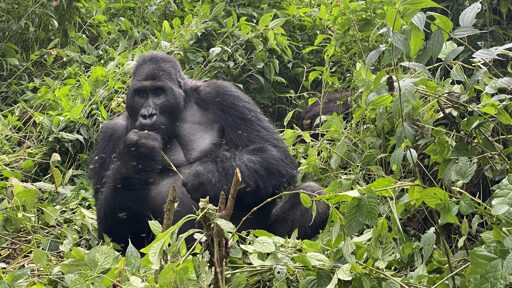
The fact that primates other than humans engage in homosexual behavior is well-documented. A recent study in Nature Ecology & Evolution digs deeper into the factors influencing the prevalence of this behavior. Of the 491 nonhuman primate species considered in the paper, 59 were found to engage in same-sex behavior. This behavior is more likely to occur among species that live in drier climes, experience heightened food insecurity, and face greater pressure from predators, the researchers suggest, based on analyses of patterns across 23 species. Same-sex interactions are also more likely when there’s a significant difference in body size between male and female members, and in primates with longer lifespans. A more complex and stratified social structure is also a predictor of this behavior. Gorillas are an example where social configurations play a role. This genus of primates includes two species: the western (Gorilla gorilla) and eastern gorillas (Gorilla beringei). Gorilla groups, which include anywhere from 20 to 50 members, typically consist of a dominant adult male (the silverback), several adult females, and their offspring. A chimpanzee in Uganda’s Kibale Forest. Image by Valerie Hukalo via Flickr (CC BY-NC-SA 2.0). “Same-sex sexual behavior in gorillas has been associated with reconciliation and strengthening social bonds,” Chloë Coxshall, a doctoral student in biology at Imperial College London, U.K., and lead author of the study, told Mongabay. “Reconciliation reduces the likelihood of further aggression, which reduces risks of injury or fatalities and promotes group cohesion.” She added that stronger social bonds can be crucial…This article was originally published on Mongabay
From Conservation news via This RSS Feed.