

Article Summary
• The EPA announced it will ‘freshly reassess’ the safety of the controversial weedkiller paraquat, news that was celebrated by supporters of the Make American Healthy Again (MAHA) movement.
• In fact, the agency is not starting a new evaluation. The agency is continuing some work begun by the Biden administration EPA, in response to lawsuits. That doesn’t include evaluating new evidence on the chemical’s links to Parkinson’s disease, which many health experts say is now robust.
• Health advocates warn that the EPA is not doing enough to protect people from the deadly herbicide, which has been banned in 74 other countries.
In early January,Reuters and other major media outlets posted headlines declaring that the Environmental Protection Agency (EPA) would “reassess” the safety of paraquat, a controversial weedkiller linked to Parkinson’s disease.
Such a reassessment would have been an important development for public health advocates, including members of the Make America Healthy Again (MAHA) movement, who argue the EPA’s risk-benefit analysis of paraquat is outdated. While the EPA maintains it can be used safely, the herbicide is banned in more than 70 countries, including China, Brazil, and the United Kingdom—nations with similarly industrialized agricultural systems.
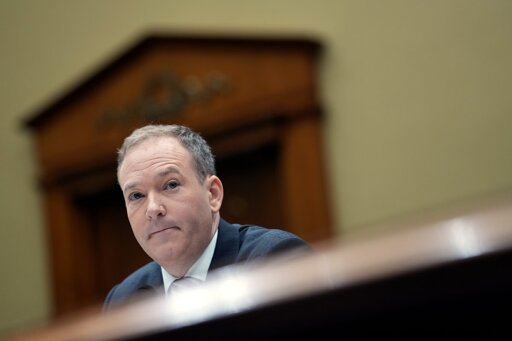
“More MAHA Progress!” EPA Administrator Lee Zeldin posted on X. “The Trump EPA has made the important, proactive decision to freshly reassess the safety of PARAQUAT. It’s all about gold-standard science and radical transparency for Americans.”
In fact, the EPA did not start a new review of paraquat. Starting with an announcement in November, Zeldin is simply continuing reviews started by the Biden administration in response to lawsuits.
“Zeldin is repackaging things that EPA had already committed to do or is legally required to do and is touting it as some new announcement,” said Jonathan Kalmuss-Katz, a staff attorney at Earthjustice. “In the meantime, the EPA is allowing workers in communities across the country to remain exposed to unsafe levels of paraquat and is failing to take action that is more than justified based on the science.”
“Zeldin is repackaging things that EPA had already committed to do or is legally required to do and is touting it as some new announcement.”
The agency did not answer detailed questions from Civil Eats about whether it is taking new action or when the various pieces of the current work being done were started. Instead, it sent a statement that again referred to a “reassessment” and referenced ongoing studies on the pesticide’s volatilization.
“If the new studies show that paraquat poses more risk than previously thought, the EPA could put stricter rules in place, limit how it can be used, or take other actions to protect farmworkers and people living in rural communities,” a spokesperson said.
Zeldin’s initial post came after several months of courting MAHA supporters who have been critical of the agency’s approach to pesticide regulation. After some in the movement started a petition calling for his dismissal, Zeldin and other top EPA officials invited them to the agency to discuss pesticide policy. He and other EPA officials have also made regular appearances on MAHA Action’s weekly calls since December.
As a result, some MAHA supporters believe Zeldin is truly listening to their concerns. While they would prefer that he ban paraquat and other pesticides with serious health risks outright, they say, the announcement is a step in the right direction.
“It’s great that they’re actually looking at paraquat,” Zen Honeycutt, the founder of Moms Across America and a prominent voice within the MAHA movement, told Civil Eats. “Saying that you’re going to do something is good, if there’s actual follow through. We want to see that happen.”
Other advocates who have worked on pesticide policy for decades and have been tracking Zeldin’s dismantling of protective regulations are more skeptical, especially given the biggest issue—the risk of Parkinson’s disease—is not part of the reassessment.
“The fact that EPA is still reviewing paraquat rather than banning paraquat is what’s making Americans sick, not healthy,” said Scott Faber, the senior vice president of government affairs at the Environmental Working Group (EWG). “EPA has been struggling to do what 74 other countries have done, to simply ban paraquat.”
Paraquat Risks and Policy: The Background
Paraquat, which was introduced in the 1960s, is the deadliest pesticide in American agriculture. According to the U.S. Geological Survey, farmers and other applicators in 2018 sprayed about 11 million pounds across corn, soybean, and cotton fields and in orchards and vineyards.
A single sip can kill a person, and the EPA classifies it as “restricted use,” requiring those who spray it to undergo special training. The agency has long held that if it is used with restrictions in place, its dangers can be avoided.
However, multiple reports have shown that violations of safety requirements on pesticide labels are common, and the EPA does not actively enforce restrictions. In addition, experts say the agency’s registration process often fails to adequately account for the impacts of long-term exposure to pesticides, even as new evidence emerges.
In recent years, the evidence linking paraquat exposure to increased risk of Parkinson’s disease has been piling up.
In recent years, the evidence linking paraquat exposure to increased risk of Parkinson’s disease has been piling up.
“That evidence includes epidemiological studies involving farmworkers and other people who are exposed to paraquat,” Kalmuss-Katz said. “It includes laboratory studies where animals who were dosed with paraquat exhibited the telltale symptoms of Parkinson’s disease, and it includes cellular studies, which explain exactly how paraquat is causing the neurological changes associated with Parkinson’s disease. . . . So, not only is there a very large body of evidence, but there’s a coherence between the multiple lines of evidence.”
Thousands of farmers and other pesticide users have sued Syngenta, which manufactures paraquat, and Chevron, a former distributor, claiming use of the pesticide caused them to develop the disease. Syngenta maintains there is no causal link between paraquat use and Parkinson’s. The company has also worked to influence academic and media reports on the issue and to fend off further regulation.
“Despite decades of investigation and more than 1,200 epidemiological and laboratory studies of paraquat, no scientist or doctor has ever concluded in a peer-reviewed scientific analysis that paraquat causes Parkinson’s disease,” the company claims on a website dedicated to defending paraquat. “Our view is endorsed in science-based reviews by regulatory authorities, such as in the U.S., Australia and Japan.”
“The law requires EPA to periodically review the state of the science on pesticide risks and to strengthen their regulations as needed to protect the public and the environment.”
The EPA is required to review registered pesticides every 15 years. In 2021, the EPA published an “interim decision” on the re-registration of paraquat, which included some new restrictions to account for the chemical’s risks. But soon after, a group of environmental and health organizations, including the Michael J. Fox Foundation for Parkinson’s Research, Pesticide Action Network North America, the California Rural Legal Assistance Foundation, and Farmworker Justice, challenged the decision in court.
“The law requires EPA to periodically review the state of the science on pesticide risks and to strengthen their regulations as needed to protect the public and the environment,” Kalmuss-Katz, who represented them in court, said. “Here, the EPA failed to do that.”
The lawsuit claims the agency failed on three fronts: They challenged the EPA’s finding that the evidence linking paraquat to Parkinson’s is insufficient, they said the agency failed to look at all the ways people are exposed to paraquat, especially in terms of how it drifts when it’s sprayed, and they said the agency’s balancing of the environmental, social, end economic costs and benefits was comprehensive on the side of economic benefits to growers but not on the side of public health.
In response, the EPA did not directly defend its review. The agency acknowledged to the court some of the issues and said it needed more time to go back and consider more research, especially on the issue of drift, or “volatilization,” which can impact farmworkers and nearby communities.
The agency said it would gather new data from Syngenta on volatilization and that the process would take four years.

U.S. Secretary of Health and Human Services Robert F. Kennedy Jr. (left) welcomes Vice President JD Vance to the Official MAHA Summit in Washington, D.C., where top Trump administration officials, executives, and influencers discussed the “Make America Healthy Again” agenda. (Photo credit: Alex Wong/Getty Images)
What Trump’s EPA Has Done
In November, Zeldin’s EPA put out a press release claiming that, based on data Syngenta had submitted in 2024, the agency found “greater uncertainty regarding the potential for paraquat to volatilize than previously considered.” As a result, the EPA said it will be requesting more data from paraquat manufacturers. (Syngenta makes the most popular U.S. product containing paraquat, but several other companies manufacture it.)
In the statement EPA sent to Civil Eats, the spokesperson said the uncertainty revealed in the new study prompted the agency to require additional “real-world” studies to get a better picture of the risks: “EPA will make the new data, our methods, and our updated risk analysis publicly available and open for public comment, so communities, independent scientists, and advocates can examine and provide feedback on our work.”
“EPA will make the new data, our methods, and our updated risk analysis publicly available and open for public comment.”
That the process is ongoing and that the agency is working to meet its legal obligation on volatility are positive notes, Kalmuss-Katz said, but the agency “has not committed to taking any further action on any of the other issues raised in the case,” most notably on the link to Parkinson’s.
Zeldin’s press release also said that the agency will complete Endangered Species Act and endocrine disruption assessments before making final registration decisions. Those are also required by law and had been planned prior to Zeldin’s arrival.
Kalmuss-Katz and Faber are both concerned that the agency’s announcements are part of a pattern, whereby Zeldin and other officials at the EPA are misrepresenting their actions to gain political capital among MAHA supporters while not actually strengthening protections from chemicals.
For example, on New Year’s Eve, the EPA announced it will regulate some uses of five phthalates, chemicals commonly used in plastics, because it found they “pose unreasonable risks to workers and to the environment,” under a law called the Toxic Substances Control Act (TSCA). Again, on X, Zeldin declared a “Massive MAHA win.”
But the new regulations only apply to industrial uses, not phthalates in consumer products like food packaging. More importantly, in September, the EPA proposed bigger changes to key components of TSCA, which experts said will, overall, “open the door to more chemical approvals with less oversight.”
What Advocates Want the EPA to Do
In November, Zeldin was facing calls for his ouster led by vocal opponents in the MAHA movement. At the time, Honeycutt at Moms Across America, supported a petition that called for Zeldin’s removal, based on his actions weakening protections against harmful chemicals.
But while the petition now has more than 15,000 signatures, it also contains a note added on Jan. 16: “Several petition signers have met with or are scheduled to meet with Lee Zeldin to discuss advancing the regulation of harmful chemicals. At this time, we are in a collaborative effort to advance the MAHA agenda at the EPA.”
“EPA doesn’t need to wait for new science to ban paraquat in the United States.”
Honeycutt said she does believe Zeldin wants to make progress. “I’m hopeful that further conversations won’t be about him being fired, it’ll be about what we can get done together and that’s what we’re working on now,” she said.
Last week, Moms Across America launched a new petition with seven asks for Zeldin. The third is for him to end the use of pesticides already banned in other countries, including paraquat.
“We want to see real change and real results, and that means actions that reduce our children’s exposure to toxic chemicals,” Honeycutt said. “Our farmers are also paying the price for the lack of regulation by our government and the lack of responsibility by these manufacturers who do not disclose these health risks on the labels.”
Pesticide Action and Agroecology Network, one of the groups involved in the paraquat lawsuit against the EPA, issued a statement on Jan. 14 that also called for the EPA to immediately ban the pesticide, instead of continuing the multiple-year process of gathering new data.
“EPA doesn’t need to wait for new science to ban paraquat in the United States,” they said. “Credible research meeting EPA’s ‘gold standard’ tenets has already been submitted to EPA demonstrating that exposure to paraquat causes harm to farmworkers, farmers, and rural communities, and that its continued registration for use poses an unreasonable risk to these communities.”
At EWG, Faber said that he still wants to believe the government will do the right thing when presented with all the evidence, but based on the Trump EPA’s approach so far, he is not convinced real action is coming.
It is more likely, he said, that “it will be states that lead the way.”
The post The EPA Is Not Starting a New Review of Paraquat appeared first on Civil Eats.
From Civil Eats via This RSS Feed.