

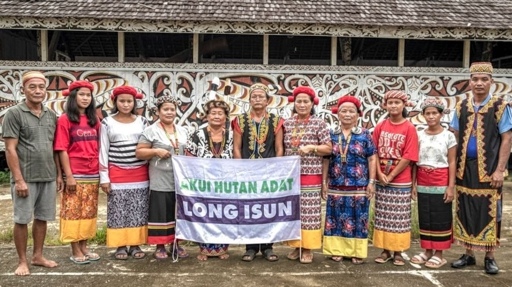
In the upper reaches of the Mahakam River, inside one of the last intact rainforest corridors of Borneo, the Dayak Bahau community of Long Isun has been fighting a long, layered battle for justice. Their history on the land predates the Indonesian state, yet on official maps their existence is reduced to an administrative code printed on a sheet of paper, with no record of the rivers they follow like family, the sacred groves where their elders are buried, the hills that hold ancestral stories. In the documents that decide the fate of their territory, their cosmology disappears beneath lines drawn to serve other interests. Erasure becomes technical: their land is not seen, so their rights are not acknowledged. The consequence is real. When companies arrive with permits approved in distant government offices, those papers speak louder than generations of lived governance. And now, international climate finance mechanisms have entered this same forest, treating the landscape as a source of carbon emission reductions while the people who protected it have yet to see their rights recognized. In November 2025, representatives from Long Isun filed a formal grievance against the World Bank’s Emission Reduction (ER) Program in East Kalimantan province, arguing that the project infringed upon their rights, ignored unresolved territorial conflicts, and failed to uphold a meaningful process of free, prior and informed consent (FPIC). The complaint is not a sudden reaction, but is the culmination of more than a decade of resistance, from daily patrols and adat (customary laws…This article was originally published on Mongabay
From Conservation news via This RSS Feed.