


Animal welfare advocates have hailed a ‘historic moment’ as the Norwegian chicken industry announces a total transition away from fast-growing chicken breeds by the end of 2027.
Norway raises 70 million chickens for meat every year. And it will become the first country in the world to transition to 100% higher welfare breeds. This could increase pressure on UK companies to address the widespread use of controversial breeds.
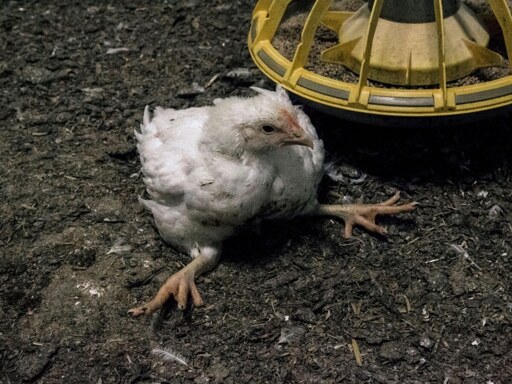
Fast-growing ‘frankenchickens’
For decades, NGOs have raised concerns about the use of so-called ‘frankenchickens’ – known in Norway as ‘turbochickens.’ Chicken companies typically use fast-growing breeds which have been selectively bred to gain weight as quickly as possible.
The birds suffer from significant and commonplace welfare problems as a result. Countless exposés show the birds struggling to walk under their own weight. Research suggests that fast-growing chickens suffer hundreds of hours of pain during their short lives.
60% of the chickens in Norway are fast-growing breeds, specifically the Ross 308. And 90% of the UK chicken industry uses the Ross 308 breed. Over the past five years the Norwegian industry has gradually adopted higher welfare breeds known as the Rustic Gold and the Hubbard JA787.
Connor Jackson is CEO of the UK branch of global animal advocacy organisation Anima International. He said:
What’s happening now in Norway is a historic moment. It’s one of the greatest improvements to animal welfare in history, and it shows that the transition away from fast-growing breeds is possible.
But it also shows just how far behind we are on this issue in the UK, where companies have barely started to address this problem.
Anima International has been campaigning in Norway for five years to see a transition away from fast-growing breeds. In the UK, where it also operates, a number of NGOs have been calling for the same transition since 2017 with the Better Chicken Commitment (BCC).
Last year, Waitrose became the first major UK company to make a full transition to higher welfare breeds in all its products as part of the BCC. M&S, a fellow signatory to the BCC, has transitioned for all fresh chicken, with a plan to transition completely by the end of this year.
However, fast-growing breeds remain the norm in Britain. Other UK retailers have chosen to focus on giving their chickens more space in efforts to address welfare concerns. While advocates recognise this as a positive step, it does not address the fast-growing genetics of the birds.
Jackson added:
UK consumers care deeply about animal welfare, and they would be shocked to see the reality of an intensive chicken farm even with more space. Better management is positive, but it only scratches the surface of the problem.
To really improve these animals’ lives, we need to follow in Norway’s footsteps with a transition to higher welfare, slower growing breeds.
Retailers, along with high street brands like KFC, Greggs and Pret, need to step up and solve the biggest welfare problem for chickens: fast-growing genetics. Nothing is stopping companies from getting together with industry and finding a solution, just like Norway has.
Featured image via Anima International
By The Canary
From Canary via This RSS Feed.