

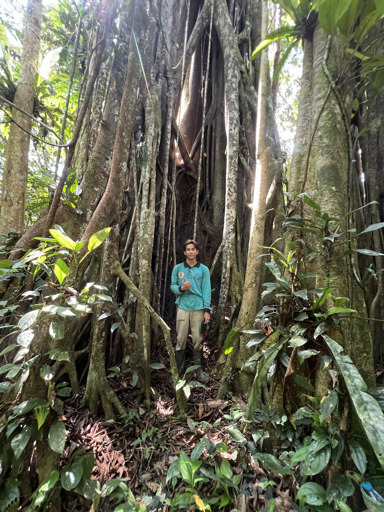
In parts of Indonesian Borneo, forests endure not because they are fenced off or regulated, but because they are feared. Among the Indigenous Iban people of Sungai Utik, large strangler fig trees are believed to house spirits that can mislead, sicken, or even kill those who disturb them. The belief is not abstract. It is anchored in stories, warnings and remembered loss, Mongabay’s Liz Kimbrough recently reported. One such story recounts a boy who vanished near a rice field, only to be found hours later by a towering fig. He said spirits had called to him and hidden him in plain sight. His family took him to a shaman. His name was changed, to sever the spirits’ hold. The tree remained. For researchers, these accounts might read as folklore. Yet new fieldwork shows that the consequences of such beliefs are visible on the land. When the Iban clear fields for farming, they leave large strangler figs standing. They also leave a buffer of forest around them, creating islands of vegetation scattered through farmland. The practice is called dipulau, a word that translates simply as “island.” These islands occupy only a small fraction of the cultivated landscape, perhaps 1 or 2%. Still, they matter. Different species of strangler figs fruit at different times of the year and draw birds, primates and wild pigs when other food is scarce. Hunters once waited beneath them. Today, wildlife still moves between forest and field along these living stepping stones. Measurements from Sungai Utik…This article was originally published on Mongabay
From Conservation news via This RSS Feed.