

This editorial by Manuel Pérez Rocha L. originally appeared in the January 26, 2026 edition of La Jornada, Mexico’s premier left wing daily newspaper. The views expressed in this article are the authors’* own and do not necessarily reflect those ofMexico Solidarity Mediaor theMexico Solidarity Project.*
Mexican social and civil organizations are striving to present alternatives to free trade within the framework of the current USMCA review. However, they are not listened to by our own government, nor are they even received. In contrast, every time Trump opens his mouth, he unsettles, insults, and confuses his friends and enemies about who they truly are. He knows he doesn’t need much trickery to create a distraction. He is the distraction. He has resorted to extreme measures. As Canadian Prime Minister Mark Carney said, “The old international order is over.”
Indeed, Trump is shaking off cumbersome rules for the American plutocracy and severing ties with every democratic multilateral institution, be it the UN or international agreements like the Paris Convention. He is, in effect, setting in motion a full-throttle neoliberalism. Meanwhile, the United States’ role and interests in the global capitalist financial system remain intact; Trump has not seriously threatened to withdraw from or dismantle the Bretton Woods system (IMF, World Bank), for example.
Although Trump is capriciously politicizing this year’s USMCA renegotiations, it’s positive that this neoliberal treaty, which is largely a repeat of NAFTA, is being questioned. Free trade agreements are indeed “free” to the extent that they grant capital freedom from obligations, regulations, and measures that interfere with its profits. For Trump, the “politicization” of the USMCA is a smokescreen to advance US corporate interests.
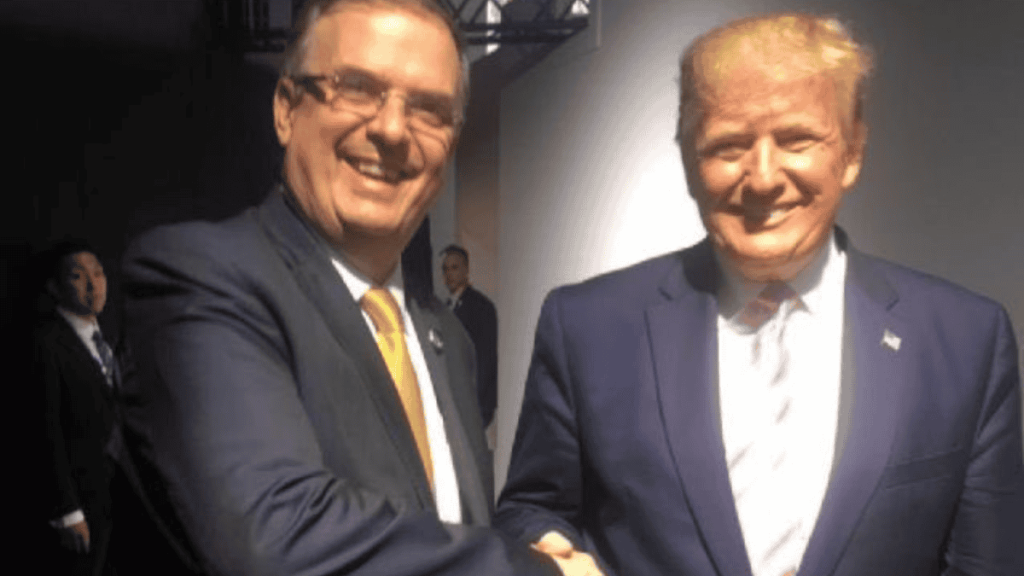
Ebrard famously remarked he wouldn’t submit to “that woman,” but that President?
Just last Friday, the bipartisan Defense of American Property Abroad Act was approved by the Congressional Transportation and Infrastructure Committee. This law, according to its co-sponsor, Texas Republican Representative August Pfluger, “sends a clear message: The United States will defend its companies and hold accountable countries that violate trade agreements or undermine property rights”. Pfluger cites, as the sole precedent, that supposedly “in May 2022, then-Mexican President Andrés Manuel López Obrador (AMLO) abruptly shut down Vulcan Materials Company’s operations with false accusations that the company was breaching its contract, and his government subsequently launched a relentless pressure campaign against Vulcan, which included multiple lawsuits and the deployment of military and law enforcement personnel to its facilities” (own translation). Meanwhile, Vulcan’s $1.9 billion lawsuit against Mexico remains pending at the ICSID.
At the same time, the largest US corporations and mining companies are demanding that the Trump administration restore the “legal certainty” privileges of NAFTA that were eliminated in the USMCA, which limited the rights to resort to investor-state dispute settlement (ISDS) claims to existing contracts of hydrocarbon and energy companies (see Business Roundtable Comments on the Operation of USMCA and the National Mining Association comments on USMCA).
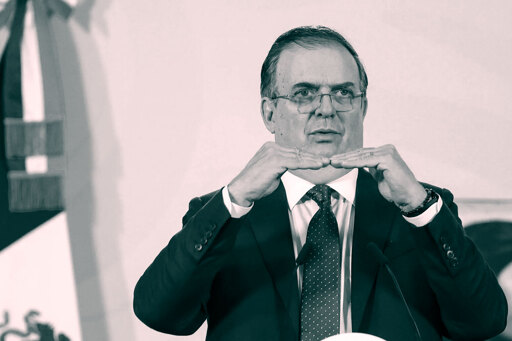
Given this enormous pressure, the recent statements by the Secretary of Economy, Marcelo Ebrard, regarding the need to expand legal certainty for foreign investors, are noteworthy. Ebrard appears to be responding to and endorsing the business sector’s concerns about the current rule of law in Mexico (in his interview in La Jornada). He has maintained that it is essential for Mexico to maintain and strengthen the dispute resolution mechanism to avoid “hasty decisions that affect different industries.” What decisions is he referring to? He says that with this system (of dispute resolution) there is “an equal, symmetrical sphere for the three countries.” What symmetry is he talking about? “That it be as agile as possible and cover more areas so that this reduces uncertainty in the operation of the treaty.” What more areas? So that Mexico continues to receive a flood of lawsuits?
An article published by this newspaper states that “Ebrard mentioned that in the coming days they will deliver to President Claudia Sheinbaum the results of the consultation conducted in Mexico in preparation for the trilateral review, and subsequently send it to the Senate.” However, unlike the business sector, social and civil organizations have been excluded from this consultation. More than one hundred civil society organizations (CSOs) and experts in different sectors and matters related to NAFTA and the trilateral relationship, gathered at the USMCA Advocacy Assembly (Sin Maíz no hay País), have expressed, in a letter dated January 21, their concern and surprise at the cancellation of meetings previously agreed upon with the Ministry of Economy, “in a context in which key definitions of the renegotiation process of the Treaty between Mexico, the United States and Canada (USMCA) are advancing,” citing Ebrard’s statements regarding expanding the dispute resolution mechanisms.
They say that “the repeated rescheduling of this dialogue space is causing concern among the organizations that make up the assembly, particularly given the lack of effective channels of communication with the Ministry of Economy, despite the impacts that the current decisions will have on workers, communities, and the fulfillment of the Mexican State’s international commitments” (see full letter). The exclusion of Mexican CSOs continues a trend that has persisted for four decades since NAFTA was negotiated.
The eagerness to attract foreign investment without conditions, requirements, or controls (that’s what a free trade agreement is), and to grant supranational legal rights, is to further undermine our sovereignty. I echo the letter from the USMCA Advocacy Assembly, which “reiterates its willingness to engage in constructive dialogue and contribute proactively to an inclusive, transparent, and people-centered renegotiation process.” Is that too much to ask?
-
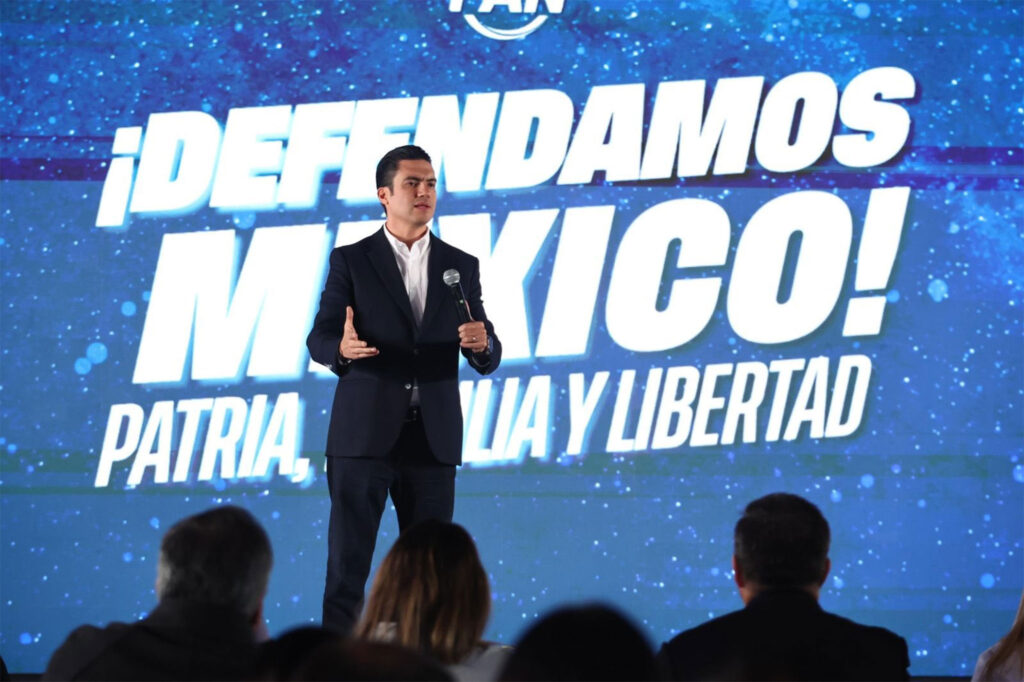
PAN’s Desolate “Mass” Membership Drive
January 26, 2026January 26, 2026
It began in October with an arena event where Maximiliano Cortázar fell into a pool. Three months and only 3,500 new members later, the ultra-right party is still floundering in the deep end.
-
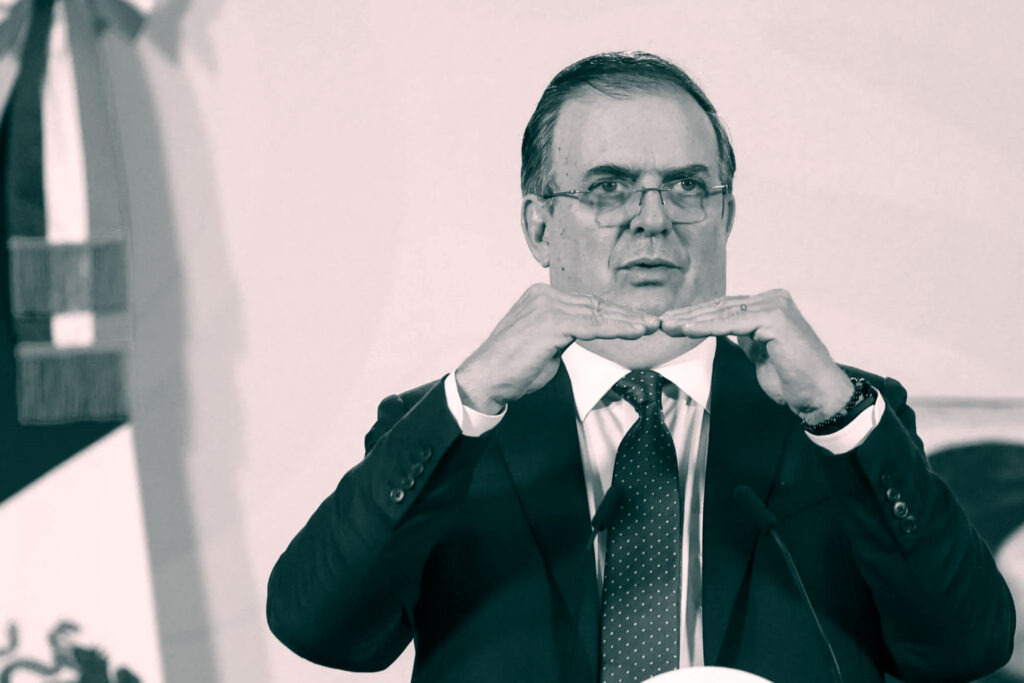
USMCA Review Needs to Include More Than Just Corporate Interests
January 26, 2026January 26, 2026
Mexico’s Economy Secretary Ebrard has cancelled social organization consultations and adopted a rhetoric of supplication towards corporate interests in advance of the USMCA review.
-

Salinas Pliego Did Not Pay Tax Debt, Still Negotiating
January 24, 2026January 24, 2026
A five-day grace period which would allow the ultra-right winger a 39% discount on his nearly $3 billion USD tax debt has passed.
The post USMCA Review Needs to Include More Than Just Corporate Interests appeared first on Mexico Solidarity Media.
From Mexico Solidarity Media via This RSS Feed.