

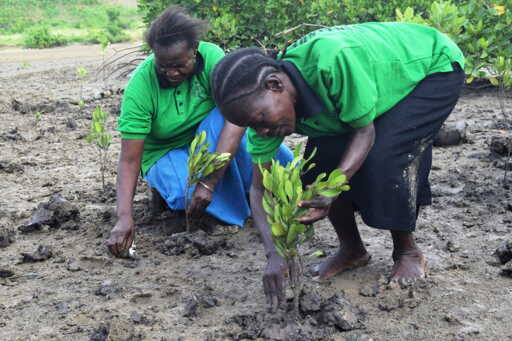
In 2022, when William Ruto was elected president of Kenya, he pledged that his government would plant 15 billion trees by 2032. Many observers saw it as a bold and ambitious promise — one that would require coordinated planning, reliable monitoring, sustained financing, and long-term stewardship on a massive scale. According to estimates from the Ministry of Environment, Climate Change and Forestry, about 1.5 billion trees have been planted so far. In a recent interview with Mongabay’s David Akana in Nairobi, Kenya’s environment minister, Deborah Barasa, said the country can still meet the 15 billion target. But recent media reporting on the tree-planting campaign has highlighted significant hurdles, including funding gaps, labor and seedling shortages, persistent drought conditions, and other challenges. Some conservation scientists point out that planting trees is not a cure-all and that without stronger monitoring systems and clearer accountability, the initiative risks becoming more about counting seedlings than restoring ecosystems. Barasa acknowledged the scale of the task, but argued that strong political backing at the highest levels of government, combined with genuine community ownership, can turn the pledge into lasting gains. Barasa made these remarks during a commemoration ceremony to honor the legacy of Wangari Maathai, the Kenyan environmentalist whose work with communities helped reshape environmental stewardship in the country and earned her a Nobel Peace Prize. On Dec. 10, 2025, government officials joined representatives of the United Nations Environment Programme and the World Resources Institute Africa to celebrate Maathai’s legacy. In recent decades, a move toward…This article was originally published on Mongabay
From Conservation news via This RSS Feed.