

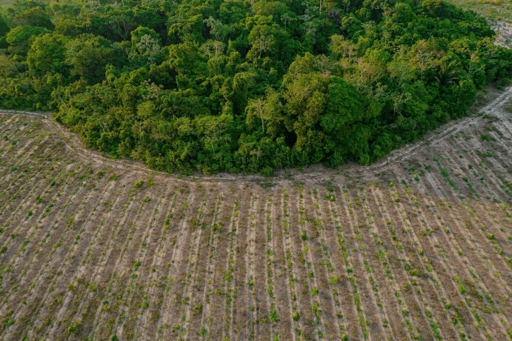
In Eunápolis, in the southern Brazilian state of Bahia, the clearing of Atlantic Forest for agriculture started centuries ago, leaving a patchwork of cattle pastures, monocultures and degraded land. Between 11% and 25% of Brazil’s native vegetation is in a process of degradation related to deforestation, while 22% of its pasture is severely degraded. To reverse this, efforts are underway across the country to recover ecosystems and their services, a vital help in climate change mitigation. Since 2022, about 30 kilometers (19 miles) away from the city of Eunápolis, restoration efforts have been ongoing on the Ouro Verde farm to bring back Atlantic Forest species on hundreds of hectares of unproductive cattle pasture. Currently, 344 hectares (850 acres) of forest have been restored. “In two years, you’ve gone from degraded pasture, extremely damaged, sandy soil, to a forest with more than 60 species, trees more than 4 meters [13 feet] high. It looks like a forest,” said Miguel Moraes, director of projects at re.green, the Brazilian company behind the Ouro Verde project. Founded in 2021, re.green aims to restore 1 million hectares (2.5 million acres) of tropical forests across the Amazon and Atlantic Forest, while selling carbon credits and generating benefits beyond carbon capture. “We’d like to be a leader showing that there are different models of monetizing forests and natural ecosystems that don’t just generate benefits for the climate, but also for people and biodiversity,” Moraes told Mongabay in a video interview. Restored forest at re.green’s Ouro Verde project…This article was originally published on Mongabay
From Conservation news via This RSS Feed.
Hasn’t this been proven not to work?