

Three weeks later, the ramifications of the unprecedented US attack on Venezuela continue to reverberate. The military action in itself provoked nearly unanimous condemnation among experts in international diplomacy and law and has been also been a tremendous source of pain for the families of the more than 100 people killed in the nearly two-hour operation on South American territory.
The illegal operation also sparked concerns about the consequences that such a unilateral measure taken by Washington will have on the region and on global geopolitics.
After the attack, several journalists asked Donald Trump directly if the next target would be Cuba, which his administration has been targeting by exacerbating the economic blockade and seizing Venezuelan tankers bound for the island. They repeated threats made by his own Secretary of State, Marco Rubio, a declared opponent of the revolutionary government.
Trump’s ambiguous response to reporters sparked much speculation, until the US president himself wrote on Truth Social: “Cuba lived, for many years, on large amounts of oil and money from Venezuela. In return, Cuba provided “Security Services” for the last two Venezuelan dictators, BUT NOT ANYMORE! Most of those Cubans are DEAD from last week’s U.S.A. attack, and Venezuela doesn’t need protection anymore from the thugs and extortionists who held them hostage for so many years. Venezuela now has the United States of America, the most powerful military in the World (by far!), to protect them, and protect them we will. THERE WILL BE NO MORE OIL OR MONEY GOING TO CUBA – ZERO! I strongly suggest they make a deal, BEFORE IT IS TOO LATE.”
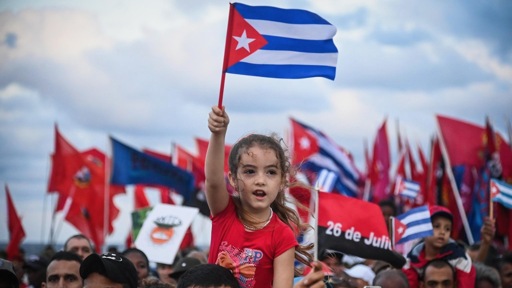
Despite threats, a massive march of nearly 500,000 people paraded through the streets of Havana to honor the 32 Cuban combatants who were killed in Venezuela. During the march, the country’s top leaders promised that they would not surrender in the face of renewed imperialist aggression.
Abel Prieto, Cuban writer and the president of Casa de las Américas, and Dr. José R. Cabañas, the director of the Center for International Policy Research and former Cuban ambassador to the United States, spoke to Peoples Dispatch to share their perspectives on the threats lodged by Trump and how the attack on Venezuela has transformed the region.
Regarding the regional impact of the US military action that resulted, among other things, in the capture of Venezuelan President Nicolás Maduro and his wife Cilia Flores, Abel Prieto asserts that this is an act of extreme right-wing aggression that broke the most basic rules of international law and opens a new and dark chapter in the history of the Americas.
“What the Trump administration did in Venezuela was an act of fascist barbarism, completely illegal, against all norms of civilized coexistence between nations,” he said. “It represents the beginning of a sinister era where, as Ivan Karamazov said, ‘everything is permitted’ for the most powerful. It has been a blow to the Venezuelan people, to the Cuban people, and to all Latin American peoples.”
“However,” Prieto says, the attack has also turned the tide among the progressive movement, “I believe it has strengthened anti-imperialism and anti-fascism in all decent people, whether they are on the left or not. The Yankee Empire is in irreversible decline, and this makes it more violent and rabid.”
Dr. José R. Cabañas, for his part, affirms that the United States’ act of ignoring and destroying international law reveals a geopolitical purpose that cannot be hidden: “The full application of the Monroe Doctrine attempts to dominate the region’s natural resources, prevent countries such as Russia or China, but also the European Union as a whole, from developing preferential economic ties with Latin American and Caribbean nations. The actions of January 3 against Caracas and other subsequent actions have caused fear among certain political forces in the region, but at the same time have reinforced the independent national agenda of several governments that have demanded that the US develop bilateral relations based on greater equality and respect.”
An emboldened empire will be met with steadfast resistance
Regarding the growing danger facing Cuba following Washington’s more aggressive stance, Prieto states: “This supposed ‘victory’ [in Venezuela] has emboldened [the United States]. That is why there are threats against Cuba.”
We feel a mixture of pain and pride [for the 32 Cuban combatants killed on January 3]. Pain, obviously, because 32 Cuban families have been brutally torn apart. Pride, because we know that they faced an enemy that was vastly superior in numbers and military technology, and that they fell with courage and honor, doing their duty. They are our heroes, and they will inspire us in the face of any new aggression.”
Dr. Cabañas agrees that the killing of the 32 Cuban soldiers in combat is already an act of aggression against Cuba: “At the moment, the most significant impact on Cuba has been the loss of our 32 heroes who fell defending the same ideals as our internationalists in Africa, Grenada, or other regions of the world. The imperial forces do not understand the ties between Venezuela and Cuba, which long predate the revolutionary processes of both nations. Their roots go back to the independence movements against the European colonial powers.”
In this regard, Prieto added that the defense of the Cuban Revolution will be carried out to the bitter end: “I don’t know how far these fascists, full of hatred and lacking in morals, will go to hurt Cuba. Our people are not afraid. They will defend their Revolution in the worst circumstances, without ever giving up.”
A long history of aggression and resistance
Perhaps that is why Cuba is the country that has known the most in the history of the entire continent about US hostility and boycotts against a sovereign government. Dr. Cabañas recalls: “Over the last 67 years, the United States has used every weapon possible to destroy the Cuban Revolution. In the 1960s, there were more than 100 CIA-armed gangs in the country that caused hundreds of deaths among the civilian population; there were several terrorist actions, from the invasion of Playa Girón to the persecution of Cuban ships on the high seas.”
The former diplomat recalled that this year marks the 50th anniversary of one of the worst CIA-backed terrorist attacks against Cuba “which claimed dozens of civilian victims. In the 1970s, strains of animal and human diseases were introduced into the country, causing great losses.”
He also recalled that the economic and commercial blockade is a US strategy of attrition that the Cuban people know better than anyone: “The blockade against Cuba was originally established in 1962, but it was updated in legislative bodies that were approved in 1992 and 1996. Not to mention the barrage of negative information against the country, trying to isolate it from the rest of the international community and cause frustration among the local population.”
In this regard, Dr. Cabañas recalls that for six decades, despite facing diverse and persistent attacks, the Cuban Revolution has creatively resisted and continued building a society that centers people’s needs and defies US interests for the region. “They have tried to use all means to destroy us and have failed in their essential purpose. Cuba faced the COVID-19 pandemic with its own resources and had five times fewer victims than the United States, which supposedly had all the resources to prevent thousands of deaths.”
Now, Dr. Cabañas says, Cuba faces the effects of an even stronger economic, commercial, and financial blockade, “But even under these circumstances, Cuba repeats the same question: how would the country progress if it were not the victim of that hostile policy, which is much older and much more complex than the recent events we are referring to now?”
Perhaps that is why Cuba has also been the country that has most vigorously rejected US intervention in Venezuela, not only through diplomatic communiqués, but also through the mobilization of masses who rejected an aggression that seems to loom as a possibility on its borders. Dr. Cabañas states: “Havana was perhaps the capital that, in a matter of hours, mobilized its population for a mass demonstration condemning the crimes committed against Venezuela. These demonstrations have spread throughout the country… Our government has repeatedly expressed Cuba’s historic position both in terms of solidarity with our Latin American and Caribbean brothers and sisters, and in terms of the respectful and equal relationship that the United States is obliged to have with its neighbors and with the international community as a whole.”
The post “The Yankee Empire is in irreversible decline”: Cubans respond to Trump’s threats appeared first on Peoples Dispatch.
From Peoples Dispatch via This RSS Feed.