

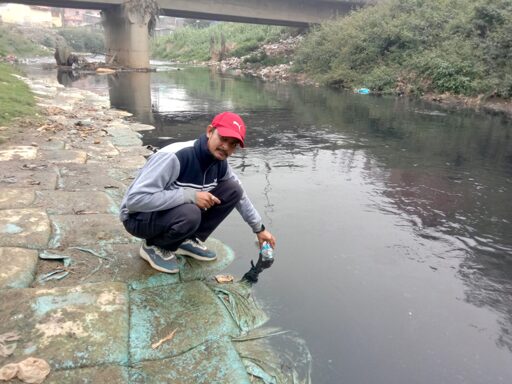
BIRGUNJ, Nepal — When 38-year-old Pradeep Kumar Bishwokarma was growing up in Ramgadhawa, a neighborhood in southern Nepal’s industrial town of Birgunj, he would jump into the Sirsiya River to beat the summer heat as his mother washed clothes and residents drew drinking water from it. Today, Bishwokarma and his fellow residents of the border town cover their noses with a handkerchief whenever they pass by the river that was once their village’s lifeline. The flowing liquid no longer resembles a river. It is thick and black as if a truckload of oil had been dumped into it. The air around the river feels heavy with the stench of sulfur and rotting organic matter. “This is no longer a river,” Bishwokarma said, pointing toward it. “It has become an open drain for factories, and we haven’t just lost a river, we’ve lost our self-respect,” he added. The river, which was once a crucial part of daily life, religion and agriculture in Bara and Parsa districts, is one of the 6,000-odd rivers and rivulets flowing into India from Nepal. It begins its journey from the Ramban Jhadi( forest) of Bara district farther north and passes through Nepal’s largest industrial zone, the Bara-Parsa corridor. Today, ineffective environmental regulation and poor coordination among government agencies have allowed factories to dump untreated industrial waste and sewage into the river. Even after decades of protests, multiple court cases and government committees and unimplemented wastewater treatment plans, the river remains a public health hazard, damaging local…This article was originally published on Mongabay
From Conservation news via This RSS Feed.