

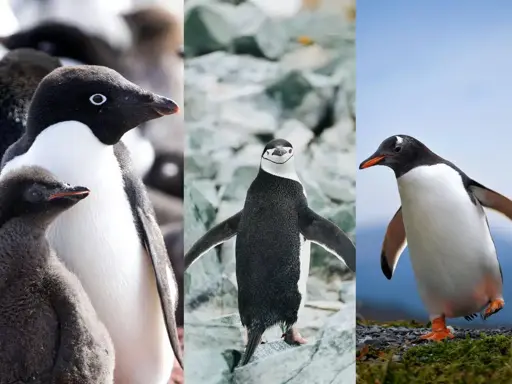

Antarctic penguins have drastically changed their breeding patterns because of the climate crisis, which is now threatening the species’ survival.
A ten-year study by Penguin Watch at the University of Oxford and Oxford Brookes University revealed that the breeding seasons of three species — Adélie, Gentoo, and Chinstrap have moved forward by more than three weeks.
This is important because their breeding periods are based on when food is most accessible. This means penguins could start breeding before prey is available. It could mean penguin chicks do not have enough food for their first few weeks of life, which can be fatal.
According to Dr Ignacio Juarez Martínez, the report’s lead author, the penguins are now breeding earlier than ever before.
Scientists gathered evidence from 37 colonies in Antarctica and sub-Antarctic islands, using 77 time-lapse cameras. Each time a camera took a photo, it also recorded the air temperature.
According to the temperature loggers, penguin colonies are warming by 0.3º per year. This is four times faster than the continental average of 0.07º per year. Already, Antarctica is the second-fastest-warming region in the world.
A worrying record
The biggest and most worrying change was among Gentoo Penguins. Their breeding season has changed by an average of 13 days over the last ten years. However, some colonies’ breeding season has shifted by a massive 24 days. According to the study:
our data indicate Gentoos have undergone the fastest phenological shift on record for all bird species while Adélies and Chinstraps are respectively fourth and fifth. Relative to all vertebrates, these species would be first, fifth and sixth, respectively.
Adélie and chinstrap penguins also pushed their breeding forward by an average of 10 days.
Scientists have used statistical models that suggest temperature changes are the main reason for breeding-season shifts. However, it is not clear whether it is an adaptive response to temperature changes or whether the temperature is causing a lack of prey.
One of the most worrying factors is that Gentoo Penguins are among the most adaptable to the warming Antarctic temperatures, thanks to the variety of their diet. Other species, such as Chinstrap and Gentoo, rely on arctic krill, which are much more susceptible to the climate crisis.
Perpetual decline
Scientists are warning that the loss of penguin biodiversity will have a devastating knock-on effect. Penguins bring nutrients from deep water to the surface, which algae need to complete photosynthesis.
This means there is a risk of broader ecosystem collapse if penguin numbers continue to decline.
All three species at risk are listed as least concern on the IUCN Red List, meaning their numbers are widespread and abundant.
The climate crisis is only set to intensify without fast, widespread preventive measures — meaning we are likely to see all species of Antarctic penguin decline in the not-so-distant future.
If the loss of such a beautiful and well-loved bird doesn’t make people realise the time to panic is well and truly here, then I’m honestly not sure anything will.
Feature image via Unsplash/ Dylan Shaw, TC Photography & William Warby
By HG
From Canary via This RSS Feed.