

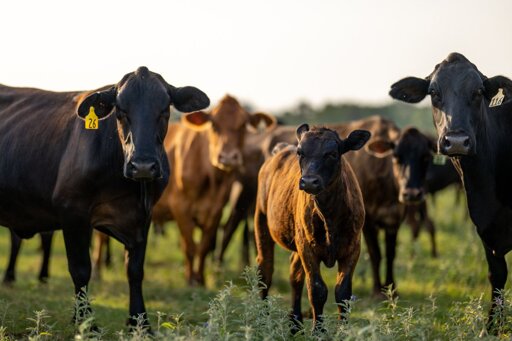
A little over a decade ago, in 2015, farmers in the U.S. purchased more than 10,000 tons of “medically important” antibiotics—the same drugs used for people in hospitals and doctors’ offices—for their chickens, pigs, and cattle. They used these drugs to prevent diseases and treat infections, and to make their animals to grow faster.
But growing concern over antibiotic resistance and agriculture’s role in driving the threat led to a groundswell of public opposition to overuse of the drugs, which brought about a determined decrease in use by food companies and an important change in federal regulations.
By 2017, the volume of medically important antibiotics sold for farm animals was nearly cut in half, where it remained fairly steady year after year. In December 2025, however, when the FDA released its annual report, things had changed: In 2024, the volume climbed 16 percent.
“It’s the biggest increase we’ve ever seen,” said Steve Roach, director of the Safe and Healthy Food Program at Food Animal Concerns Trust (FACT), who has been tracking the issue for decades. “I was really surprised.”
“There are so many bad things going on in the world, and I’m worried that people have just quit paying attention to this problem.”
Sales were up for cattle, pigs, and poultry, even when adjusted for the number and weight of animals raised, meaning the reason was not simply more animals.
Industry groups and the U.S. Food and Drug Administration (FDA) say that the data does not provide information on drug use, only sales. Even so, a surge across industries is significant, Roach said. He believes it could mean that companies are backtracking on efforts to improve antibiotic stewardship, even though antibiotic resistance remains as a pressing public health threat.
According to the Centers for Disease Control (CDC), Americans contract about 2.8 million antibiotic-resistant infections each year. More than 35,000 people die from those infections. The development of new drugs, meanwhile, is not keeping pace.
“There are so many bad things going on in the world,” Roach said, “and I’m worried that people have just quit paying attention to this problem.”

(Source: FDA)
The Trump Administration’s Approach
The jump in sales comes at a fraught time at the Department of Health and Human Services (HHS), which oversees antibiotic use in the country through the FDA (which regulates antibiotic approvals, use, and distribution) and the CDC (which tracks and manages antibiotic resistance as a public health threat).
Major cuts at federal agencies under the Trump administration could impact that work. The FDA’s Center for Veterinary Medicine, for example, lost about 23 percent of its staff last year. Since President Donald Trump’s inauguration, FDA officials have said little publicly about their approach to regulating the use of antibiotics in animal agriculture.
An HHS spokesperson told Civil Eats in an email that the FDA “continues to evaluate the findings from this report, along with other information, as part of implementation of its 5-year plan for supporting antimicrobial stewardship in veterinary settings.” The plan “supports the FDA’s ongoing efforts to slow the development of antimicrobial resistance by fostering the judicious use of medically important antimicrobial drugs in animals,” they said.
“FDA continues to evaluate the findings from this report, along with other information, as part of implementation of its 5-year plan for supporting antimicrobial stewardship in veterinary settings.”
Under past administrations, Roach said, federal health officials have always responded to FACT’s letters requesting policy actions or meetings to discuss their concerns. Similar requests sent to the current administration have been ignored. The HHS spokesperson did not respond to a question about the letters.
In early January, a coalition of 41 public-health groups planned to resend a separate request they had sent in June to HHS Secretary Robert F. Kennedy Jr. which they say also went unanswered. Their letter requests that the President’s Advisory Council on Combating Antibiotic Resistant Bacteria (PACCARB) meet as soon as possible. The council includes public health, veterinary science, and agricultural industry experts and is tasked with advising the HHS on antibiotic resistance policy. It met two to four times a year between 2016 and 2024.
After Trump took office, a meeting scheduled for the end of January 2025 was canceled, and the council hasn’t met since. That meeting was supposed to be dedicated to developing a five-year National Action Plan for Combating Antibiotic Resistant Bacteria, to follow the 2020–2025 plan. Now, no plan exists. The chair and vice chair of the council did not respond to emails from Civil Eats, and the HHS spokesperson did not answer a question about PACCARB.
In October, HHS fired 55 employees in the office that oversees PACCARB. If Kennedy’s plan to reorganize HHS proceeds, that office will be absorbed into the newly created Administration for a Healthy America. The CDC lost 3,000 workers last year, including employees who work on antibiotic resistance.

(Source: FDA)
Why Sales of Antibiotics Are Up
In interviews with Civil Eats, multiple experts said it’s impossible to know whether to set off alarm bells about public health without more details on how and why the drugs are being used.
“We would need a better understanding of what went into the change,” said Amalia Corby, director of federal affairs at the American Society for Microbiology (ASM).
In the email from HHS, the spokesperson acknowledged the increase was a departure from generally stable annual sales and said fluctuations could be due to “changing animal health needs, changes in animal populations, and changes in animal production practices.”
In cattle and pork, which account for more than 80 percent of the volume of antibiotics sold, there’s no clear explanation for the uptick. A spokesperson for the Meat Institute, which represents the country’s biggest meat companies, referred Civil Eats to the “producer associations.”
The National Cattlemen’s Beef Association, which represents the feedlot operators that administer most antibiotics in cattle, did not respond to questions about the increase.
A spokesperson for the National Pork Producers Council said in an emailed statement that the industry is committed to “safe and responsible use of antibiotics and other medications.” “There is no one single factor that is driving the increase in antibiotic sales in the pork industry, as the FDA points out in its report,” the spokesperson said.
The FDA does not track how, where, or when the drugs are used, but data that does exist shows important drugs are routinely added to feed and water for disease prevention.
Meanwhile, a 2024 U.S. Department of Agriculture (USDA) study on pig farms showed a significant proportion reported using the drugs for growth promotion, even though that practice is illegal.

Broiler chickens feeding in an indoor barn. (Photo credit: davit85/Getty Images)
There is more data on the poultry industry, which has been on a different trajectory.
For about a decade, Randy Singer, a professor in the Department of Veterinary and Biomedical Sciences at the University of Minnesota, has been working with chicken and turkey companies to collect detailed information on the medically important drugs used at their farms.
Each year, he compiles data on which drugs were used, for how long, and why. (He works closely with the industry and that work is partially funded by the poultry companies.) Singer’s data covers close to 90 percent of U.S. chickens raised for meat, also called broilers.
According to Singer’s data, chicken companies have drastically reduced their use of important antibiotics over time. For example, the data shows that in 2013, more than three-quarters of broiler chicks received injections of gentamicin, an important drug used to treat severe infections in humans, before hatching. By 2024, that number was close to zero.
“That is a huge change,” Singer said, “because of the amount of work the industry had to put in to fix whatever that gentamicin may have been hiding—things like really working on your hatchery and ensuring that the chicks are hatched in as healthy as a state as possible.”
In recent years, some companies have backtracked on their “no antibiotics ever” commitments, but many have done that in order to use a class of drugs called ionophores that are not used in humans. Some advocates have concerns about emerging research showing ionophore overuse could lead to the spread of resistant bacteria that also carries resistance to drugs humans do need, but overall, experts agree that their use is not a significant contributor to driving resistant infections.
Singer’s data aligns with FDA report trends, in that it shows significant increases in chicken companies using three classes of medically important antibiotics in 2023 and 2024. Most of the increases, he said, are attributable to a surge in a disease called avian metapneumovirus, which often causes chickens to contract secondary bacterial infections.
However, while the trend mirrors the FDA’s, Singer’s estimates on the volume of those drugs used in chickens are significantly lower. For example, the FDA’s sales data shows more than 200,000 kilograms of tetracyclines sold for use in chicken, while Singer reports just under 7,000 kilograms used. “This does not match at all with the amounts that were reported in the sales report,” he said.
His theory is that the FDA numbers for individual animal groups are not accurate, because for drugs used in multiple animal groups, the companies that report them to the FDA sell the products to meat companies and don’t really know how much they’re using for pigs versus chickens or chickens versus turkeys.
In 2012, before the FDA began requiring companies to report the sales data by species, the trade group that represents animal drug manufacturers submitted comments to the agency. In those comments, the Animal Health Institute (AHI) said that separating the drug sales would be a “highly imprecise exercise” that would “likely increase the probability of false assumptions and conclusions.”
“[Companies] can neither provide such additional sales estimate breakouts nor distribution data, nor assure the accuracy, even if the Agency makes it a requirement,” they wrote.
The AHI did not respond to questions about what happened after the requirement was put into place and how those numbers are currently reported. Singer is currently working on a research analysis on the topic.

(Source: FDA)
Is There a Public Health Threat?
Even if the allocations to different animal groups aren’t entirely accurate, the 16 percent jump in sales remains. That means farms are using more of the drugs, and that contributes to the development of resistant bacteria in animals over time.
The drug-resistant bacteria can then spread into the environment when animal waste is applied as fertilizer, eventually infecting humans. The bacteria can also contaminate the meat itself and infect humans at mealtimes.
By volume, the FDA data shows the vast majority of the medically important drugs being used in animals are tetracyclines.
In a study published in October 2025, researcher Lance Price and his co-authors showed that in one population in California, E. coli strains that came from animals caused 18 percent of urinary tract infections. Many of those strains were resistant to tetracycline.
“People are getting these infections from the food supply, and they are often resistant to tetracycline,” said Price, the founding director of the Antibiotic Resistance Action Center at George Washington University, “but we don’t use tetracycline to treat UTIs anymore because they don’t work.”
Extended tetracycline overuse has already led to significant resistance, in other words, causing doctors to move away from using the drugs.
“We have this sort of collective faith in technology to rescue us because it has before. But If you really look at the pipeline, it’s not as [likely] as it used to be.”
Resistance may even be showing up in animal agriculture, Singer said, based on the chicken industry’s use of the drugs to treat infections caused by avian metapneumovirus. “What they were finding is that some of the vets felt that the antibiotic tetracycline was ineffective, and we know that there’s a lot of resistance out there to tetracyclines,” he said.
That could lead to farms and feedlots shifting to other drugs in the future, and there aren’t that many left for human use that bacteria haven’t yet developed resistance to. That’s what worries Price.
“We have this sort of collective faith in technology to rescue us because it has before,” Price said. “But if you really look at the pipeline, it’s not as [likely] as it used to be.”
It’s a complicated problem that spans public health and agriculture, said Corby at ASM, the kind that the president’s council on antibiotic resistance is meant to tackle.
“This is why we need PACCARB,” she said, to bring together experts on infectious disease, animal agriculture, and microbiology. “They all need to be sitting together talking about, ‘Is this a real problem? How much is tetracycline really being used?’ [and] getting a sense of what the reality is so that they can build consensus.”
Policy Fixes
Corby is also concerned about the impact of the Trump administration pulling out of the World Health Organization (WHO).
“One of the things that we say is that microbes know no borders, and obviously, that’s especially true for infectious disease and the anti-antimicrobial resistance that accompanies it,” she said.
The WHO has long recognized antibiotic resistance as a top global public health threat and made curbing it a priority. Now, the U.S. has no seat at the table as those efforts continue.
Aside from restarting PACCARB and re-engaging in the WHO, Roach and Price both want the FDA to collect better data on how the drugs are being used, especially in cattle and pigs. That way, if future FDA reports show increases in drug sales, the reasons won’t be a mystery.
“If we understand why,” he said, “then you can start to say, ‘Oh wow, there seems to be a problem with X or Y. We’re seeing a lot of antibiotic use for this respiratory infection. Maybe we need to send extension agents out to help deal with respiratory tract infections.’”
The FDA could also close what critics call the “routine prevention loophole.” Proponents of industrial agriculture’s approach often argue that giving antibiotics routinely for prevention reduces the amount needed later for treatment.
But since the same drugs, like tetracyclines, can also make animals grow faster, advocates have long said feedlots and farms are likely using the drugs for growth promotion while calling it prevention. Mass use of drugs in feed and water, they believe, should be restricted to treatment.
That’s a change they’ve been pushing for throughout several Republican and Democratic administrations, and given the Trump administration’s silence on the issue so far, they aren’t optimistic.
“It’s not like under previous administrations we were making good progress on antibiotic resistance,” Roach adds. “It’s been almost 10 years since FDA has taken any significant steps.”
The post Sales of Antibiotics for Farm Animals Spiked in 2024 appeared first on Civil Eats.
From Civil Eats via This RSS Feed.