

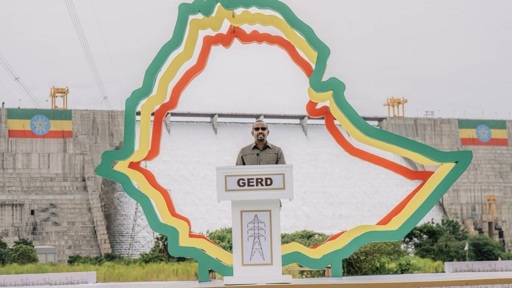
Since the launch of the Grand Ethiopian Renaissance Dam (GERD) last year, a USD 5 billion mega-project and Africa’s largest hydroelectric development, tensions between Ethiopia, Egypt, and Sudan have steadily escalated. The dispute has drawn renewed attention from the US, with President Donald Trump indicating he will intervene. Egypt has welcomed potential US involvement.
The GERD has long been a source of contention. Egypt and Sudan argue that the dam violates principles of international water law, particularly the obligation not to cause significant harm to downstream states. Ethiopia, however, maintains that the project is a sovereign development initiative that will not harm downstream countries.
Trump’s mediation offer
In a letter dated January 16, 2026, sent to Egyptian President Abdel Fattah el-Sisi, Trump offered to restart US-led mediation between Egypt and Ethiopia on Nile water-sharing. He wrote:
“I am ready to restart US mediation between Egypt and Ethiopia to responsibly resolve the question of ‘The Nile Water Sharing’ once and for all. My team and I understand the deep significance of the Nile River to Egypt and its people, and I want to help you achieve an outcome that assures the water needs of Egypt, Sudan, and Ethiopia long into the future. The United States affirms that no state in this region should unilaterally control the precious resources of the Nile and disadvantage its neighbors in the process.”
President El-Sisi responded and publicly welcomed Trump’s letter, reiterating that the Nile remains the “lifeline of the Egyptian people.” Egypt confirmed its willingness to cooperate with Nile Basin countries under international law, emphasizing equitable use and the avoidance of harm. El-Sisi also sent a formal reply to Trump, reaffirming Egypt’s water security concerns while expressing support for renewed mediation efforts.
Egypt’s regional manoeuvring
Egypt has also moved to strengthen its strategic posture in the Red Sea and Horn of Africa region. In late 2025, Cairo signed agreements with Eritrea and Djibouti to upgrade the ports of Assab and Doraleh, increasing their capacity for warships and limited military deployment. Analysts interpret these moves as part of Egypt’s strategy to pressure Ethiopia on the stalled GERD negotiations, despite previous mediation efforts led by the African Union and other international actors.
As of now, Ethiopia has not issued an official public response to Trump’s letter or the renewed US mediation offer. However, based on previous statements, Addis Ababa’s position remains firm: the GERD is a sovereign development project, Ethiopia has the right to utilize the Blue Nile for power generation, and the dam will not cause significant harm to downstream countries if managed properly.
With renewed US engagement, seen by some as favoring Egypt, the future of GERD negotiations remains uncertain. Key disagreements persist over binding agreements, dam operations during droughts, and enforcement mechanisms. As Ethiopia continues with the GERD and Egypt intensifies diplomatic and strategic pressure, the dispute is becoming one of the consequential and potentially volatile trans-boundary water conflicts in the continent.
The post US re-engages in GERD dispute as tensions between Ethiopia and Egypt escalate appeared first on Peoples Dispatch.
From Peoples Dispatch via This RSS Feed.