

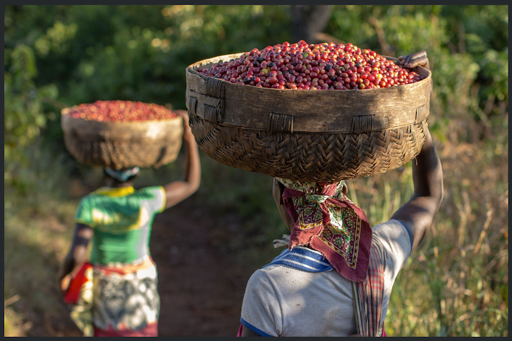
Roughly half the world’s arabica coffee-growing regions will become unsuitable for cultivation of the crop by 2050 due to the effects of climate change. The consequences of a shrinking coffee harvest extend far beyond a daily caffeine fix, but experts say solutions do exist. One promising approach is agroforestry. The nonprofit Coffee Watch has now created an e-library of all the research ever conducted on coffee agroforestry to help producers grow the finicky plant amid the changing climate. Coffee is “a very sensitive little plant,” Etelle Higonnet, founder and director of Coffee Watch, told Mongabay in a video call. “It doesn’t like cold, but it doesn’t like hot. It doesn’t like dry, but it doesn’t like wet.” It only grows well in mountainous areas in the tropics. Coffee agroforestry seeks to mimic natural ecosystems by growing coffee alongside other trees and bushes, creating a moderated microclimate that meets the “Goldilocks” balance of temperature and rainfall, mitigating the impacts of climate change. The approach can also support soil health and biodiversity, and produce better coffee. Companion plants grown with coffee can include fruit trees or other cash crops that provide additional income and food for coffee growers. Coffee agroforestry is potentially a win-win, Higonnet said, but only if producers know how to do it. That’s where the Coffee Watch e-library comes in. “Anything that’s ever been written about agroforestry coffee is in this library. That way, companies don’t have to do a million stupid pilot projects and reinvent the wheel for 20…This article was originally published on Mongabay
From Conservation news via This RSS Feed.
