

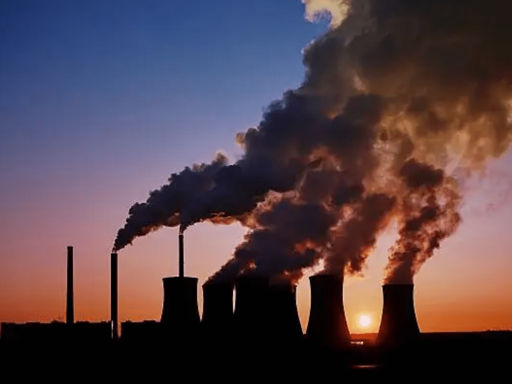

Coal-fired power generation in China and India — the world’s top coal consumers — declined for the first time in over 50 years.
Simultaneously, clean energy production in both countries set new records, as reported by Carbon Brief.
Lauri Myllyvirta, a lead analyst at Carbon Brief, highlighted that:
China’s recent clean-energy generation growth, if sustained, is already sufficient to secure a peak in coal power. Similarly, India’s clean-energy targets, if they are met, will enable a peak in coal before 2030, even if electricity demand growth accelerates again.
The International Energy Agency projected a 0.5 global rise in coal use for 2025, but in China and India, coal use fell by 1.6% and 3%, respectively. The two nations were responsible collectively responsible for 93% of the global rise in CO2 emissions from 2015-2024.
Is this the decisive inflection point we’ve been waiting for, or a short-lived dip?
Coal is still King in the Global South
Despite coal’s declining role in power generation, in India it still accounts for around 70% of the country’s electricity, underscoring coal’s continued dominance over cleaner energy sources. Additionally, both China and India continued to expand their coal-fired power capacity, highlighting how deeply coal is entrenched in their energy infrastructure
To truly understand why coal remains so central in the Global South, context — specifically historical emission trends — is key to unlocking the bigger picture of how we got here. As is pointed out by Tricontinental Research:
Though the reliance by China, India, and other developing countries on carbon, particularly coal, has risen to a high level, their per capita emissions continue to remain far below those of the United States, whose per capita emissions are close to twice that of China’s and eight times more than India’s.
The real challenge lies in treading the fine line between meeting energy demands and ensuring long-term sustainability — in two countries with a growing population bulge.
US quits climate treaties
Right-wing voices often obsess over the coal use and emissions of the Global South, while disregarding the foundational role of historical emissions from the Global North in creating the climate crisis.
Trump in particular – peddles in clean energy disinformation. He wrongly claimed recently that China didn’t have any windmills – despite China being the global leader.
Meanwhile, the US, the largest historical contributor to climate change with over 540 billion tonnes of CO2 emitted, has announced its withdrawal from key climate treaties. This sweeping exit includes 31 UN entities, such as the UNFCCC and IPCC, as well as an additional 35 organisations, effectively ending US participation in emissions reporting, COP negotiations, and climate finance.
Myllyvirta described the move as “extraordinary steps to cede global influence,” adding that:
The U.S. is withdrawing from the UN climate convention UNFCCC, negotiated in 1992 under Bush Sr., from the Intergovernmental Panel on Climate Change (IPCC), where U.S. climate scientists have made the largest contribution of any nation, and the IRENA, among others.
And so, as the US retreats and shirks its responsibility, the Global South continues to push for cleaner energy — grappling, all the while, with the colonial legacy of coal dependency.
Featured image via the Canary/Unsplash
By Nandita Lal
From Canary via This RSS Feed.