

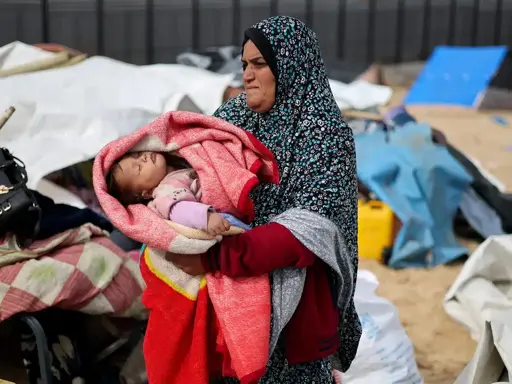

Human rights data and official figures released by the Ministry of Health in the Gaza Strip paint a very bleak picture of the impact of Israel’s war of extermination on reproductive health, in one of the most serious humanitarian consequences of the ongoing war.
The Strip has seen a sharp decline in birth rates, coupled with an unprecedented rise in abortions, premature births, birth defects, and maternal and neonatal deaths.
The collapse of childbirth in Gaza under Israel’s genocide
According to two reports prepared by Physicians for Human Rights in collaboration with the Global Human Rights Clinic at the University of Chicago Law School, and reported by the British newspaper The Guardian, the war has led to a 41% decline in birth rates in Gaza, amid a near-total collapse of reproductive health care services as a result of direct bombing of hospitals, targeting of medical personnel, and prevention of essential supplies from entering the territory.
The report described these policies as a form of ‘systematic reproductive violence’ aimed at undermining the ability of Palestinians to reproduce, in line with the definition of genocide in international law.
According to data documented between January and June 2025, there were approximately 2,600 abortions, 220 pregnancy-related deaths, and 1,460 premature births in the Gaza Strip, in addition to more than 1,700 low birth weight babies. Approximately 2,500 infants required intensive care in incubators, most of which were rendered inoperable due to destruction and fuel shortages.
Since the war began in October 2023, giving birth in Gaza has become a daily risk, given the lack of basic medical services, power cuts, and shortages of medicines and vital supplies.
Health system under direct attack
The health system in Gaza has been extensively destroyed, including the bombing of hospitals, the targeting of ambulances, the killing and injury of medical staff, or forcing them to work in extreme conditions, in addition to the blockade and the prevention of fuel and medical supplies from entering, which has led to the almost complete paralysis of maternal and child health services.
UN Women estimated that more than 6,000 mothers were killed during the first six months of the war, at a rate of two women per hour, while some 150,000 pregnant and breastfeeding women were displaced, and hundreds of women had limbs amputated as a result of their injuries.
Last July, the World Health Organisation reported that maternal health experts had recorded a 300% increase in miscarriages since the start of the aggression.
Reports documented the targeting of the Al-Basma In Vitro Fertilisation Centre in December 2023, which led to the destruction of around 5,000 reproductive samples and the suspension of dozens of IVF procedures per month. A UN commission of inquiry considered this attack a deliberate violation of international law and a direct targeting of the right to reproduction.
Unprecedented
Zaher Al-Wahidi, director of the Information Department at the Ministry of Health in Gaza, said that in 2025 there were 48,500 births, resulting in 49,180 newborns, including 4,900 with abnormal weights and 4,000 premature births. There were also 315 cases of congenital malformations, 616 intrauterine deaths, and 5,000 abortions before the 24th week of pregnancy, in addition to the deaths of 450 children during the first week after birth.
Al-Wahidi explained that the rates of deformities and premature births rose by more than 60% compared to normal cases, attributing this to the inhalation of dust and rocket powder, malnutrition, famine, and the spread of sewage in displacement camps.
Despite the ceasefire coming into effect, reports confirm that the humanitarian situation in Gaza remains extremely fragile, with severe cold, dilapidated tents, and a continuing lack of medical care, putting pregnant women at double risk to their lives and those of their children.
Genocide extends to the womb in Gaza
According to the Guardian, a UN commission of inquiry concluded that Israel’s destruction of the reproductive health system in Gaza, resulting in deaths, forced abortions and a sharp decline in birth rates, was one of the pieces of evidence that led it to consider Israel’s actions as amounting to genocide.
During two years of war, Israel’s genocide, with US support, left more than 71,000 dead and 171,000 wounded, most of them children and women, in addition to the destruction of about 90% of the civilian infrastructure in the Gaza Strip.
Featured image via the Canary
By Alaa Shamali
From Canary via This RSS Feed.