

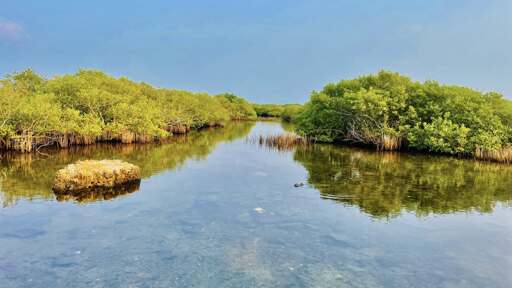
COLOMBO — Cricket is more than a sport in Sri Lanka. It is woven into the country’s postindependence identity, a unifying passion that cuts across class, ethnicity and geography. Yet in recent years, the push to expand cricket infrastructure has increasingly collided with fragile ecosystems, triggering uncomfortable questions about development priorities, environmental governance and climate resilience. The latest controversy centers around plans to build an international cricket stadium on Mandaitivu, a small island off the Jaffna Peninsula in Sri Lanka’s Northern province. Environmentalists warn that the proposal threatens a sensitive coastal ecosystem already under pressure from sea-level rise, flooding and postwar development. Mandaitivu Island has a traditional fishing community that relies on prawns and crabs for its livelihood, and the mangrove ecosystems are their breeding ground. Image courtesy of Muhunthan Balachandiran. In September, President Anura Kumara Dissanayake launched the construction, stating that the Jaffna International Cricket Stadium will not merely be a venue for cricket, but a symbol of national unity. Prasanna Rodrigo, media spokesperson for Sri Lanka Cricket, confirms a delay in commencing construction due to Cyclone Ditwah but says development work is being carried out as planned to have the project commissioned for international matches by 2027. This international cricket ground is part of Sri Lanka Cricket’s broader initiative to develop a modern sports city in Jaffna covering a total area of 56 hectares (138 acres), Rodrigo told Mongabay. Mandaitivu is a low-lying island of 7.6 square kilometers (2.9 square miles), rising only about 5 meters (16 feet) above sea…This article was originally published on Mongabay
From Conservation news via This RSS Feed.