

At Drop Site, our mission is to bring you journalism directly from the ground, handing the mic and the notebook to those who are living through what we are reporting. Covering the uprising and its suppression in Iran has presented a unique challenge. The clear involvement of outside forces, backed by the U.S. and Israel, make distinguishing authentic domestic grievances from foreign-backed, regime-change efforts difficult. The U.S. is openly soliciting intel on the Islamic Revolutionary Guard Corps and offering “rewards and relocation.” Meanwhile, the Iranian government enforced a lengthy and near-complete internet blackout just as the protests reached their zenith at the end of last week.
Flights to and from Iran were canceled en masse last week, as the country prepared for another round of U.S. airstrikes. Those attacks may still be in the offing, but have yet to materialize.
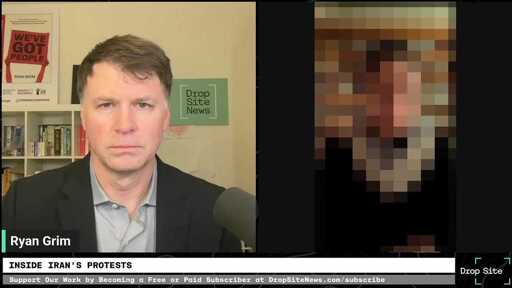
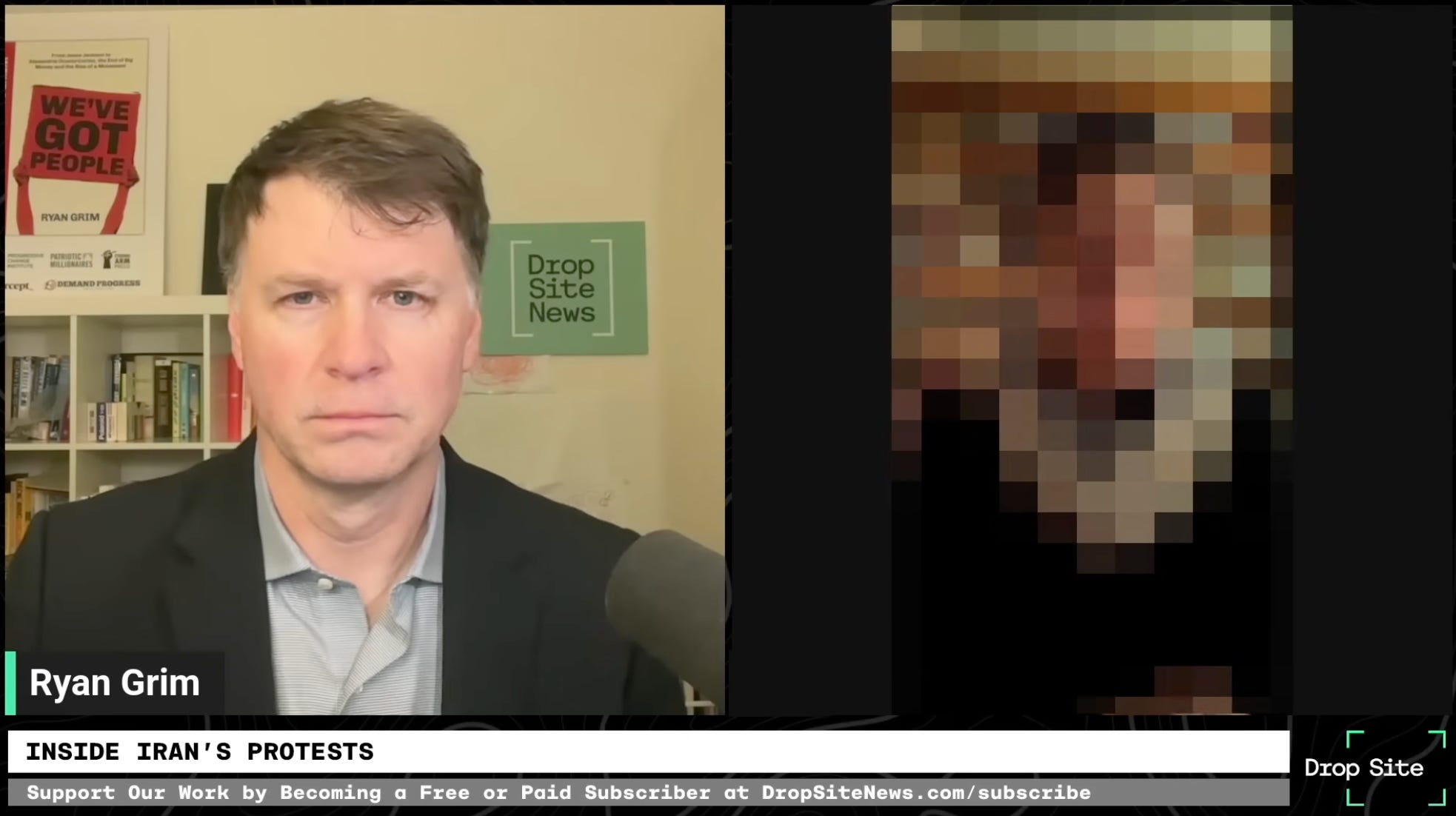
Now, flights have resumed, and one protestor, who had spent the last month in Iran, and has participated in previous rounds of protest, agreed to sit down for an interview on the condition that we protect her identity. We reviewed travel documents and verified other elements of her account where we could, including with footage she and her friends took at the marches. Much of the footage, some of which is included in the interview, shows overturned dumpsters and tires set aflame. The Financial Times reported that witnesses to the uprising observed groups of black-clad, well-organized men going from dumpster to dumpster, setting them on fire, while the woman we interviewed did not see that directly. Videos of the uprising, as well as testimony reported by FT, show “armed agitators” firing into crowds and at security services.
Her account does not claim to be comprehensive; no single account could be. She is not part of a professional activist network, but she was visiting Iran in order to spend time with family. The interview presents a first-hand perspective of a person directly involved with the protests—from someone who is opposed to the government there, but is also opposed to the bombing of Iran and is not a supporter of the U.S. or Israel, countries that have played a role in the unrest and have made no secret of their designs toward Iran. The New York Times has reported that “a ragtag network of activists, developers and engineers pierced Iran’s digital barricades” and with the help of the National Endowment for Democracy, a CIA-adjacent American funding mechanism, managed to build a transnational network that smuggled some 50,000 Starlink devices into Iran, which is about $40,000,000 of hardware for that “ragtag” band.
In our interview, the woman recounts a massive march in Tehran of nearly unprecedented size on Thursday, January 8, which she saw meet very little security service resistance. Elsewhere in the city, reports suggest it did turn violent. That march was followed by another on Friday, at which her friends saw people fall from gunfire but she did not. On Saturday, the government sent text messages to the public warning that another demonstration would be met with force. “Saturday was – I don’t think I’ll ever forget Saturday,” she told me. After the massacre, the city went quiet. Since then, Iranian Supreme Leader Ayatollah Ali Khamenei has said that “several thousand” people were killed in the protests. The death toll includes demonstrators, some armed and, Khamenei argued, trained by foreign adversaries, as well as personnel from Iran’s security services.
Watch her first-hand account here.
From Drop Site News via This RSS Feed.