


Mary Annette Pember
ICT
The Michigan Attorney General’s office has launched an investigation into Indian boarding schools and other institutions to see if crimes were committed in the state.
The office is seeking to identify, document, investigate and prosecute instances where crimes are believed to have occurred at the institutions, Michigan Attorney General Dana Nessel announced recently.
To support the effort, investigators are asking survivors, witnesses, and others who may have firsthand knowledge to come forward and share information.
“This investigation seeks to bring truth and accountability to a painful chapter in our state’s history,” Nessel said in a statement. “My office is committed to ensuring that survivors’ voices are heard and that any criminal acts uncovered are thoroughly investigated and, when possible, prosecuted.”
Michigan is home to 12 federally recognized tribes, and eight schools and institutions have been identified as operating in the state beginning in 1823, with some functioning until 1983. Five of the institutions were boarding schools and received federal subsidies, according to the U.S. Department of the Interior’s Indian Boarding School Initiative Investigative Report released in 2022.

Michigan Attorney General Dana Nessel pauses during an interview with The Associated Press on Nov. 21, 2024, in Philadelphia. Credit: AP Photo/Matt Slocum
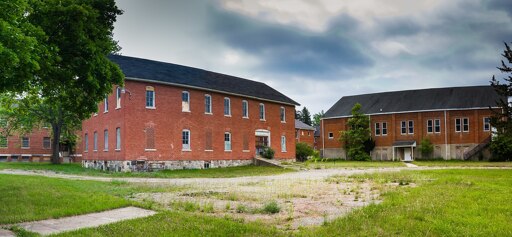
Researchers say that nearly 250 children are believed to have died at the most notorious school, the Mount Pleasant Indian Industrial Boarding School, which operated from 1893 to 1934.
Holy Childhood School of Jesus in Harbor Springs, which opened in the 1880s, was operated by the Sisters of Notre Dame until 1983 and was known for harsh treatment of students, according to researchers at the University of Michigan.
The investigation could uncover records and evidence that may not have previously been disclosed, since the attorney general’s office has the ability to issue subpoenas and obtain search warrants if approved by a judge.
investigative subpoena power which includes the authority to obtain search warrants if probable cause can be demonstrated to a judge. If sufficient evidence exists, the agency will support charges according to information on the attorney general’s website.
Notably, the latest version of the Truth and Healing Commission on Indian Boarding Schools Act pending in Congress was amended to remove subpoena power from the authority that would be authorized for the proposed commission after complaints by some lawmakers. The act was approved in the U.S. Senate, but the House did not agree to include it in the sweeping National Defense Authorization Act approved in December 2025.
Michigan could be restricted by legal limits on how long prosecutors may wait before filing charges. The law allows survivors to raise issues up to 10 years after they turn 18, and in Michigan, a suppressed memory exception allows victims up to their 48th birthday.
Unlike some states, however, Michigan does not have a so-called look-back law. Fifteen states have laws that allow extended limits or no limits for raising criminal allegations or filing civil lawsuits for some or all child sexual abuse.
And approximately 30 states have look-back windows for civil lawsuits that allow abuse survivors to file suit regardless of when the abuse occurred.
More info
Individuals with information about abuse or potential crimes at Indian boarding schools may contact the Michigan Attorney General’s Office via email or by phone at (517) 897-7391. Tips can be left anonymously. More information is available at the Native Boarding School Investigation.
The post Michigan announces criminal probe of boarding schools appeared first on ICT.
From ICT via This RSS Feed.