

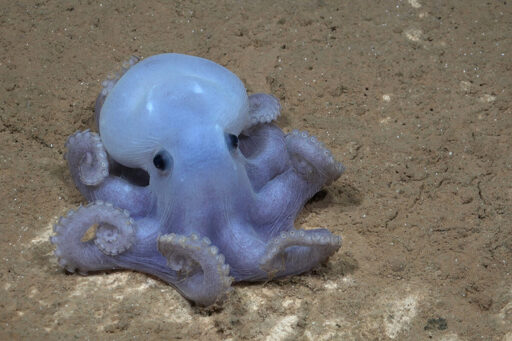
For most of modern history, the open ocean has been treated as a place apart. Beyond the 200-nautical-mile limits of national jurisdiction, it was governed by custom, fragmented rules, and the assumption that what lay far offshore was too vast to manage and too resilient to exhaust. That assumption has worn thin. On January 17th 2026, a new United Nations agreement—the Biodiversity Beyond National Jurisdiction accord, or BBNJ—will enter into force, creating the first global framework aimed explicitly at conserving life in the waters and seabed beyond national borders. Oceanic manta rays photo courtesy of Mark Erdmann The scale of what it covers is hard to overstate. Areas beyond national jurisdiction account for roughly 60% of the ocean and more than 40% of the planet’s surface. They include deep trenches, seamount chains, midwater ecosystems, and the largely unseen communities that regulate nutrient cycles and store vast amounts of carbon. Less than 1.5% of this space is currently protected in any formal sense. Fishing, shipping, bioprospecting, and exploratory mining have expanded there faster than the rules governing them. BBNJ is an attempt to close that gap. Finalized in 2023 after two decades of negotiation, the treaty passed the threshold for entry into force when Morocco became the 60th country to ratify it last September. More than 80 states are now full parties, according to the High Seas Ratification Tracker. The United States helped shape the text but has not ratified it. The agreement rests on four pillars. An Ocean sunfish (Mola…This article was originally published on Mongabay
From Conservation news via This RSS Feed.