

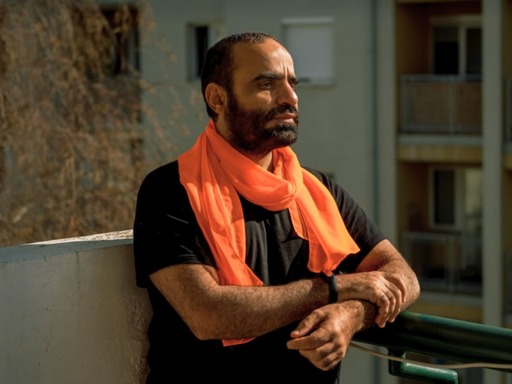

Mansoor Adayfi is Guantanamo Project Coordinator at CAGE International, a writer and co-founder of the Guantanamo Survivors’ Fund. He is also a former detainee of Guantanamo Bay — the US military prison in Cuba — long been synonymous with the “War on Terror”. Adayfi was incarcerated for 14 years without charge or trial. On December 17, he went on hunger strike in solidarity with the pro-Palestine hunger strikers in UK prisons.
UK government is a slave to Zionism
On 14 January, we heard the news that Zionist weapons manufacturer Elbit Systems lost out on a £2bn contract with the MoD. In response, three Palestine Action hunger strikers ended their hunger strike. Adayfi says, after 30 days, he needed to honour the hunger strikers, so he has stopped his too:
I feel happy Elbit Systems lost the contract. I am also relieved they stopped their hunger strike, because I really admire these young activists. I was worried that some of them might actually die. The British government has ignored them, not listened to their demands.
This is because this is linked to what is happening in Palestine, and the British government doesn’t want to upset their masters, the Israeli Zionists. They even mocked the hunger strikers in parliament, when they were on day 40 or 50. I know how that feels, and was outraged. I felt it was my duty to join them, so started my hunger strike to give them support. It’s the least I can do.
Adayfi is not new to hunger striking, and says he was force fed for almost five years through a tube while at Guantanamo. His health has suffered as a result, and he now has problems with his immune system, stomach, kidneys and vision. And because he was unable to walk for three months, due to a coma, he also has problems walking straight.
Mansoor Adayfi: “Hunger strikes are a last resort….Your body becomes a language to communicate when all other doors are shut”
Unlike the Palestine Action activists, during this latest hunger strike Mansoor Adayfi had been taking a spoon of honey, and electrolytes every day. Sometimes he also ate dates, so he could continue to work and pray. But even with these, he has lost almost 12kg in 30 days, and has felt dizzy, tired, and out of breath. His heart beat has also become irregular. He explains that hunger strikes are a last resort.
When the government closes every door, your body becomes a language to communicate when all other doors are shut. It is an appeal to the government, and to the world outside, “look at our case”.
According to Adayfi, one of the most difficult parts of a hunger strike is stopping. He says it will take several months for these hunger strikers to get back to normal. And they will now need to do a lot of work on themselves, to recover.
When you go on hunger strike, you are dying every single day, every single moment, because the body eats itself. All body systems are disrupted. You lose weight, your mental capacity is not as it should be. One of the hardest parts is stopping.
You need to revive your body, your muscles, your nervous system and your brain. You need more liquids, salt, soft food that your stomach can digest, at least five small meals a day. Sometimes, when you start eating, you can’t sleep because your heart-rate starts increasing, because the body is reviving itself.
That all takes a couple of weeks. Because all muscles have wasted away and need to rebuilt, it can also take a couple of months before you can start walking properly again.
UK and US government use “terrorism” label to justify abuse, violence and torture.
Mansoor Adayfi has brought his hunger strike from Guantanamo to the UK prisons. This is because he feels it is the same system, based on injustice and torture.
He says:
The arrest of these hunger strikers, or indeed the Filton 24, is like Guantanamo.
First they link you to terrorism.
Then they justify the abuse, violence and torture.
They deny you your basic rights, and deprive you of sympathy from the people.
These hunger strikers were willing to die. The government could have intervened, but I believe they don’t value people’s lives. Heba was 73 days on hunger strike, and the UK prison system was silent! This is intentional, it is punishment. Once you are in prison it’s the government’s responsibility to keep people alive and healthy. But they don’t care. I used to think the British government was way better that the US government, but not any more!
The hunger strikers, all activists from Palestine Action, were arrested before the non-violent group was proscribed. But counter terrorism powers continue to be used against them, in an attempt to silence dissent. Their pretrial detention is lengthy, each will have spent more than one and a half years behind bars by the time their trial comes around. Eight activists were originally on hunger strike bu, due to ill health and hospitalisation, five were forced to stop. Three continued until 14 January. Heba Muraisi lasted 73 days.
Condemnation of the UK government’s gross misuse of counter-terrorism powers, and its treatment of these political prisoners has been widespread. Amnesty International called the “dire situation” of the hunger strikers “a shameful moment for the UK government”, while UN experts raised serious concerns about “compliance with international human rights law and standards, including obligations to protect life and prevent cruel, inhuman or degrading treatment.”
Mansoor Adayfi: silence is complicity
Mansoor Adayfi credits the Palestine Action activists and hunger strikers with raising public awareness of Elbit Systems and its associated crimes. He also believes they played a major role in the weapons manufacturer losing the MoD contract, although the government would never admit to this, as they do not want to appear weak and pressured- “although they surely are,” he says.
He continues:
These activists have given us all an important lesson- that we need to take action. Silence is complicity. Nothing can be changed without action. Otherwise we will be enslaved by the system.
As we can see, they try to target Muslims, brown people, and those who support them, and they destroy their lives. It’s worse that slavery when you are targeted for your freedom of speech and respect for humanity. Why is this? Because you are criticising the people who think they are God’s chosen people.
Our duty now is to support these activists, to secure their freedom, and continue their campaign. These people are not terrorists. They have put their lives on the line to stop the genocide and they should be treated as heroes, not imprisoned and put on trial.”
Featured image via the Canary
By Charlie Jaay
From Canary via This RSS Feed.