


In many ways, Somaliland is a success story. In a region blighted by western intervention, deliberate destabilisation, and a settler state occupying Palestine, Somaliland has emerged as an energetic and determined society, albeit without official recognition on the world stage since its unilateral declaration of independence in 1991.
The Somali government in Mogadishu argues that this was an illegitimate secessionist movement and that a people sharing the same language, ethnicity, and religion should remain as one nation. Somalilanders, on the other hand, assert that the Act of Union in 1960, which brought together Somalia, a former Italian colony, and Somaliland, a former British colony, was never properly ratified, and that they suffered years of oppression and genocide at the hands of the Siad Barre government that ruled the country from 1969-1991.
The day-to-day reality of Somaliland
Regardless of the position you adopt, however, Somaliland has functioned as a de facto independent country since the 1991 declaration, or so I had been told by friends from the region. Travelling here four months ago confirmed this assessment.
When I arrived in Hargeisa airport, I was given a Somaliland visa. The local currency is the Somaliland shilling. People hold Somaliland passports. The Somaliland National Army is visible. And the head of state, who coincidentally I met on a pilgrimage to Makkah in 2015, is Abdirahman Mohamed Abdullahi, the president of Somaliland.
Indeed, the president of Somalia has not visited Hargeisa since the two nations split. In 2020, after then-Somali president Mohamed Abdullahi Farmaajo became the first to apologise for the crimes of the Barre regime, expressing his desire to “correct a dark chapter and apologise to our brothers who were killed, maimed in the north”, a visit was suggested by the Ethiopian government but never came to fruition.
Complex admin
But the hindrances of a lack of formal recognition were also evident, even before I boarded my flight at London Heathrow. ‘
On 1 September 2025, just weeks before I travelled to Hargeisa, the Somali government introduced a new e-visa, which was to be acquired online by all visitors before leaving their home country. As Somaliland is internationally recognised as part of Somalia, this meant that both tourists and locals returning to visit family now had to acquire two visas: a Somaliland visa on arrival and a separate Somalia e-visa, the latter of which is issued by what Somalilanders essentially view as a foreign government!
My experience of Hargeisa has been of a peaceful city with a welcoming, entrepreneurial society, ideal climate, and calming daily routine. People wake up before dawn for morning prayers, children arrive at school by 7am latest, and there is a burgeoning community of Somalilanders from the UK, Australia, Canada, and Scandinavian countries, once scattered by civil war but now returning home.
In December, posters started appearing across the city, promising that a “big announcement” related to the recognition of Somaliland was imminent. Many, myself included, assumed that this
was related to the US administration, especially since Texas senator Ted Cruz had written to president Trump in August 2025 that granting recognition would be to the:
greatest benefit to American national security interests.
In June 2025, another Republican senator, AIPAC beneficiary Scott Perry, had introduced the Republic of Somaliland Independence Act, which would make the official policy of the US:
that all territorial claims by the Federal Republic of Somalia over the area known as Somaliland are invalid and without merit.
Israel’s recognition of Somaliland
Instead, on 26 December, a video of a FaceTime call between the Somaliland President and Israeli genocidaire Benjamin Netanyahu was posted online. Netanyahu spoke of “excitement in Israel” at the prospect of “expanding our partnership”. The settler state had decided to recognise Somaliland. In return, the Somaliland administration announced its intention to join the “Abraham Accords”, a series of normalisation treaties between the Israeli state and primarily Arab nations initially instigated by Trump in 2020.
In a shocking statement, Somaliland president Abdullahi, known locally as “Irro”, praised the wanted fugitive Netanyahu for “fighting terrorism” in the region.
Many were stunned.
Somaliland is a Muslim nation and has felt a particular pain at the continuing Gaza genocide. Despite being one of the poorest nations in the world, Somalilanders have sent millions in charitable donations to the Palestinians and held their hands up in prayer night after night. Would the price of recognition be an alliance with a mass murderer? Was international “acceptance” worth being tied to the world’s last remaining settler state?
Flag waving
In the age of instant news, videos of Israeli flag wavers in Hargeisa were heavily pushed on TikTok, the most popular platform with the younger generation here, and quickly became viral, not least with horrified diaspora communities abroad. The dangers of AI were also on display, however, as reality began to blend with falsehood. Local imams began to refute fake videos circulating of themselves wrapped in blue-and-white flags upon minbars, and an outlandish story of the world’s first “marriage” between an Israeli man and Somali woman was locally confirmed to be a fabrication – the husband was actually a British Muslim.
Within hours of the recognition being announced last week, two Israeli “journalists” were pictured first crossing the Wajaale border from Ethiopia, and then waving Israeli flags in Hargeisa. Within days, they had been outed as former IDF soldiers. Israeli “tourists” filmed themselves on the beach in Berbera, a key port stationed within 100 miles of Yemen. A local woman, speaking on condition of anonymity, told me:
If there are Israelis entering so quickly, they must have also been here before.
Indeed, Netanyahu personally thanked Mossad chief David Barnea for “years of quiet involvement” in the Somaliland deal.
Opposition and oppression
Judging by social media, it would seem as if the deal between Somaliland and the Zionist state had been embraced with universal approval, but the idea that an entire nation of six million Muslims in the Horn of Africa had embraced the self-proclaimed “only Jewish state” was engineered. On the ground, voices of dissent were emerging.
On the Friday following the announcement, an imam named Mohamed Wali Abdirashid gave an impassioned speech against the agreement, claiming that several scholars had met with president Irro and urged him to change course:
We advised him, we urged him, we told him the truth…but now he is on his way to Tel Aviv. When the United Arab Emirates joined the Abraham Accords, they wanted to round up everyone who opposed the Israeli state, but there were too many! Now, we are heading down the same path. They want us not to feel pain at the idea of normalisation, to be fine with it! They are the real terrorists.
By Friday evening, Abdirashid was reportedly detained by Somaliland security forces. Mohamed Ali Kaariye, another Islamic teacher, was said to have been arrested in Hargeisa after calling on people to “reject Netanyahu” in a Facebook post.
Even amongst those who were initially excited at the prospect of recognition, there is little clarity regarding the specifics of the deal. The Somaliland government has so far denied widespread rumours that they have accepted the resettlement of up to 1.5 million Palestinians in Somaliland, although Netanyahu put this option on the table as far back as March.
Until now, there are very few foreigners in Hargeisa, and such a dramatic change in demographics would have a seismic impact on its developing economy. A young man from the Isaaq clan told me that it “could never happen”, but such statements seem driven more be emotion than evidence.
The scramble for Berbera
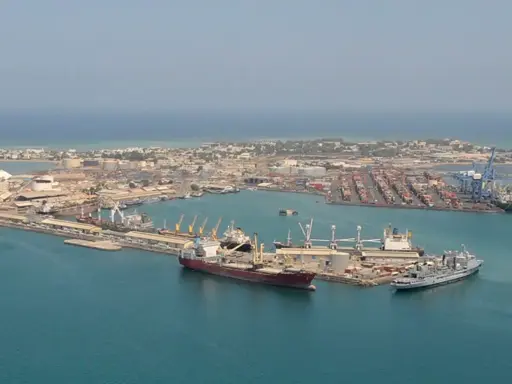
The Somaliland government has also denied claims that the Israelis will be allowed to establish a military base at Berbera. Last month, I visited Berbera myself. It is a beautiful, peaceful town, with delicious, plentiful fish and relaxing beaches. It also looks out onto the Bab al-Mandeb Strait, the vital trade route in which Israeli ships have been targeted by the Houthis in southern Yemen since the Gaza genocide commenced.
Whilst in Berbera, I spoke to a young Somali businessman visiting from the UK. He worked in aeroplane maintenance, and was interested in establishing a partnership with Hargeisa Airport. The airport in Berbera, he told me, is already being run by the UAE, adding to the $400m+ DP World investment in Berbera port.
Indeed, a recent Times of Israel blog lauding the recognition of Somaliland as a “monumental move” emphasised the importance of:
ties with the UAE, one of Israel’s prime partners in the region.
The message from the settler state is unambiguous:
Somaliland…is a prime base of operation to counter…the Houthis.
By allying with the rogue Israeli state, the Somaliland government is needlessly creating enemies and implicating itself in a much wider struggle for influence and power. After two years of brutal genocide against the Palestinian people, a photo opportunity with a Muslim leader was a desperate last throw of the dice for genocidaire and fraudster Netanyahu. As Somalis from Hargeisa and Mogadishu curse each other online, the Greater Israel project continues apace.
For the last 35 years, Somaliland has struck its own path. But now, it risks becoming an Israeli satellite state on the Horn of Africa.
Featured image via the Canary
From Canary via This RSS Feed.