


Kevin Abourezk
ICT
Laticia DeCory opened the tablet, expecting to see a love note from her mother.
Yvonne “Tiny” DeCory had told her daughter to read the note after she was taken into emergency heart surgery. While she knew her mom wasn’t particularly sentimental, Laticia DeCory secretly hoped to read some encouraging and heartfelt words from her mother, whose fate seemed uncertain.
“It was a to-do list,” Laticia DeCory said this week, laughing.
The list included a variety of tasks that Tiny DeCory needed her daughter to complete, including transporting food to a family in need on South Dakota’s Pine Ridge Reservation, distributing 25,000 pounds of potatoes, and providing firewood to families.
“All the way to the end she was making sure that everyone was taken care of,” Laticia DeCory said.
Yvonne “Tiny” DeCory died Jan. 5 at the age of 73.
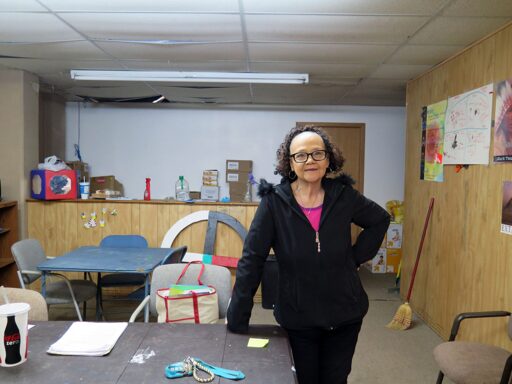
As the co-founder of the BEAR (Be Excited About Reading) Project, Tiny DeCory — whose Lakota name, Ni’ca Ole’ Win (translated as “one who helps the poor”), seemed a far more fitting moniker than her childhood nickname — spent many years working to empower Oglala Lakota youth and prevent youth suicide on her reservation.
The scourge of youth suicide on the reservation culminated between December 2014 and June 2015, when more than 100 young people attempted suicide. In 2015 alone, 23 young people took their lives.
Sky Goings, 25, was among the youth Tiny DeCory helped overcome her suicidal thoughts by ensuring Goings’s needs were met, including her emotional needs, and encouraging her to never give up.
“She would make sure that I was good, that I had food when I needed it, that I had somewhere safe to go,” she said. “She is the reason I am here today.”
It’s a sentiment echoed among many formerly troubled youth on the reservation.
The short, frizzy-haired grandma who loved to dance and laugh and bring people together did more than most, and maybe anyone, to bring hope to the youth of Pine Ridge.
Brian Sherman Jr., 29, worked with Tiny DeCory for more than 10 years, first as a high school freshman and later as a youth mentor. He said she enlisted him when he was in high school to teach the program’s youth to dance. She met him at a community dance after Sherman won a hip-hop dance contest.
The BEAR Project offered motivational presentations to schools and other programs that featured youth dressed in animal and other costumes – including bear costumes – dancing and performing skits. Sherman said Tiny DeCory was a vital part of his support system after he lost his parents and other family members.
“She wasn’t just a mentor in my life,” he said. “She became a relative.”
He said he and other youth would often have to encourage her to put away her phone at the end of her workdays and relax, but were often unsuccessful as they watched Tiny put on her reading glasses and try to respond to anyone who reached out to her for help.
“Her phone number wasn’t just a phone number to call,” he said. “It was a hotline for life.”

And while she became a world-renowned Native youth advocate, her absence will be felt most by the young people of Pine Ridge, but Sherman expressed optimism that the youth she mentored and empowered will be able to continue her work.
“Now we’ve got to come together from all walks of life and do what she did,” he said. “I hope I can get out there and radiate the same energy that she did.”
Noel Bass, a filmmaker who produced a documentary called “The Bears on Pine Ridge” about the youth suicide crisis on Pine Ridge that featured Tiny DeCory’s work, said her greatest impact was in her ability to pull youth from their lonely, isolated lives and put them to work helping each other and their community.
He said Tiny DeCory grew up during a time on the reservation before cell phones and even the internet when connecting with others required leaving your home and meeting in communal spaces.
“She’s a person who only knows what it’s like to be around people and be in community,” he said.
He said many reservation youth isolate themselves and abuse alcohol and drugs because they suffer from depression and trauma. Tiny DeCory understood the power of getting youth involved in the community and would constantly work to host community events, including dances, sports activities and educational presentations. Bass described her as the “Energizer Bunny,” repeating a description often applied to the woman known for wearing bright, fluorescent clothing and being everywhere all at once.
“That was the magic of Tiny,” he said. “She was a disco ball, and she spread out all this light and charisma and got people who didn’t think ever would dance to dance.”
Julie Richards, 52, got to know Tiny DeCory while she was working for an early childhood program in Pine Ridge as a secretary. Tiny DeCory would visit with Richards nearly every day and encourage her to keep chasing her dreams.
But Richards struggled for a year, drinking heavily and using drugs while living without a home on the streets of Whiteclay, Nebraska, a town on the border of the reservation and Nebraska where alcohol was once sold before the Nebraska Liquor Control Commission shut down beer sales there in 2017.
When Tiny DeCory would see Richards in Whiteclay, she would talk to her, sometimes crying while begging her friend to get sober and come home.
“‘When you’re ready to sober up, I’ll always be here for you,’” Tiny DeCory would tell Richards. “And I did sober up.”
Seventeen years ago, Richards finally took Tiny DeCory’s advice and sobered up. However, by then, her own daughter became addicted to methamphetamine and in response Richards joined an organization called the Mothers Against METH Alliance.
Her work fighting meth addiction inevitably brought Richards into alliance with Tiny DeCory.
“Obviously, we became a team because the two go hand in hand,” she said.

Screenshot
Richards said Tiny DeCory’s legacy will be her work with the youth, work that helped give hope to everyone on the impoverished reservation where hope is often scarce.
“She brought life to this reservation,” she said. “She brought life to her kids. She brought life to me.”
And she brought life to Davidica Little Spotted Horse, a 53-year-old Oglala Lakota woman who got to know Tiny DeCory after she became pregnant and had a child when she was 18 and attending Pine Ridge High School. Tiny DeCory was among a group of adults who advocated for the creation of an in-school daycare for students, which the school eventually approved, allowing Little Spotted Horse and other parent-students to continue their education.
After graduating from high school, Little Spotted Horse became an event promoter and social justice activist. Tiny DeCory would often connect her to schools so Little Spotted Horse could host events in communities across the vast reservation. Later, Tiny DeCory would invite her to host musical acts during larger events like the annual Oglala Nation powwow.
Tiny DeCory always preferred to say yes when asked for help rather than try to find ways to say no, Little Spotted Horse said.
“She’d always create time and space for us,” she said.
Little Spotted Horse said she always enjoyed visiting the BEAR Cave, which was a space in the lower level of Billy Mills Hall, a community building in Pine Ridge, where youth and others could find needed supplies like pampers, snacks and clothes.
Tiny would host youth gatherings and offered the cave as a place where youth seeking a safe space or community could visit. Little Spotted Horse said she can’t remember seeing Tiny solicit donations for the BEAR Cave. Still, donors would fill the shelves of the space with supplies.
In addition, Tiny would provide suits and dresses to youth for prom and other school activities, but despite everything she did for her community, Tiny didn’t promote herself.
“She didn’t brag about herself,” Little Spotted Horse said. “She would talk about everybody else. She would talk about how good the kids were doing.”
She said Tiny instilled a desire to help others in the youth she inspired, as well as her children and grandchildren, who Little Spotted Horse is confident will step forward to continue Tiny’s work.
“I think that’s a great example for our reservation and our communities – how important that is to pass along to your families and communities and she made sure she did that,” she said.

From left: Teton Saltes, Yvonne “Tiny” DeCory, and Laticia DeCory are seen in this photo. (Courtesy photo)
Her grandson, Teton Saltes, 27, said his grandmother planted a seed in everyone she inspired and he’s confident those seeds will bloom as people seek to ensure the survival of the youth of Pine Ridge.
“Instead of one Tiny, there’s going to be many,” he said.
Laticia DeCory said her family was able to communicate with her mother in the week before she died while she lay in a hospital bed fighting for her life.
“We were able to hear her voice and talk to us and she wanted us to continue her life work,” Laticia DeCory said. “She felt that we were ready to take over.”
Among her last messages to her loved ones was, “Be good to people.”
In the moments after her mother died on Jan. 5, a storm cloud roared thunder, and lightning struck the earth outside her hospital window. The Lakota consider thunder sacred and call them “thunder beings.”
“The thunder beings took gram home,” Laticia DeCory said. “It was really beautiful how she left the world.”

Funeral services for Tiny DeCory will begin with a caravan that will start at the Sioux Funeral Home, 8 Grey Wolf Road in Pine Ridge, at 3 p.m. Mountain Time Friday, Jan. 16 and will continue to the Lakota Tech High School, 14 New Wolf Creek Road in Pine Ridge.
Services will continue Saturday, Jan. 17 at Lakota Tech High School with a dance and speeches, as well as activities for children.
“It’s just going to be a celebration of her life because that’s what he would have wanted,” Laticia DeCory said.
The post Youth advocate ‘Tiny’ DeCory leaves big shoes to fill appeared first on ICT.
From ICT via This RSS Feed.