

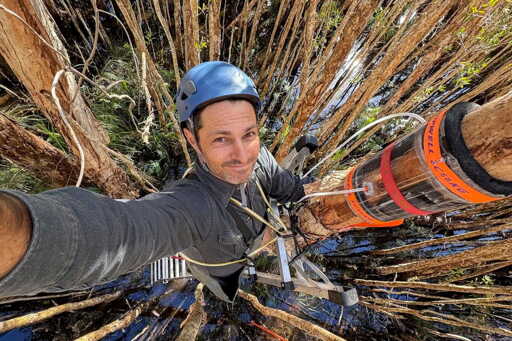
Microbes living in tree bark consume vast amounts of climate-related and toxic gases, according to new research published Jan. 8 in Science. In the past, tree bark was considered little more than an inert protective covering for trees and unlikely to support significant microbial life. But over the last decade, research has found that microbes not only thrive in tree bark, but they consume methane, a phenomenon significant on a global scale. This knowledge caused scientists at Australia’s Monash and Southern Cross universities to wonder if microbial communities living in tree bark might also be utilizing and absorbing other ubiquitous atmospheric gases, a line of reasoning that turned out to be “spot on,” says Pok Man Leung, a research fellow at Monash University and the study’s co-lead author. The research team sampled the bark of eight common Australian trees across different biomes in subtropical eastern Australia. They then used metagenetics along with laboratory and field-based measurements of gas fluxes to determine what kinds of microbes lived in the bark, and what they were doing. Melaleuca wetland forest on the Tweed Coast of Australia, a hotspot for tree bark microbial life. Image courtesy of Luke Jeffrey/Southern Cross University. They found that the trees’ bark was brimming with microbes that digest methane, hydrogen, carbon monoxide and volatile organic compounds (VOCs). Methane is at least 20 times more potent as carbon dioxide as a greenhouse gas, while hydrogen and carbon monoxide are considered indirect greenhouse gases. Carbon monoxide and VOCs are both harmful…This article was originally published on Mongabay
From Conservation news via This RSS Feed.