


Starting from 25 February 2026, the UK Electronic Travel Authorisation (ETA) scheme will be fully enforced. The government claims that this fully digital system will make it easier for travellers to come to the UK, whilst also making it easier to screen people before they reach the border.
However, there’s a catch — the scheme makes travel more difficult for people who hold dual citizenship with the UK (or Ireland) and another country.
Electronic Travel Authorisation
The ETA was originally announced way back in the March 2023 Statement of Changes to the HC 1160 immigration rules. The scheme was rolled out in phases, the first coming into force in October 2023.
In theory, the ETA was fully implemented by 2 April 2025. However, we’re currently in a period of leniency intended to give people time to adjust to the new rules. The UK will only fully enforce the ETA requirements starting on 25 February 2026.
Before the ETA requirements, visitors from 85 different countries — including France, the US and Canada — could travel to the UK without a visa. Whilst that’s still the case, they’ll now need to obtain an ETA in order to enter the country. People from outside of those 85 countries will need an eVisa.
Applying for an ETA costs £16. It’s usually authorised within the hour, but may take up to 3 working days if it requires additional review. The ETA is valid for a stay of up to 9 months.
Mike Tapp, the minister for migration and citizenship, said:
ETAs give us greater power to stop those who pose a threat from setting foot in the country and gives us a fuller picture of immigration.
ETAs are also better for travellers. Digitising the immigration system ensures the millions of people we welcome to the UK every year enjoy a more seamless travel experience.
Dual citizens
However, as it turns out, the process looks like anything but a “seamless travel experience” for dual citizens.
The government advises that:
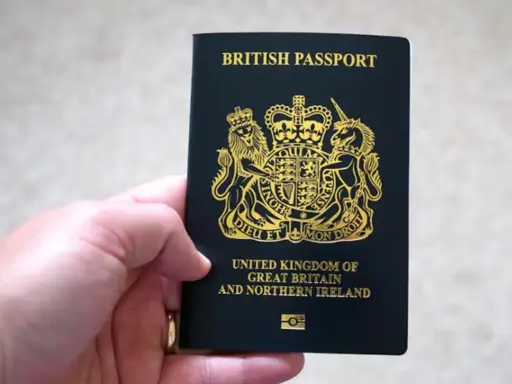
British and Irish citizens, including dual citizens, are exempt from needing an ETA. The UK government strongly advises dual British citizens to make sure they have a valid British passport or certificate of entitlement, to avoid problems like being denied boarding when travelling to the UK from 25 February 2026.
As such, whilst visitors who aren’t dual citizens can pay £16 and wait an hour to have their travel authorised almost immediately. However, dual citizens of the UK or Ireland aren’t visitors – they have citizenship here, after all.
So, a dual citizen with a UK passport can simply show their passport for the journey. However, if they showed a non-UK passport, the dual citizen has no way of proving that they’re not a visitor, in which case they’d need an ETA, but they couldn’t get an ETA because they’re not a visitor….
And therein lies the problem.
‘Everyone ends up paying the price’
For dual citizens, the government website advises you “Prove your permission to travel” using:
- a valid UK passport
- a valid Irish passport
- another valid passport containing a certificate of entitlement
A British passport costs £94.50 for adults or £61.50 for children under the age of 16. A certificate of entitlement costs a whopping £589. Both take far longer to process than the hour needed for an ETA.
Cesare, a University of Manchester maths lecturer, became a British dual citizen in 2023 after moving from Italy in 2016. He spoke to the Metro about the issues with the new ETA system:
As it happened with post-Brexit immigration restrictions, everyone ends up paying the price of measures like ETA.
Indeed, while ‘ETA is just for visitors’, it is not because now everyone who is not a visitor also needs to prove that.
He also spoke about the penalisation of dual citizenship:
As usual with these last two governments, policies are rushed through without proper impact assessments and without consulting stakeholders properly, and everyone ends up paying the price.
It’s shameful that the government has failed to consider the hidden pitfalls and extra costs of their ‘seamless’ new scheme for dual citizens – but, as Cesare put it, that’s also business as usual for both the last two administrations.
Featured image via the Canary
From Canary via This RSS Feed.
If you’re a dual citizen traveling between the two countries, you always carry both IDs on you. The UK hasn’t invented dual citizenship or entry requirements. This was already requirded 30 years ago. And every airline I have ever travelled with accepted this.
