

How many defections can Reform UK absorb before losing their ability to differentiate themselves from the parties they claim have failed Britain? Whatever the number actually is, Nigel et al clearly don’t think it’s 21.
Yesterday, Robert Jenrick joined the serried ranks of Reform MPs (making him the twenty-first current-or-former Tory parliamentarian to do so) after Kemi Badenoch rumbled his resignation plans and booted him from the Opposition frontbench.
A day of drama, hurriedly filmed Zoom videos, backstabbing and betrayal. It’s like The Traitors, for people who don’t pay their TV licence.
So, what happened? Badenoch (leader of the Conservatives, in case the existence of the ‘natural party of government’ had entirely slipped your mind), kicked things off by posting a surprise video on X (shot with a potato, apparently), announcing that she had stripped Jenrick of the whip and removed him from the shadow cabinet.
Badenoch claimed that she had been presented with “clear, irrefutable evidence” that the then-shadow justice secretary and recreational BAME-spotter had been plotting a defection, intending to time it for maximum damage to his former party. Apparently Kemi had been handed screenshots of his resignation speech by a well-placed mole in Jenrick’s camp.
Badenoch, winner of the 2026 Academy Award for Best Original Screenplay? You heard it here first.
Excluding the possibility that he was planning to team up with Zack Polanski’s Greens, there was only one serious contender for Jenrick’s hand in marriage. Nigel Farage’s live reaction to the news that Jenrick had been pushed before he got the opportunity to jump seemed to indicate genuine surprise.
The Reform UK leader claimed Jenrick had “conversations” with him, but that there hadn’t been any deal struck over his exit from the Tories. “Hand on heart”, he said, he was not planning on unveiling Jenrick as a defector at a scheduled press conference later that afternoon.
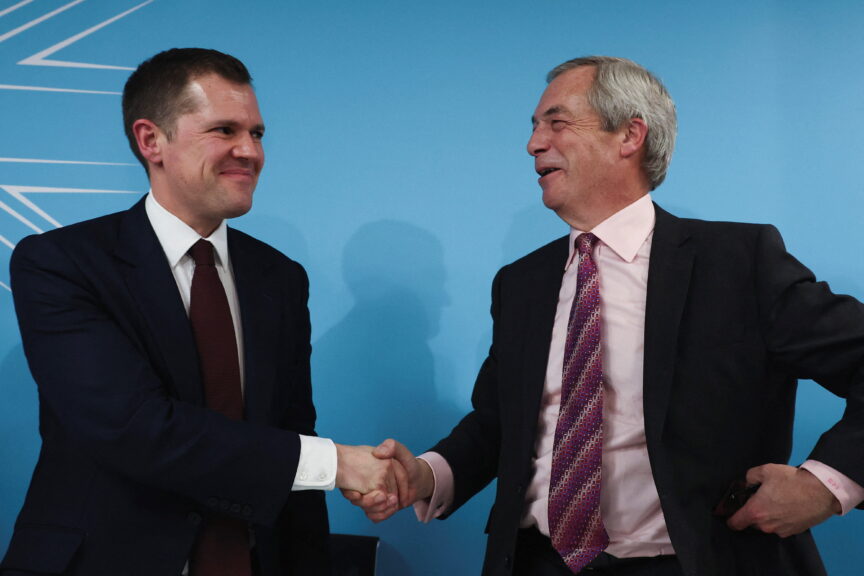
Cut to 4:30pm, at a press conference where Jenrick is being unveiled as Reform UK’s latest defector. Despite some delays to Jenrick’s big debut, eventually Farage’s Diamond of the Season turned up in his glad-rags to put the boot into his former Conservative colleagues.
“I can’t kid myself any more,” said a chastened Jenrick. “The party hasn’t changed and it won’t. The bulk of the party don’t get it. They don’t have the stomach for the radical change Britain needs … the divisions, the delusions, are still there.”
The Conservatives had broken Britain, and couldn’t bring themselves to admit it; Mummy and Daddy hadn’t been in love for a very long time, and Nigel made him feel like a virile young man again.
Still, there was some awkward business. It wasn’t too long ago that Farage had lambasted Jenrick as a “fraud” for his role in setting up the system of asylum hotels as immigration minister. Farage’s new comrade-in-arms had said, just last year, that he wanted to put Reform “out of business” and send Farage himself “into retirement.”
Indeed, it was only last Friday that Jenrick told a Telegraph journalist that he would “never” defect to Reform. Ah well, you know, we all say things.
The Tories, having entered the story on the front foot due to Kemi’s hasty cinematography, claimed to be better off without him. “All I would say to Nigel,” said Kemi to GB News, “is Rob’s not my problem anymore – he’s your problem.” But despite the tough talk, the Conservatives have a real political problem on their hands.
Jenrick is the seventh member of Boris Johnson’s former cabinet to have jumped ship to Reform (joining the likes of Nadhim Zahawi and Nadine Dorries) – meaning that, if you’re a habitual Tory voter, putting a cross in the box for Reform isn’t going to be much of a political leap. The Conservatives are rapidly finding themselves squeezed out of electoral relevancy.
Meanwhile, Farage claims there are more defections to come, with a Labour switcher pencilled in for next week. But despite the Reform leader making each traitor parade in “sackcloth and ashes”, repudiating their former parties and pleading forgiveness, there is a risk in taking in so many figures associated with the old regime.
How can Reform claim to break with the broken Westminster model while offering room-and-board to former ministers? How many can they take in without losing their distinctive political identity? There’s a fine line between seizing opportunities when offered them, and eating any old sandwich you find at a bus stop.
Three years is a long time in politics, and a lot can happen before the next General Election. Already, Reform UK are having to deal with some of the pressures that come with incumbency: every council controlled by the party has hiked council tax, in many cases by the maximum possible amount, despite having campaigned on tax cuts.
Can Farage maintain his gimmick as disruptor-in-chief all the way to 2029? Perhaps. Or maybe he’ll just look like a Tory in teal.
From Novara Media via This RSS Feed.