

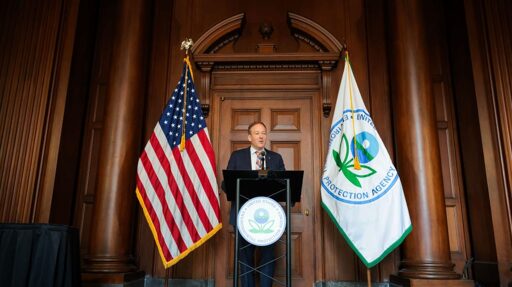
In the 55 years since its founding under President Richard Nixon, the Environmental Protection Agency has been a regulatory pendulum, swinging between stringent and lax control of air pollution. Under Democratic presidents, the agency tends to clamp down on emissions from cars and smokestacks. Under Republicans, it tends to give automakers and the manufacturing sector more flexibility.
When President Donald Trump returned to office last year, climate experts expected him to tilt the balance toward industry as he did in his first term, continuing the ping-pong of the last few decades.
Instead, his EPA is going much farther, attempting to eliminate its own power to govern pollution. The agency is soon expected to release its final proposal to repeal the landmark “endangerment finding,” an Obama-era rule that gave it the authority to regulate the greenhouse gases that warm the earth; at the same time, it will also repeal its rule limiting automotive carbon emissions. The agency also confirmed this week that it will no longer quantify the human health benefits of regulating industrial pollution, a change that could justify far more lenient oversight of toxic emissions from things like smokestacks and power plants. Administrator Lee Zeldin hits the road today for a “Freedom Means Affordable Cars” tour in Michigan and Ohio, during which he will tout Trump’s efforts to relax environmental rules on gas cars.
These changes are the latest in a battery of repeals that cover everything from mercury to microplastics, but they go much farther than simply cutting industry a break. If the changes hold up in court, experts and former agency officials say they could amount to a backdoor repeal of the EPA itself. The agency would still have funding and staff, these experts say, but it would no longer be able to perform its mission of protecting what the Clean Air Act calls “public health and welfare.”
“Any erosion of the purpose of these laws, which was to protect public health, is … undermining the very purpose of environmental protection,” said Bob Perciasepe, who served as an assistant administrator of the EPA for air and water quality under President Bill Clinton.
The agency is pairing its proposed repeal of the 2009 “endangerment finding” with a repeal of its rules limiting carbon pollution from gas cars. Its rule proposing these repeals makes two distinct arguments against past regulations on tailpipe carbon. The first is that the EPA lacks the authority under the Clean Air Act to regulate carbon dioxide, because global warming is a worldwide issue, not a “local and regional” one like soot.
The second echoes Trump’s criticism of strict Biden-era tailpipe rules. Biden’s regulations would have spurred a faster transition to electric vehicles, but Trump has claimed they amounted to a ban on internal combustion cars. The proposed rule argues that that “no technology … is capable of preventing or controlling” carbon emissions from cars except for “a complete change from internal combustion engines to EVs.” It also claims that regulating the pollutant often “requires manufacturers to design and install new and more expensive technologies, thereby increasing the price of new vehicles” and hurting consumers. (It adds that “the ability to own a vehicle is an important means to unlock economic freedom and participate in society.”)
Experts dismiss both arguments. The legal basis for the EPA to regulate carbon has long been seen as solid, and the 1970 Clean Air Act even specifies that it can intervene when “air pollutant[s] emitted in the United States … endanger public health or welfare in a foreign country.” The Supreme Court ruled in 2007’s Massachusetts v. EPAthat this authority was “unambiguous,” and the current conservative court has upheld that decision even in rulings limiting the scope of the agency’s authority.
The argument that vehicle regulations are too burdensome for automakers also doesn’t hold water, said Margo Oge, who led the EPA’s Office of Transportation and Air Quality from 1994 until 2012 and wrote its first vehicle greenhouse gas emissions standards.
“We have heard time after time from companies that the sky is falling when they [are] faced with stringent standards,” Oge told Grist. “But that hasn’t happened. As the rest of the world moves toward electric vehicles, U.S. policies and investments [risk] leaving domestic manufacturers behind investing in old high-polluting technologies.”
Public comments regarding the EPA’s proposal were almost universally negative. Thousands of environmental groups and individuals opposed the repeal, and even many polluters urged the EPA to reconsider. If the endangerment finding goes away, states could still try to regulate greenhouse gases according to common law, they argued, creating a chaotic and unpredictable business environment.
“Attempting to comply with multiple, likely conflicting, regulations among the states will drive up compliance costs for companies, create obstacles for investment decisions, lead to regulatory uncertainty, and make efficient reduction of emissions more difficult,” the Business Roundtable, an influential council of large companies, wrote in its comments. Members of the roundtable include major polluters such as 3M, General Motors, and Chevron.
If courts don’t strike it down, Trump’s repeal could hamstring climate regulations for years to come. Should a court rule that the EPA has no authority to regulate greenhouse gases, a future president would have to formulate a new endangerment finding, which could take years to go through the regulatory process, or else would have to secure explicit approval from Congress. Unless Congress acted, the EPA would not be able to set any limits on greenhouse gas emissions from tailpipes, which make up a quarter of the U.S.’s contribution to global warming.
“If they were to say, ‘We have no authority at all,’ and the Supreme Court upholds that, there would be a lack of authority unless Congress were to pass a new law,” David Doniger, a senior attorney at the Natural Resources Defense Council, who has also served at the EPA and the White House Council on Environmental Quality, told Grist. “But if they take that position, they expose the companies more to federal and state common law liabilities” — in other words, if the EPA’s central authority goes away, companies could face a range of climate lawsuits in various state and federal courts.
Such a decision would also undercut the EPA’s other regulations governing carbon from power plants and similar “stationary sources.” The agency is already trying to repeal Biden-era standards for pollution from power plants, and a full repeal of the endangerment finding would prevent future presidents from reimposing those standards. Even oil lobbyists such as the American Petroleum Institute have asked the EPA not to go this far — many producers worry that if the agency loses the ability to regulate methane from oil sites, they would be exposed to lawsuits over their role in climate change.
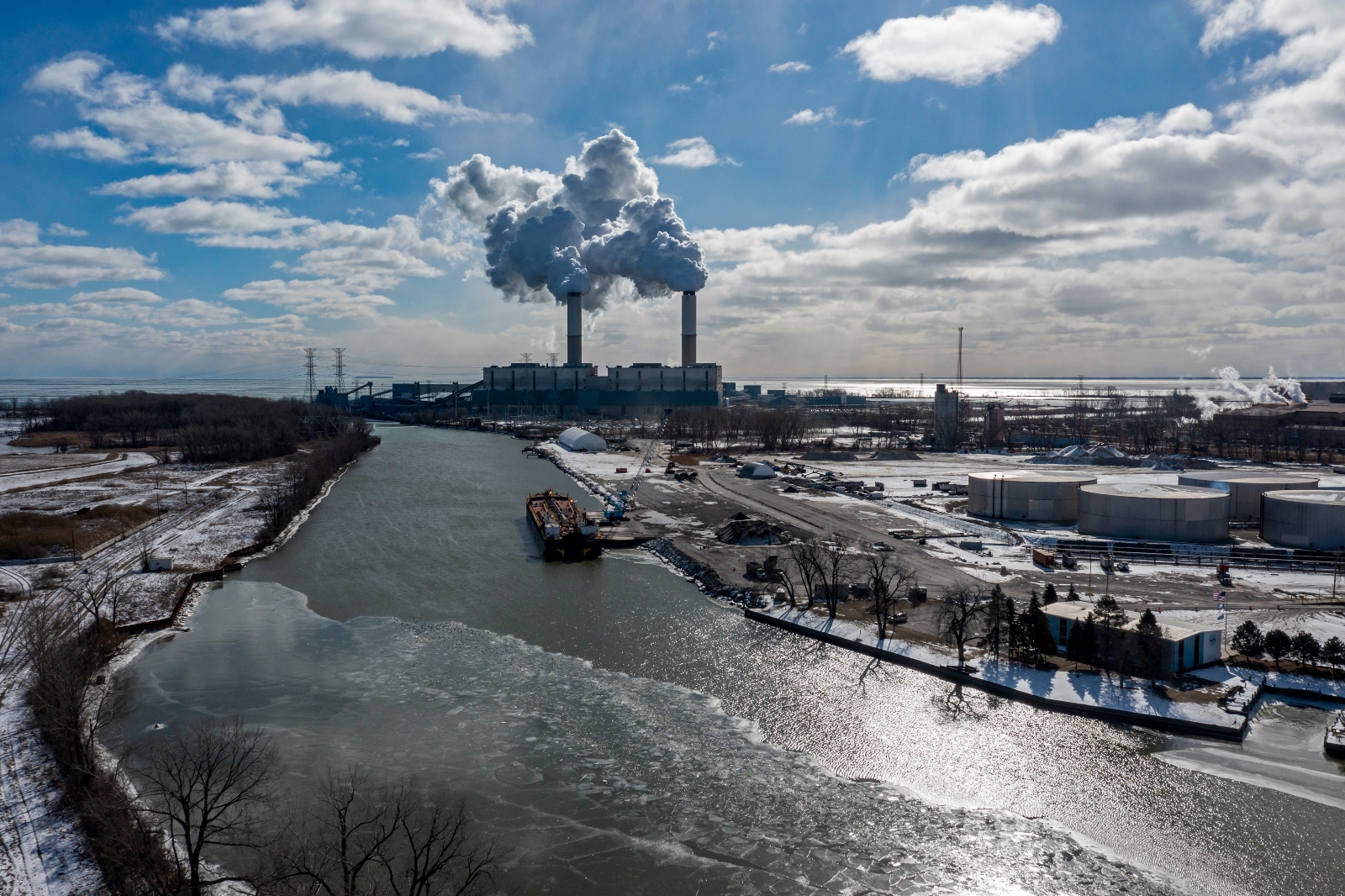
DTE’s Energy’s Monroe Power Plant on the shore of Lake Erie in Monroe, Michigan. The coal-fired plant is the second biggest emitter of greenhouse gases in the United States. Jim West / UCG / Universal Images Group via Getty Images
The EPA’s other move this week could weaken its bedrock authority to regulate other air pollutants. When the agency designs rules for contaminants like soot, dust, and ozone, it weighs an industry’s financial cost of compliance against the financial benefits of imposing the rule. To do this, the agency most often sets a dollar value on human health — under Biden, for instance, the agency estimated that reducing a ton of particulate pollution prevents $77 in health costs.
Past presidents have revised this number according to evolving scientific evidence, but the EPA is now setting the health cost of soot and ozone at zero dollars, claiming that previous estimates offered a “false sense of precision.” When the agency considers whether to place limits on the emission of ozone from factories or soot from smokestacks, it will now quantify the economic costs of compliance to industry, but not the monetary value of avoided health costs.
The agency has already debuted its first rule under this approach. It governs emissions of fine particulate matter from methane gas turbines used in power plants. Former agency officials said the decision not to monetize health benefits would lead to a bias against limiting pollutants like soot and dust, which could in turn lead to much dirtier air.
“A key governing principle of benefit cost assessment is to account for all of the benefits and all of the costs,” said Chris Frey, a professor of civil engineering at North Carolina State University and a former assistant administrator for research and development at the EPA. “The assessment is not valid if it excludes known benefits or costs. That there is uncertainty is not a sufficient reason not to conduct an assessment.”
In response to questions from Grist, an EPA representative said that the agency’s pause on monetizing health costs was temporary, and that it would resume quantifying those costs when it had better data.
“EPA absolutely remains committed to our core mission of protecting human health and the environment, that mission guides every decision we make,” the representative said. “EPA, like the agency always has, is still considering the impacts that [particulate matter] and ozone emissions have on human health, but the agency will not be monetizing the impacts at this time.” The agency didn’t respond to questions about how it will incorporate health costs into its analyses without quantifying them, or about legal arguments against its endangerment finding repeal.
But experts and former agency officials said the pause on health costs and the greenhouse gas rule repeal both represent departures from the agency’s core mission. As Perciasepe sees it, if the agency doesn’t take an active role in restricting major pollutants, it is straying from its original mandate to protect public health, as established in laws like the Clean Air Act and the Clean Water Act.
“When you start to go down this road to devalue the economic cost of poor public health, you do undermine the whole reason for … all these laws that were enacted in the 1970s when there was this gross impact from pollution on the quality of life in the United States,” he said.
This story was originally published by Grist with the headline Trump’s EPA is taking itself out of the regulation game on Jan 16, 2026.
From Grist via This RSS Feed.