

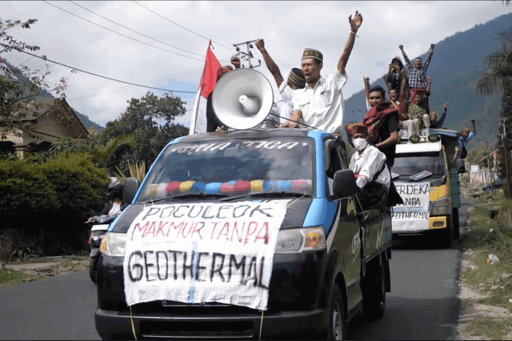
When Indonesia designated Flores a “geothermal island” in 2017, identifying up to 21 geothermal sites, the policy was framed as a cornerstone of the country’s renewable energy transition. Backed by international lenders and enshrined as a “national strategic project,” Flores was positioned as a global showcase for clean energy. Eight years later, key geothermal projects on the island remain suspended, derailed by sustained resistance from Manggarai communities who argue that the transition has come at the expense of justice, safety and cultural survival, found a study published Nov. 13 in the journal Environment and Planning E: Nature and Space. Locator map of Flores Island, East Nusa Tenggara. Image by Gunkarta via Wikimedia Commons (CC BY-SA 3.0). Flores of East Nusa Tenggara province is a rugged and mountainous island where electricity access remains uneven. As of 2025, parts of the island were still not connected to the grid, which relies heavily on imported diesel and coal, both costly and polluting. Citing energy insecurity and the nearly 1 trillion rupiah ($59 million) spent annually on electricity subsidies, the government has argued that geothermal power could meet all of the island’s electricity needs. “Flores has become a uniquely distinctive case in Indonesia’s geothermal energy transition. It may even be unprecedented globally, as an entire island has been designated a “geothermal island,” with exploration occurring simultaneously across multiple sites,” Cypri Jehan Paju Dale, a social anthropologist with Kyoto University and University of Wisconsin-Madison who is a corresponding author of the study, told Mongabay in…This article was originally published on Mongabay
From Conservation news via This RSS Feed.