

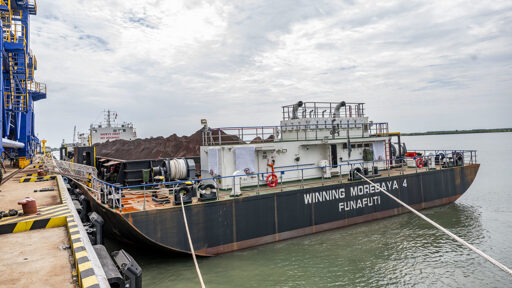
On Dec. 2, 2025, Guinea celebrated a milestone when a ship loaded with iron ore departed from the newly constructed port of Morebaya on the Atlantic coast. The shipment of 200,000 tonnes of ore, pulled out of the Simandou mountain range in the forested southeast, was destined for China. Successive administrations in the capital Conakry have dreamed of turning the estimated 3 billion tons of ore in the Simandou deposits into cash for decades. Mamady Doumbouya, a military officer who seized power as interim president in 2021, put it at the center of his government’s promises to Guineans. After leaning on the two consortiums that operate mines in Simandou to fast-track construction of the 650-kilometer (400-mile) railway and port facilities needed to bring the ore to market, the first shipment left just weeks before he was elected president in late December. The Simandou mountain range before mining began. Image by cjvp via Flickr (CC BY-NC-ND 2.0) In a symbolic gesture, it contained ore extracted by each of the two consortiums. Simfer is a joint venture between the Anglo-Australian giant Rio Tinto and a group of Chinese companies that includes the state-owned aluminum producer Chinalco. The other, Winning Consortium Simandou, is partly owned by Singaporean investors but is dominated by Chinese interests and firms like the China Baowu Steel Group. Guinea’s government holds a 15% ownership stake in both projects, as well as in a separate joint venture established to build and then run the railway and port facilities needed to…This article was originally published on Mongabay
From Conservation news via This RSS Feed.