

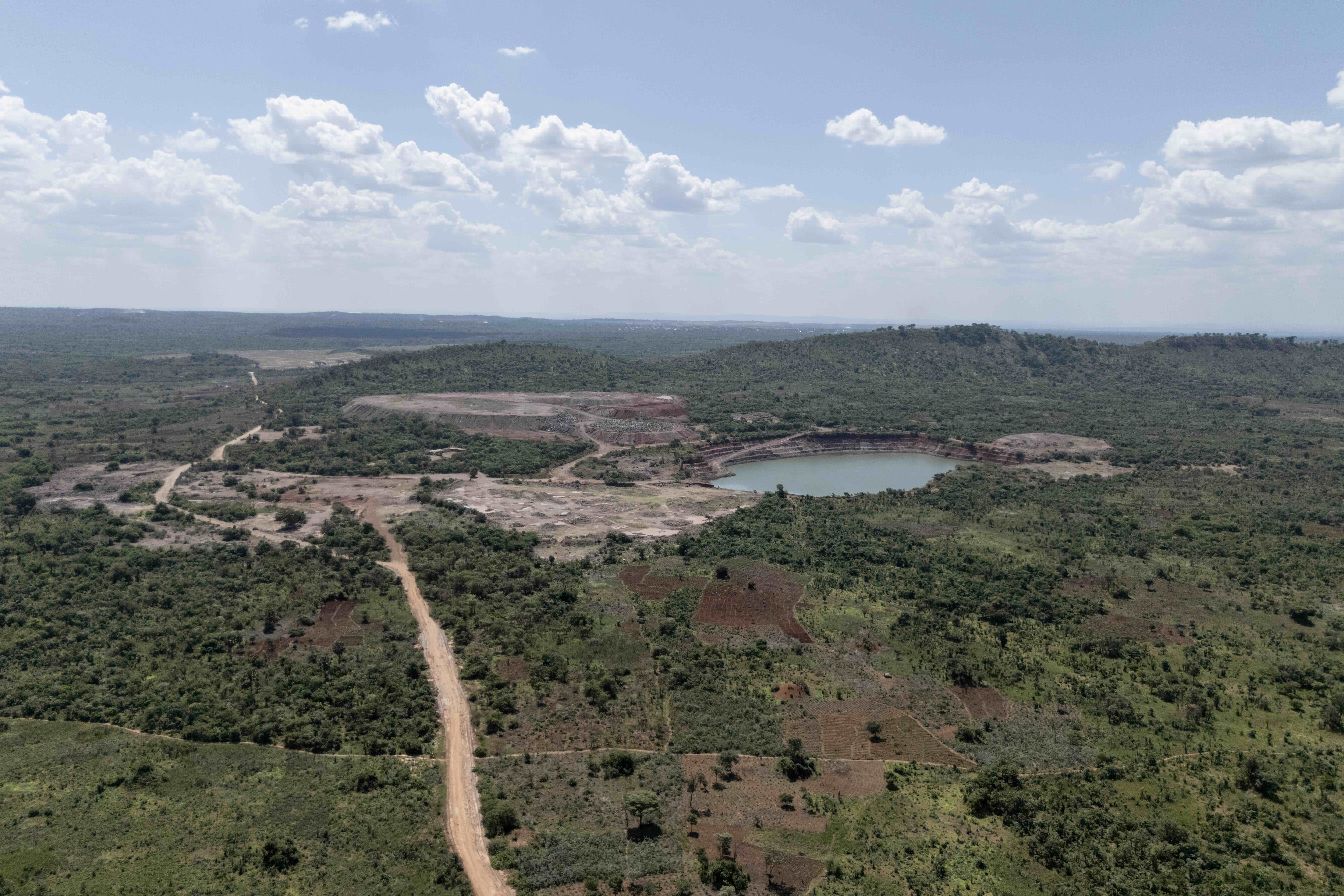
LIKASI, Democratic Republic of Congo — North of the limits of the Lukutwe community forest concession, two armed soldiers stepped in front of Valery Kyembo and his visitors. Wearing a bright orange vest with the logo of a reforestation project, Kyembo was guiding our journalists through a heavily deforested area in the copper-cobalt belt of the Democratic Republic of Congo, stepping around newly planted seedlings, when he was stopped by members of the FARDC, the national armed forces. Behind them stood a barrier to control access to a semi-industrial mine. “We are visiting the boundaries of our community’s property,” Kyembo tried to explain, before one of the soldiers brandished his automatic weapon to make him turn back. The land in question is the Lukutwe community forest concession (CFCL), 70 kilometers (43 miles) from Lubumbashi, the second-largest city in the DRC. The concession is a titled property created in the mineral-rich area of southeastern DRC by village leaders who sought to protect their land rights and miombo forests against a growing wave of mining companies taking up lands. Valery Kyembo walking in the Lukutwe forest concession in Likasi on November 26, 2025. Image by Glody MURHABAZI / AFP. Ten years ago, the displacement of nearby famers from the villages of Bungubungu and Shilasimba by Société d’Exploitation de Kipoi (SEK), a company owned by Australia-based Tiger Resources in search of copper and cobalt, sparked worry in Lukutwe village that their village could be next. “That’s why when the environmental project came to…This article was originally published on Mongabay
From Conservation news via This RSS Feed.