

This article by María del Pilar Martínez originally appeared in the January 14, 2026 edition of El Economista.
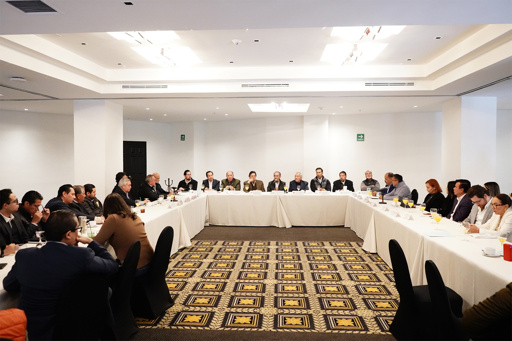
At least 30 labor unions in Mexico have successfully established and expanded the Labour Dialogue Table. At their first meeting of the year, attended by leaders such as Napoleón Gómez Urrutia (Los Mineros); Francisco Hernández Juárez (Los Telefonistas); Ángel Celorio Guevara (CTM); Hugo Morales (STUNAM); Abel Domínguez (CTC); Alberto Juárez Bautista (ConLabor); and Sol Merino (SUCOMM), they emphasized that strengthening and uniting workers will allow them to raise and demand compliance with labour rights, whether under the USMCA or national laws.
This union bloc, which also includes state workers, with the participation of the Federation of Trade Unions of Workers in the Service of the State (FSTSE), endorsed the strengthening of an increasingly “cross-cutting and less fragmented” agenda.
“The main objective is to build a common position to face the external pressure derived from the Treaty between Mexico, the United States and Canada (USMCA) and, internally, to demand solutions to the main shortcomings of the labour market,” said Hernández Juárez.
US external pressure increases the risk of relocating production lines [to the US] and the consequent loss of formal jobs.
The convergence of unions from the service, telecommunications, industrial, and public sectors underscores a renewed willingness to forge unified positions on the country’s labour challenges. Among the key issues discussed, the bloc prioritizes challenges in the trade relationship with the United States, as well as wages, the full exercise of collective bargaining rights, and the functioning of the new justice system.
In the area of collective rights, the members of the panel warned about the obstacles that still persist for the full exercise of these rights within the framework of the new labour justice model and specifically pointed out the difficulties in strike processes and contractual review, even in cases where there are already legitimate collective agreements.
While the organizations positively valued the granting of greater powers to the Federal Center for Conciliation and Labor Registration to sanction improper practices, they emphasized that the effectiveness of the system will depend directly on its “consistent application and institutional openness to union dialogue.”

USMCA Impact & Relocation Risk
The international context dominated a key part of the discussion. The unions expressed deep concern about the monitoring and potential renegotiation of the trade agreement, as well as the imposition of tariffs that are already impacting some production chains, particularly in the automotive industry.
From the bloc’s perspective, US external pressure increases the risk of relocating production lines and the consequent loss of formal jobs. Therefore, the unified position was to insist on the need for workers’ organizations to achieve “more active participation in the international negotiation forums and tables” of the USMCA.
As a result of the meeting, the executive committee of the table will be responsible for developing a common agenda that prioritizes the defense of collective rights, salary issues and the strengthening of the justice system.
Additionally, the bloc announced that it will intensify regional meetings and coordination efforts to broaden participation, noting a sustained growth in organizations interested in joining and thus consolidating a unified trade union front.
-

30 Mexican Unions Unite in Face of USMCA & Labour Demands
January 15, 2026January 15, 2026
The bloc announced it will intensify regional meetings & coordination efforts, towards consolidating a unified trade union front.
-

Evangelical zionists Close to Forming Political Party
January 15, 2026January 15, 2026
Amongst other political malformities, two evangelical groups are set to become national political parties in Mexico, one with ties to the US ultra-right and the israeli government.
-

Venezuela: Then & Now
January 15, 2026January 15, 2026
The US Constitution denies universal and equal rights at home and protects the military behemoth that denies the same rights abroad. A democratic constitution would create a new political playing field and strengthen the movement to dismantle the imperial war machine.
The post 30 Mexican Unions Unite in Face of USMCA & Labour Demands appeared first on Mexico Solidarity Media.
From Mexico Solidarity Media via This RSS Feed.