

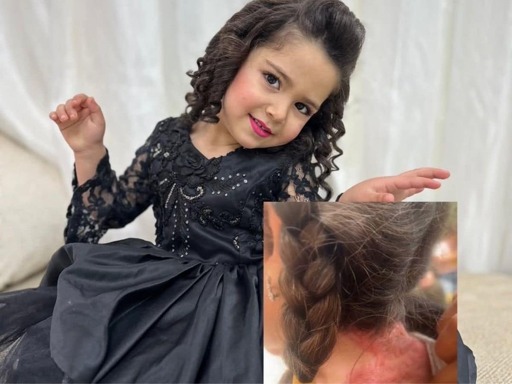

In Gaza, the bombing does not end when the rocket falls, nor does the war stop at the moment of injury.
Al-Baz witnessed a child whose small body carried a long history of suffering. She was burned once by the bombing, and burned again while waiting for treatment that never came. Fire and shrapnel struck her neck, shoulders, and face, leaving deep burns. The wounds were agonising, but they were not the end of her suffering.
Over time, the burns developed into severe hypertrophic scars, and a large keloid formed on her neck and shoulders. This caused visible disfigurement and swelling. The abnormal tissue distorted her features, restricted her movement, and forced her to live in constant pain.
Gaza children suffer physically and psychologically
Physically, Shahd suffers from recurrent infections and constant pus discharge. This raises the risk of complications and prevents the wounds from healing. Psychologically, the cruelty is even greater. She endures stares and bullying from her peers, which pushes her into isolation. She withdraws from play and fears appearing in public, as though her childhood has become a burden rather than a basic right.
In besieged Gaza, doctors are powerless in cases like hers. Limited medical resources make the precise surgical and reconstructive procedures she needs impossible. After assessing her condition, the medical conclusion was clear: Shahd must be transferred outside the Strip for urgent treatment.
That treatment is needed not only to improve her appearance, but to stop the pain, prevent complications, and restore part of the life that was taken from her. But medical referrals in Gaza involve a gruelling wait. Months pass, sometimes years, while a child’s health deteriorates and the wound grows with her body.

Shahd is not an isolated case. Since the war began, more than 44,000 Palestinian children have been injured, many suffering long-term physical and psychological harm. Humanitarian data shows that over 16,500 patients in Gaza urgently need medical evacuation, including around 4,000 children, amid the near-total collapse of the health system.
More than 10,000 children now live with severe injuries or permanent disabilities. They require complex surgery, rehabilitation, and specialised psychological care that Gaza cannot provide. Nearly 60% of medical transfer requests for children are rejected or delayed, turning treatable injuries into lifelong conditions.
In this context, Shahd Al-Baz stands as a witness to a war that continues to burn children’s bodies, even while they are still alive.
Featured image via twitter
By Alaa Shamali
From Canary via This RSS Feed.