


https://media.blubrry.com/counterspin/content.blubrry.com/counterspin/CounterSpin260102.mp3
Janine Jackson: Welcome to The Best of CounterSpin for 2025. I’m Janine Jackson.
We call it the “best of” but, as always, we are deeply thankful to all of the activists, researchers, reporters and advocates who appear on the show. These are just a few of the void-filling conversations it’s been our pleasure to host in the last year.
2025 was a rough one. We appreciate everyone who helps us stay informed, forward-looking, and in communication.
You’re listening to CounterSpin, brought to you each week by the media watch group FAIR.
***
Janine Jackson: Day One orders calling for roundups and mass deportations showed us the Trump White House was serious, that terrorizing people was going to be policy. Silky Shah, executive director at Detention Watch Network, told us in January about the ways and means of the predicted assault, as well as its history.

Silky Shah: “Already, within the first days of the year, we saw the Democrats, both in the House and the Senate, capitulating.”
Silky Shah: I think the whole intention here is to cause fear and instability in people’s lives, and the strategy of forced attrition, forced self-deportation. So it’s like a combination of all the different orders that have been put in place. Some of them are being blocked, like the birthright citizenship order; again, [it’s] just to cause panic in people, but it’s very much unconstitutional. And there’s other things that people are filing litigation against.
But we have a lot of the system in place already. There are thousands of ICE agents, and thousands of CBP (Customs and Border Protection) agents, and they’ve already started doing roundups, and we’ve seen that across the country.
But we also know they work really closely with law enforcement at every single level—at the local level, at the state level, at the federal level. And so much of what people have done for many years to protect communities is by doing that work to get ICE out of those particular locations—out of churches, out of schools, out of hospitals—and also do that work to make it so that ICE and police aren’t collaborating, because that’s actually how we saw a lot of people funneled into deportation proceedings, and into the detention system, especially during the Bush and Obama years.
For many years, we’ve been doing that, and everything this administration is trying to do is to undo a lot of that work, so that they can target people more easily. And so even now, we’ve seen that they’ve directed DoJ to start potentially looking into prosecution for states and counties and cities that aren’t complying, which is also going to be challenged.
But I think that is the intent. The intent is to undo so much of the work we’ve done to protect immigrant communities, and stop the really severe deportations we’ve seen.
JJ: Elite media won’t do it, but we can, ourselves, shift this idea that Democrats are by definition anti-Republicans, and that we’re really in a Trump versus anti-Trump situation. And it’s not to ignore partisan dynamics, but just to recognize bad ideas, whoever is pushing them.
SS: Yeah, I think one thing that was so challenging for us, coming into 2025, we were all bracing ourselves for what was going to happen a few days ago on January 20. But already, within the first days of the year, we saw the Democrats, both in the House and the Senate, capitulating, and now officially passing the Laken Riley Act, which Trump is going to sign soon. And it’s really disturbing, because it’s a bill that was really created around a moral panic which exacerbates all these questions, and scapegoats immigrants as the problem, around this really horrific tragedy, but saying, “Oh, we’re going to apply these really harsh policies to all immigrants, because of this one incident,” which we saw in the ’80s with the story of Willie Horton. And then that was one of the things, of the many things, that led to the US being one of the world’s leading incarcerators and the growth of mass incarceration.
And now we’re seeing that again, where Democrats are capitulating because of the moral panic that was created around this one incident, and saying that immigrants are the problem, and equating them with criminality.
And I think that is something that was really hard to stomach, to see how much the Democrats accepted this really harsh bill that will require mandatory detention for people who are just charged with theft-related crimes. It would expand the number of people who would be forced to be in detention without any due process, without any ability to say before a judge, “These are the reasons why I shouldn’t be in here.”
***
Janine Jackson: In February, Trump said that the US will “take over the Gaza Strip,” and “own it” for the long term, and that its Palestinian inhabitants will be permanently exiled. Not everyone went as far as the Wall Street Journal piece that called Trump’s imperialist vision a “plan to free Palestinians from Gaza,” but that doesn’t mean they called it what it was. CounterSpin heard from media critic, activist and teacher Gregory Shupak.
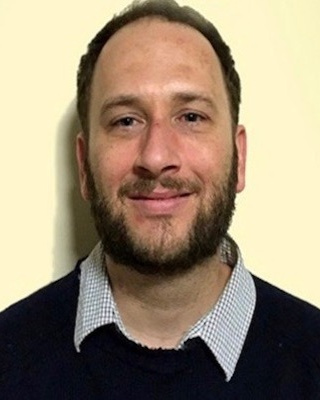
Greg Shupak: “Just automatically, you have a whitewashing of what [Trump’s] proposing to do, even in coverage that is critical of it.”
Gregory Shupak: This plan that Trump has put forth and stuck to for quite some time—I thought perhaps it would just be one of his many deranged statements that would be later walked back by, if not him, then others in administration, but he keeps pressing on this—it was widely described as ethnic cleansing by people who are positioned to make that assessment. So people like António Guterres of the United Nations, their secretary general in fact; or Navi Pillay, who is another UN official focusing on Palestine. This plan that Trump brought forth was denounced by them and by others, like Human Rights Watch, as ethnic cleansing.
And yet that term has seldom found its way into the coverage. I looked at coverage of the first just over a week since Trump’s racist fever dream, and I found that 87% of the articles in the New York Times, Wall Street Journal and Washington Post did not include the term “ethnic cleansing.” And, in fact, only 26% of the coverage included a term like “ethnic cleansing,” or something similar that captures the violence of what he is proposing. So terms like “forced displacement” or “expel” or “expulsion” or “forced transfer.”
Just automatically, you have a whitewashing of what he’s proposing to do, even in coverage that is critical of it. And that’s really leaving audiences, who are maybe not terribly well-versed in international law, not in a very strong position to understand just how egregious of a crime it is that Trump is advocating.
***
Janine Jackson: When Trump appointed RFK Jr. health and human services secretary, Kennedy’s weirdness became all of our problem. CounterSpin discussed one core idea that makes Kennedy not colorful, but dangerous, with Paul Offit, director of the Vaccine Education Center, and professor of pediatrics in the Division of Infectious Diseases at the Children’s Hospital of Philadelphia.
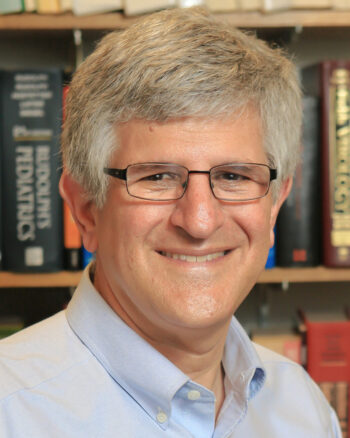
Paul Offit: “I think we haven’t done a very good job of explaining how science works.”
Paul Offit: So in the mid-1800s, people weren’t really sure about what caused diseases. There were two camps. On the one hand, there were the miasma theory believers. So miasma is just a sort of general notion that there are environmental toxins, initially that were released from garbage rotting on the streets, that caused this bad air, or miasma— kind of a poison, toxin. And so therefore diseases weren’t contagious. You either were exposed to these toxins or you weren’t.
And then, on the other hand, championed by people like Robert Koch and Louis Pasteur, were the germ theory believers, that believed that specific germs—as we now know, viruses and bacteria—can cause specific diseases, and that the prevention or treatment of those germs would save your life.
Robert F. Kennedy Jr. does not believe in the germ theory. I know this sounds fantastic, but if you read his book, The Real Anthony Fauci, on pages 285 to 288, you will see that he does not believe in the germ theory, and everything he says and does now supports that. His modern-day miasmas are things like vaccines, glyphosate—pesticides—food additives, preservatives: Those are his modern-day miasmas.
So he is a virulent anti-vaccine activist. He thinks that vaccines are poisoning our children. He thinks no vaccine is beneficial. And so everything he says and does comports with that, even with this outbreak now in Texas, it’s spread to 20 states in jurisdictions, he doesn’t really promote the vaccine. Rather, he promotes vitamin A, because he believes that if you’re in a good nutritional state, that you will not suffer serious disease. And he still says that, even though that first child death in 20 years, that occurred in West Texas, was in a perfectly healthy child.
JJ: You cited a piece in the book where Kennedy says:
Fauci says that vaccines have already saved millions and millions of lives. Most Americans accept the claim as dogma. It will therefore come as a surprise to learn that it is simply untrue.
I think the idea of resisting “dogma” is very appealing to people, because we have seen propaganda efforts, we have seen lies that are en masse, in a way. But I also think that so many folks have, for so long, trafficked in the forms of rational argument without the content, without agreed-upon standards of proof, that people are just less able to recognize fallacies, to see when something is anecdotal—not untrue, but anecdotal—and that this impedes our understanding of what public health even is. Misinformation is at the center of this in many ways.
PO: That’s a really good point. I think we haven’t done a very good job of explaining how science works. I mean, you learn as you go. The Covid pandemic is a perfect example. We were building the plane while it was in the air. There were definitely things that we said and did that were not right over time, but you did learn as you go.
And that’s the way science works. I mean, the beauty of science is it’s always self-correcting. It’s introspective, and you’re willing to throw a textbook over your shoulder without a backward glance as you learn new things.
I was a resident training in pediatrics in the late 1970s, the Children’s Hospital in Pittsburgh. I was taught things that were wrong. That’s OK. That didn’t mean the people, the senior pediatricians who taught me, were idiots. It just meant that we got more information over time.
And I think people, at some level, don’t accept that. When you say something that ends up being wrong, they say, “See? You can’t trust them.” And so they throw the whole thing out, to their detriment.
***
Janine Jackson: Twenty-four-year-old Selena Chandler-Scott was treated by paramedics after a miscarriage on March 20 and arrested the 21st, charged with concealing the death of another person and abandonment of a dead body. Readers didn’t learn about that from the New York Times, but from People Magazine.
When we spoke with Karen Thompson, legal director at the group Pregnancy Justice, I asked about a chilling sentence in People’s account: “Police investigated Chandler-Scott because she was 19 weeks into her pregnancy when she suffered her miscarriage.”
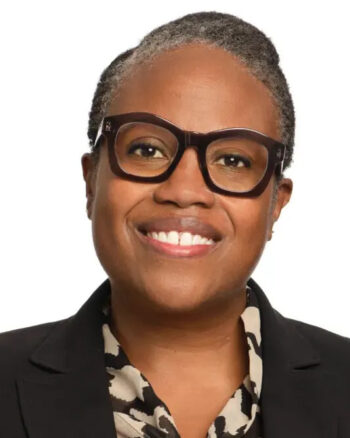
Karen Thompson: “In this moment of loss, when she should have been given healthcare, and when she should have had a moment to grieve, she was instead facing a law enforcement response.”
Karen Thompson: She went to jail because of an idea that fetuses have legal rights. She had a miscarriage at home. She did what most doctors tell folks who are experiencing a miscarriage to do, which is to stay at home. But because she did that, and because someone saw her disposing of those remains, the EMTs and the prosecutors decided that she was engaging in a crime. And why? Because that fetal anomaly, the fact that she had that miscarriage, was enough for them to justify arresting her.
And that’s the basis of pregnancy criminalization, and what we’re seeing, not only in Georgia, but all around the country.
First of all, let’s just think and talk about miscarriages. They are pretty common. I believe the number is three out of five pregnancies might end in a miscarriage, and that goes to show that this isn’t something that’s abnormal. It’s not something that is unknown to individuals who are pregnant. It’s a tragedy, but it’s a tragedy that occurs quite frequently.
And so I think the saddest thing about this is that in this moment of loss, when she should have been given healthcare, and when she should have had a moment to grieve, she was instead facing a law enforcement response, a carceral response, to what is really a medical question and a health issue.
***
Janine Jackson: Corporate and right-wing media’s assault on the human rights of trans people can be easy to dismiss sometimes, because it’s so obviously mean and weird. Still, when the Washington Post editorial board described a report on trans healthcare from the Health and Human Services Department as “thorough” and “careful,” that was going to have an impact. We asked Erin Reed, the journalist and activist behind Erin in the Morning, what she made of the piece headed “Good Questions About Transgender Care.”

Erin Reed: “The paper is willing to point out the lack of science behind this particular department’s positions under RFK Jr. for all of these other things, but it seemingly ignores that whenever it comes to transgender people.”
Erin Reed: This HHS report was produced specifically because the science on transgender healthcare has been so clear for so long. There’s been repeated study after study, coming out in the most prestigious journals, showing the positive impact of transgender healthcare on those who need it. And so the HHS report was put out in order to give cover to organizations that want to oppose transgender healthcare.
And that’s what we got with the Washington Post editorial page, where the editorial board basically endorses the report. It goes through the report, and says that it’s a great report, essentially, and that it raises great questions about transgender healthcare and more.
Whenever I read something like that from the Washington Post editorial board, though, and then I see how that same board and how that same paper treats everything else that RFK Jr.’s healthcare team puts out—for instance, vaccines, autism, fluoridation in water and more—there’s this double standard whenever it comes to transgender healthcare. The paper is willing to point out the lack of science behind this particular department’s positions under RFK Jr. for all of these other things, but it seemingly ignores that whenever it comes to transgender people.
***
Janine Jackson: Farrah Hassen has been tracking questions around homelessness for years as a writer, policy analyst and adjunct professor at Cal Poly Pomona. CounterSpin spoke with her on the anniversary of a critical Supreme Court ruling.

Farrah Hassen: “Many jurisdictions, unfortunately, including in California where I live, have used the court’s decision as a green light to crack down on people living unhoused.”
Farrah Hassen: A year ago, on June 28, in the City of Grants Pass v. Johnson, the Supreme Court ruled that local governments can criminalize people for sleeping outside, even if there is no available shelter. The Supreme Court overturned the 2018 Martin v. Boise precedent that had been decided by the Ninth Circuit Court of Appeals, which had said that the Eighth Amendment’s “cruel and unusual punishment” clause prohibits cities from penalizing unhoused people for sitting, sleeping or lying outside on public property unless they have access to adequate temporary shelter.
And so, for some context, in Grants Pass, like other cities across the United States, the number of people living unhoused easily exceeds the number of available shelter on any given night. Debra Blake was among those Grants Pass residents who were forced to live outside—in her case, for eight years—after losing her job and housing. Moreover, her disability disqualified her from staying in the town’s only shelter. And the city had these anti-camping ordinances that prohibited people like Debra Blake from sleeping or camping in the public, and they interpreted “camping” to even include the use of bedding, like a blanket, to stay warm in the cold.
Anyone who violated these ordinances in the city could be ticketed, could face fines, even subject to criminal prosecution. And the Grants Pass City Council themselves revealed that the underlying goal of these ordinances was to “make it uncomfortable enough for unhoused people in our city so they will want to move down the road.”
And so in Debra Blake’s case, after being banished from every park, accruing thousands in fines, she sued the city of Grants Pass as part of this class action suit, for violating unhoused residents’ constitutional rights. And the Oregon District Court agreed in 2020 that the city’s actions constituted cruel and unusual punishment.
But, sadly, Blake never got to see the results. And the city of Grants Pass ended up appealing this decision all the way to the Supreme Court, which ruled in the city’s favor.
And which brings us back to today. And I should also note, going back to the Supreme Court’s decision, that, importantly, it did not say, “Therefore, state and local governments must now criminalize homelessness.” But because the high court found Grants Pass’s anti-camping ordinances constitutional, many jurisdictions, unfortunately, including in California where I live, have used the court’s decision as a green light to crack down on people living unhoused, including by passing these “anti-camping ordinances,” similar to Grants Pass, which broadly criminalized the act of sleeping or pitching tents or other structures on publicly owned property.
There was this landmark study in June 2023 by the University of California San Francisco that focused on California, and it found that poverty and high housing costs are, in fact, the driving forces of homelessness. And that’s just more confirmation that housing unaffordability is the primary cause of homelessness, as other research and experts have long noted.
***
Janine Jackson: The 1982 conviction of Mumia Abu-Jamal for the killing of a police officer followed a trial marked by prosecutorial and police misconduct, shifting witness testimony and discriminatory jury selection, along with overtly biased news coverage.
Imprisoning Mumia has not worked to silence him. We spoke with him in October, and I started by mentioning how he’d been a radio reporter in Philadelphia, and head of the Philadelphia Association of Black Journalists, and I asked if he considered himself a journalist today.
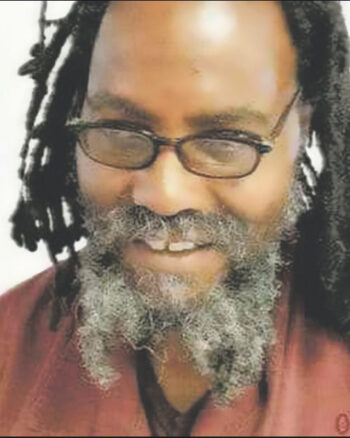
Mumia Abu-Jamal: “Everybody in prison has someone on the outside of prison that loves them or they love: their children, their mates, their parents, you name it.”
Mumia Abu-Jamal: Yeah. But in a cultural sense, I think of myself as a griot, probably a progressive griot, but a griot nonetheless. In African culture, griots were the people who remembered the history of the tribe, and, really, they served the prince in power, but they served the tribe as well. And there’s an old tradition that’s talked about in Senegal that when a griot dies, you don’t lay him in the ground. You bury him vertically in a tree, so that he and his stories are remembered.
I think about telling the stories of a different kind of tribe here in America, a tribe of rebels, a tribe of people who struggle, a tribe of the poor and the oppressed, because those are the stories that rarely get heard and get reported in much of the world.
JJ: I think people read the data point, “Oh, 2 million people incarcerated in the US,” more and more every day being put in detention centers, and they’re shut away from families and friends, by procedure, by distance, but also shut out of public debate and conversation.
And I think there’s a feeling that this is a cost to those people who are imprisoned, but there’s less recognition that there’s a cost for everyone when we don’t get to hear from this ever-expanding and various group of voices. And I think journalists who buy into, wittingly or not, the idea of “out of sight, out of mind”—they’re serving someone, they’re serving something, by excluding the voices of the incarcerated in our public conversation.
MAJ: Well, yeah, they’re excluding not just the imprisoned, who, as you said, are in the millions in the United States, but also they’re excluded from thinking about what it means to be truly American, because this is part of that. There is no space in the American landscape where the shadow of the prison doesn’t fall.
And that’s because it is so huge. It is so vast that it impacts those within and without. Because everybody in prison has someone on the outside of prison that loves them or they love: their children, their mates, their parents, you name it. And that shadow falls on all of those people. There are stories that can enrich our understanding of what it means to be human by allowing people in this condition to be heard as full human beings.
***
Janine Jackson: 2025 showed us all a lot about the cost of protest, the dangers in speaking out, and the absolute need to do it, and the power and community that come through it. We look to artists, historically, to both engage the problems that we’re facing, and to lift us above them, in a way, through art and music. When CounterSpin heard from guitarist Tom Morello, from bands Rage Against the Machine and Audioslave, solo work as The Nightwatchmen and other projects, I asked him about the role of musicians in Trumpian times.

Tom Morello: “I’ve always had the firm belief, and expressed over 22 albums in my career, that history is not something that happens, it’s something that we make.”
Tom Morello: I’ve always believed that dangerous times demand dangerous music, and especially in these troubled times, music, joy and even laughter have suddenly become acts of resistance. There may come a time, in the not-so-distant future–we may be at it right now–where the ideas expressed in our songs, and the people who write them and play them, and maybe even those who sit in the audience, may find themselves censored, smothered, evicted and erased. But not today.
I’ve always had the firm belief, and expressed over 22 albums in my career, that history is not something that happens, it’s something that we make, and so I try to encourage both myself and my audience to head out into that world and confront injustice wherever it rears its ugly head, whether it’s in your school, in your place of work, or in your country at large: The threats of the Trump administration is to not just artists, but it’s a McCarthyite fervor that seems to be on the rise. And there’s two ways to respond to it. One is to duck and cover. And the other is to meet the moment.
JJ: Part of what I see you doing is waking present-day listeners to the history of protest music, and music as protest. Using Woody Guthrie‘s “This Land Is Your Land” is a great example of censored, semi-understood, sanitized history. Why does that song mean so much to you?
TM: Sure, sure, sure. Well, I learned “This Land is Your Land,” like most of us did, in the third grade, where they censored out the verses that explained what the song was really about. “This Land Is Your Land” is a radical anthem about economic leveling. It was written by Woody Guthrie, and Woody Guthrie knew that music could be a binding force. That it could be an elevating power, an uplifting, unifying and transcendent thing, that music can be both a defensive shield and a weapon for change. Authoritarians and billionaires think that this country belongs to them. Woody Guthrie’s song insists that this land is your land.
JJ: And yet the very verses—it’s remarkable in the sense that we learned to sing it and celebrate it and say, “Yeah, we all believe in this–but not this part that we’re not going to talk about.” It seems emblematic in some ways.
TM: Yeah, yeah, yeah:
As I was walking, I saw a sign there
And that sign said “private property.”
On the other side, it didn’t say nothing.
That side was made for you and me.
In the squares of the city, in the shadow of the steeple,
Near the relief office, I see my people.
And some are grumbling and all are wondering
If this land’s still made for you and me.
And then he sings the chorus, “This land was made for you and me,” answering his own question in a very powerful way.
***
Janine Jackson: That was Tom Morello. Before him, you heard Mumia Abu-Jamal, Farrah Hassen, Erin Reed, Karen Thompson, Paul Offit, Gregory Shupak and Silky Shah. And that’s it for The Best of CounterSpin 2025.
From FAIR via This RSS Feed.