


This article by Braulio Carbajal originally appeared in the January 14, 2026 edition of La Jornada, Mexico’s premier left wing daily newspaper.
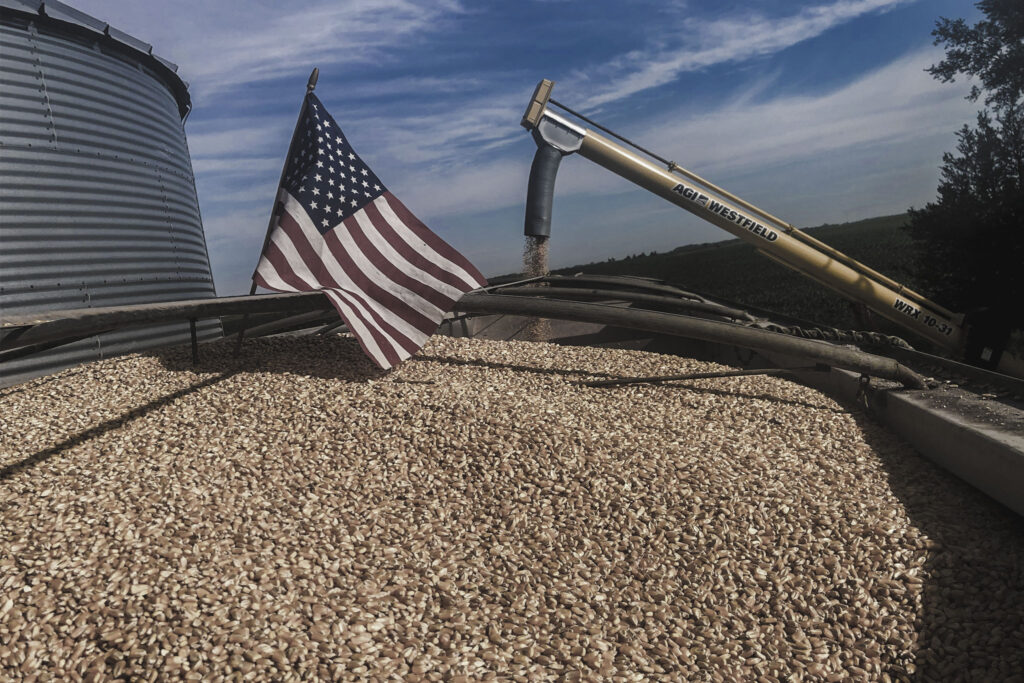
Mexico City. In 2025, Mexico broke its record for corn imports, both yellow and white, for the third consecutive year, with a volume of 24,590,000 tons, 4.1 percent more than the 23,630,000 tons of 2024, according to the Agricultural Markets Consulting Group (GCMA).

Mexican corn producers face a war on two-fronts: against the dumping of US corn, which receives over $5b USD annually in subsidies; and against the low-balling of domestic monopolies such as Grupo Minsa, owned by President Sheinbaum’s economic advisor Altagracia Gómez Sierra. Grupo Minsa is a monopoly enriched by FOBAPROA bank bailout money and the proceeds of dubious privatizations over the neoliberal period.
According to information that the agency shared with this media outlet, of the total purchased – mainly from the United States – 900,000 tons were white corn, used in the masa and tortilla chain, an increase of 350 percent compared to the 200,000 tons of the previous year.
Despite the notable increase, white corn purchases did not break records, as 1.5 million tons were imported in 2011; 1.4 million in 2012; 900,000 tons in 2015; and 1.1 million in 2016 and 2018.
Although Mexico is the ninth largest agri-food producer in the world and the fourteenth largest exporter, it is the largest importer of yellow and white corn.
Historically, the country had been almost self-sufficient in white corn production; however, imports have skyrocketed due to the increasing competitiveness of imported grain, especially from the United States, at a lower price.
“The global oversupply and depressed international prices, especially for corn from the United States, continue to drive higher import volumes at lower costs, which benefits the industry but puts pressure on domestic production,” explained Juan Carlos Anaya, general director of the GCMA.
In 2025, the United States had a record corn harvest, which lowered the international price of the grain. Furthermore, the peso appreciated sharply against the dollar, making imports cheaper, and, according to Anaya, the domestic market is stagnant due to a lack of profitability for national producers.
Regarding yellow corn, used as animal feed and to manufacture derivative products, Julio Berdegué, Secretary of Agriculture and Rural Development, explained last November that the increase in imports is due to a greater demand for animal protein, which he attributed to the increase in the minimum wage since part of the population has risen out of poverty.
-
Record Corn Imports for Third Year in a Row
January 14, 2026January 14, 2026
Mexico’s food sovereignty is being rapidly eroded thanks to the dumping of heavily subsidized US corn and the USMCA, which is an erroneously named “trade” agreement to subjugate, not develop, the Mexican nation.
-

A Renewed Opportunity for Indigenous Justice in Mexico
January 14, 2026
It is crucial to move from rhetoric to action and initiate a genuine transformative process that begins at the federal level and extends across the board to state and local governments, which are directly responsible for ensuring compliance.
-

Mexico Tells Trump ‘Not in our Hemisphere’ Soberanía 91
January 14, 2026
A large anti-imperialist march in Mexico City, US diplomatic pressure on Mexico, US funding CIA-linked contractors involved in Mexican labor, and Losers & Haters.
The post Record Corn Imports for Third Year in a Row appeared first on Mexico Solidarity Media.
From Mexico Solidarity Media via This RSS Feed.