


Deusdedit RuhangariyoICT
Around the world: Canadian First Nations women rebuild dignity after storm Melissa; and Indigenous housing investment strengthens community stability in Australia. In New Zealand, Waka Ama Nationals celebrate generational strength andIndigenous women in Brazil defend Cerrado from fire
JAMAICA: First Nations women rebuild dignity after storm Melissa
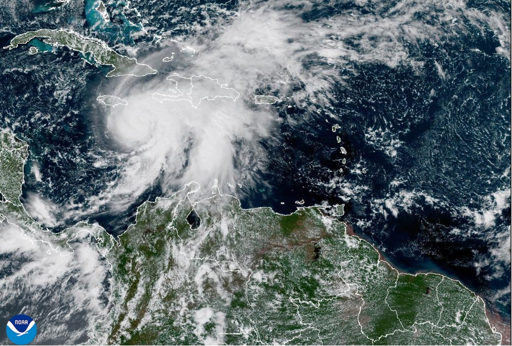
When Hurricane Melissa tore through parts of Jamaica in late October, it left behind more than broken roofs. It exposed the fragility of housing systems in communities that rarely experience such storms, and the slow pace of relief that often follows disasters affecting the Global South. Into this breach stepped an unexpected group of responders: Indigenous women roofers from Canada, as reported by CBC News.
Summit Sisters, a collective of female roofers from across Canada, arrived in Jamaica to repair homes damaged by the hurricane. The group, founded in 2022 by Samanntha De Coteau — a Cree woman from Whitefish Lake First Nation in Alberta — was born out of necessity. De Coteau needed help completing a large roofing job and realized there were few visible spaces for women, particularly Indigenous women, in the trades. What began as mutual support evolved into a mobile network of skilled labor and solidarity.
Now numbering 12 roofers, both Indigenous and non-Indigenous, Summit Sisters volunteered their time and expertise to Jamaica. Seven members paid their own way, while materials and tools were supplied through donations coordinated by CanJam Relief Mission and faith-based partners. Their work is practical and direct: repairing roofs, restoring shelter, and reducing vulnerability ahead of future storms.
For De Coteau, the motivation is simple. Helping rebuild homes is not charity—it is shared humanity. The women worked long days under unfamiliar conditions, guided by local partners who understood both the land and the urgency. For CanJam founder Kit Andrew, the experience has been humbling. Jamaica, he noted, has given the world culture, music, innovation, and resilience. This effort, he said, was a small act of reciprocity.
The impact reaches beyond construction. Jade Shepherd, a roofer from White Bear First Nation in Saskatchewan, described how joining Summit Sisters transformed her own career path. Inspired by De Coteau’s leadership, she rose from demolition and carpentry to become a residential roofing foreman. In Jamaica, Shepherd saw the contrast between her own hardships and communities living without reliable water or electricity. That contrast compelled her to act.
Equally powerful is the visibility. As the women worked—often in pink safety gear—local children watched. Shepherd recalled young girls stopping to stare, pointing, and smiling. Representation, in this context, was not symbolic. It was tangible proof that women belong in places of skill, strength, and leadership.
For Summit Sisters, each project carries emotional weight. Shepherd admitted she cries on every trip. Not from exhaustion, but from the realization that skilled hands, shared freely, can alter lives. In a world where disaster response is often bureaucratic and delayed, these women showed what happens when solidarity travels faster than policy.”
AUSTRALIA: Indigenous housing investment strengthens community stability
In Australia’s remote Fitzroy Valley, housing is more than shelter, it is the backbone of service delivery, health outcomes, and community continuity. For years, the lack of suitable accommodation for key workers has undermined efforts to deliver consistent care and services. A new $5 million capital grant from the Western Australian government marks a significant, though partial, step toward addressing this long-standing gap, reported the National Indigenous Times.
The funding, awarded to Indigenous-led organization Leedal through its housing arm Tarunda Housing Pty Ltd, will support the first stage of a key worker housing project in the Kimberley region. Thirteen homes will be developed initially, with long-term plans for up to 51. The investment covers design, development, and civil works—critical groundwork for sustainable housing delivery.
For Leedal director Patrick Green, the announcement represents years of advocacy finally taking shape. The absence of local housing has forced reliance on fly-in, fly-out workers, many of whom commute hours from Broome each week. This model is costly, disruptive, and ill-suited to community-based services. Permanent housing allows teachers, health workers, and support staff to live where they work, fostering continuity and trust.
Yet Green is clear-eyed about the scale of need. Previous studies indicate demand for at least 100 additional homes for key workers in the Valley. The current project is a beginning, not a solution. Still, beginnings matter—especially when they are Indigenous-led and community-accountable.
The project is funded through the North-West Aboriginal Housing Fund, which prioritizes Aboriginal governance and culturally informed support services. Once completed, the homes will be allocated to Aboriginal Community Controlled Organisations and non-government service providers, ensuring alignment with local priorities rather than external convenience.
Leedal’s role is significant. The organization manages tourism businesses and essential town facilities on behalf of six Aboriginal corporations in Fitzroy Valley. Its track record demonstrates that Indigenous ownership and management are not obstacles to development, but prerequisites for it.
Government leaders emphasized broader benefits: economic participation, workforce stability, and improved service delivery. But beyond policy language lies a deeper truth. Housing determines whether communities can retain their own professionals, care for their elders, and educate their children without constant disruption.
In remote regions, infrastructure failures compound inequality. This investment does not erase that reality, but it signals a shift toward partnership rather than paternalism. If sustained and expanded, it could mark a turning point—one where Indigenous communities are not merely recipients of housing policy, but architects of it.
NEW ZEALAND: Waka Ama Nationals celebrate generational strength
This week, the waters of Lake Karāpiro will carry more than canoes. They will carry memory, identity, and collective momentum as nearly 5,000 paddlers gather for the largest Waka Ama Sprint Nationals in New Zealand’s history, according to Radio New Zealand.
The 2026 championships mark a milestone for the sport, with participation exceeding previous years by hundreds. Competitors range from children as young as five to elders in their eighties, a span that reflects waka ama’s unique role as both athletic pursuit and cultural practice. Run by Waka Ama Aotearoa New Zealand with the support of mana whenua Ngāti Korokī Kahukura and Ngāti Hauā, the event is as much about community as competition.
For organizers, the growth is intentional. Waka ama has become a vehicle for whānau connection, health, and cultural continuity. Chief executive Lara Collins highlighted the rise in rangatahi participation as evidence of the sport’s power. Young people are not only paddling—they are inheriting traditions that root them in place and purpose.
The Nationals also serve as a qualifying event for the International Va’a Federation World Sprint Championships, linking local waters to global competition. Yet even as the event scales internationally, its grounding remains local. Nearly 900 tamariki will race in the under-10 categories, cheered on by thousands of spectators expected to line the lake throughout the week.
Unlike many modern sporting events, waka ama resists commercialization that strips meaning from movement. The canoe is not just equipment; it is lineage. Each stroke echoes ancestral journeys, reminding participants that endurance and coordination are communal achievements.
The scale of attendance — more than 10,000 supporters in previous years — signals something larger than sport. It reflects a hunger for spaces where culture and physical excellence coexist without compromise. In a world increasingly fragmented, waka ama offers a rhythm of togetherness.
As paddlers take to the water, they affirm that strength is not measured solely by speed or medals. It is measured by the ability to carry others, to move in unison, and to honor those who paddled before. Lake Karāpiro will witness not just races, but a living testament to Indigenous continuity.
BRAZIL: Indigenous women defend Cerrado from fire
In Brazil’s Cerrado savanna, fire has become both a natural force and a weapon of destruction. For Indigenous communities, it threatens food systems, medicine, and ancestral lands. When a massive fire swept across the Santana Indigenous Territory in 2018, the Bakairi people waited for help that arrived too late. That loss reshaped their future, Mongabay reported.
In response, the community formed a volunteer firefighting brigade—led largely by Indigenous women. Of the 45 trained volunteers, 25 are women spanning generations, from teenagers to grandmothers. Their leadership challenges assumptions about who protects land and how resilience is built.
The brigade emerged with support from Paulo Selva, a retired fire department colonel who recognized a systemic gap. Nearly half of Brazil’s forest fires occur outside official response zones. Indigenous territories, often bordering agricultural expansion, are particularly exposed. Selva’s nonprofit now trains communities in firefighting, prevention, first aid, and survival.
For the Bakairi women, participation is deeply personal. During the 2018 fire, many men were away working on farms, leaving women to watch their homes burn. That helplessness hardened into resolve. Today, they stand ready—often with minimal equipment, sometimes in sneakers, sharing eight donated uniforms among them.
The risk they face is immense. In 2024 alone, nearly 10 million hectares of Cerrado burned, much of it native vegetation. Fires frequently originate outside Indigenous lands, driven by deforestation and agricultural clearing, but their impacts do not respect boundaries.
Since the brigade’s formation, the Santana territory has avoided major fires, even as surrounding areas burned. The women receive no pay and no reimbursement. What sustains them is protection of life, land, and future.
As educator and brigade member Edna Rodrigues Bakairi said, perseverance defines her people. Their courage is not abstract. It is enacted, repeatedly, against advancing flames.
My final thoughts
Across continents, these stories share a quiet defiance. They are not narratives of victimhood, nor of heroic intervention by distant powers. They are accounts of Indigenous women and communities refusing absence and refusing to wait for permission, recognition, or rescue.
In Jamaica, Canadian Indigenous women repaired roofs not because policy mandated it, but because solidarity did. In Australia, Indigenous-led housing initiatives challenge decades of imposed solutions by asserting governance from within. In Aotearoa, waka ama binds generations through motion, reminding us that culture survives through practice, not preservation alone. In Brazil, Indigenous women stand between fire and future, unpaid and under-equipped, yet effective.
What unites these moments is refusal as action. Refusal to accept fragility as fate. Refusal to let infrastructure, culture, or land be eroded without response. This refusal is not loud. It does not seek headlines. It operates through hands, paddles, plans, and vigilance.
We often speak of resilience as if it were an innate trait. These stories show it is built — through skills, relationships, and courage exercised repeatedly under pressure. They also reveal a global truth: when systems fail or arrive too late, communities do not disappear. They reorganize.
There is a lesson here for the wider world. Progress does not always come from scale or capital. Sometimes it comes from coherence — people aligned with purpose, acting where they are, with what they have. Indigenous leadership in these stories is not symbolic. It is operational.
As climate instability, housing crises, and social fragmentation accelerate, the question is not whether such responses are admirable. It is whether institutions are willing to learn from them. Not extract them. Not tokenize them. Learn.
These are not marginal stories. They are signals. They tell us what works when certainty collapses: local knowledge, collective responsibility, and the courage to act before permission arrives.
That is the work worth paying attention to now.
The post GLOBAL INDIGENOUS: Indigenous peoples taking action to rebuild, defend appeared first on ICT.
From ICT via This RSS Feed.