


The term “Middle East” is a construction originating from Eurocentric discourse and reflects a colonial perspective. The term “West Asia” is increasingly replacing it, which both centres the peoples of the region and more accurately reflects the shifting dynamics.
The Cradle, aptly named after the region’s historical appellation as the cradle of civilisation, is possibly the only multilingual news outlet whose remit is specifically West Asia as a geopolitical entity. Journalist Sharmine Narwani founded the outlet less than 6 years ago to analyse global events through the prism of their impacts on the region. Unsurprisingly, the Cradle’s audience has surged in the last two years especially. Israel’s genocide in Gaza has led readers to seek alternative and uncensored sources of information. Sharmine’s no-nonsense humour and the sizzling dynamic between hosts of the Cradle’s digital content has put them on many listeners’ agenda.
The Cradle is entirely independent and relies on donations. Despite this, it has expanded to include a podcast, a live stream, and now exists in three languages. Most recently, the team launched the Cradle Turkiye.
Narwani, who studied at Columbia and was a senior associate at Oxford University, has been based in Beirut since 2009. She spoke to the Canary from Lebanon.
The Cradle: “not the ones that are allowed, but all voices”
The lack of donor influence has helped the outlet achieve editorial independence. It is driven by an overarching anti-imperialist perspective – it identifies the lack of sovereignty as a key problem in the region – but doesn’t toe a particular line. The focus, isntead, is on authenticity.
Sharmine describes the Cradle’s remit:
We cover the geopolitics of West Asia through analysis, news, investigations and interviews. And we don’t have, I would say, any limits on who we’re allowed to speak to. I would say our goal is to bring real voices of this region, not the ones that are allowed, but all the voices.
As an independent media outlet, they are not beholden to the usual censors and have built a network of reliable, well-connected reporters. This allows them to put together thoroughly researched investigations and cover sensitive, under-reported stories, like the sectarian violence in Syria. It has provided them with access to senior influential figures from many fronts. They have interviewed high ranking government officials, as well as top level figures from Hezbollah and Hamas.
This is one of the reasons so many people have turned to the Cradle in the last two years:
Our goal is to cover under-covered voices. If Mohammed bin Salman makes a proclamation to the PR junkets, of course we’ll cover it in a news story, but we tend to serve the unheard narrative. More so because it hasn’t been done as much, certainly not in English.
Unsurprisingly, Meta permanently banned the Cradle’s Instagram and Facebook pages in 2024. Meta accuses the outlet of allegedly violating community guidelines by “praising terrorist organizations” and engaging in “incitement to violence.” “So many arguments at the Cradle between people, which I love”
Sharmine drew on her own experience as a journalist and analyst to forge a solid network of writers. She calls trying to find English language writers who could write about regional issues in 2021 “an almost impossible task”:
You know, you could think of one who covered this pretty well or one who covered that pretty well. But there were so many holes.
A year later, she partnered up with an Arab journalist to launch the Cradle Arabic, which opened up a lot more avenues for coverage. They put together an Arabic team spread across the various countries and a group of translators to translate the content into English. Most recently, the launch of the Cradle Turkey allowed them to add “so many more perspectives to the table”.
They sought writers and correspondents who were critical thinkers and news junkies. Authentic and up-to-date coverage was more important than shared political allegiances. They might disagree or argue. But, Sharmine found people who were always in the know about their own territories:
Then we had them staff the departments. English coverage is so different from Turkish coverage, which is so different from Arabic. It just doesn’t work as well to solely translate writers’ content.
The only thing in common between the Arabic, Turkish, and English versions is the daily feature, or a deep dive on an issue. Otherwise, the teams are entirely separate. Writers reflect their world view based on their own experience and expertise. That means the language they use reflects that which means sometimes things can get lost in translation:
I think we have a really good flow. It’s been somewhat of a challenge with Turkey. Even though there are similar worldviews, at one point our Turkish editor said, “we can’t publish this. In Turkey it would be read is as though we’re Arab nationalists. That’s not how the discourse is here.”
The colonisation of the mind
The Cradle’s output is chiefly aimed at the people of West Asia, many of whom still turn to English-language news. Sharmine believes decades of colonialism has given the language more authority in people’s minds. Many still look to the West to inform their world view:
The colonisation of the mind is a incremental process. It’s so carefully crafted. You end up in a situation where Lebanese people living in the UK, especially if they only sort of very occasionally go back for a holiday, they impose a UK system and an English view of the world onto Lebanon, which just doesn’t work and they can’t connect. I mean, there’s Lebanese people who think that if you have good cafes and bars, then your country’s doing well.
The use of language is something Sharmine is very sensitive to, especially since living in Lebanon, which she says has “decolonised” her mind:
Even though I sound, as my father would say, like a hamburger, you know, with an American accent. I went to American schools, he put me in them, his fault.
She understands how analysis is shaped by the land it is written in, by the world view built on the material reality experienced by its people. As such, it is constantly subject to a balancing act:
You have to use language that can get your point across without alienating readers as well. It’s just something one has to tiptoe around. A British reader was telling me, you know, I love your articles, but sometimes the tone and the language means I can’t send it on to others, you know, who I think really need to know about this issue in the correct way.
Geopolitical shift to Asia
Sharmine no longer travels to the US. She argues it is unsafe and she can just as easily give talks on Zoom. She does travel regularly to East Asia. She’s keen for the Cradle to reflect the geopolitical shift to that part of the world without “slavishly championing one side”. She’d first started exploring this shift in her 2009 blog Mideast Shuffle:
Even back then, I was seeing a shift in power centres in this region and a shift in alliances. And then, during the Syrian war, which I covered a lot, I also discovered confrontations that were going to be brewing over corridors, transportation corridors, networks, financial networks. And, you know, after the Chinese introduced the BRI, the Belt and Road Initiative, you saw a big rush to either participate or thwart the project.
Where English-language outlets centre Western Europe and America, the Cradle’s central perspective is that of West Asia. For Sharmine, it’s important for people from the region to better understand how the rise of Russia, of China, of Turkey, of India, of Iran, and organisations like the Shanghai Cooperation Organisation impact them. This is why the focus is on macroeconomics and geopolitics rather than domestic issues. And, this is also why the Cradle invests in deep dives and investigations, not just breaking news:
We wanted to predict our own history and carve out what that could look like instead of what we were being told. Arabs were defeatist because all they read about is how they lost, how they bottomed the barrel, how they can be killed, but they can’t fight back. And so for me, politics aside, being able to chart our own path is a very valuable thing. I believe in international law. I believe in sovereignty and territorial integrity.
The outlet has grown exponentially to cover more ground. The latest initiative is a near-daily news roundup. Expanding to include more languages remains on the horizon.
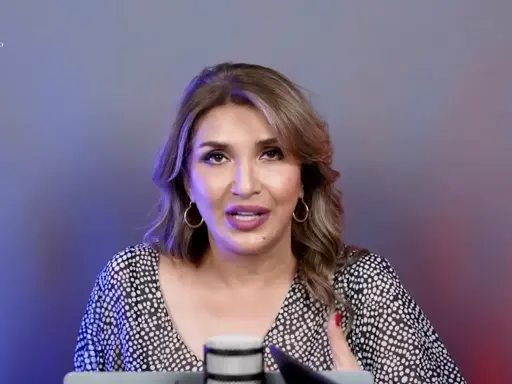
Featured image via YouTube screenshot/The Cradle
From Canary via This RSS Feed.