

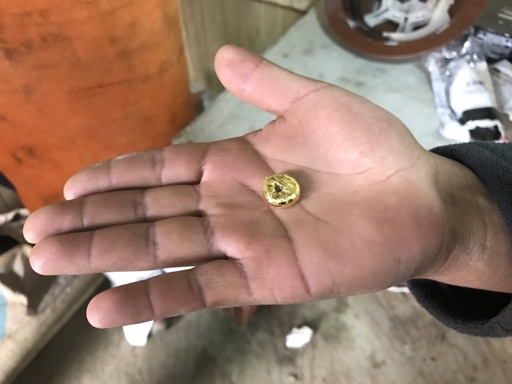
The wildcat gold mining boom that swept across the Amazon beginning in the 1970s left behind an environmental catastrophe of staggering proportions. At least 350,000 hectares (almost 865,000 acres) of forest and wetland habitat have been destroyed by placer mining operations across the Pan Amazon, with the actual figure likely far higher given the limitations of satellite monitoring for small-scale operations and river dredges. In the Tapajós River Basin in Brazil’s Pará state, particularly the municipality of Itaituba, five decades of alluvial mining have devastated tens of thousands of hectares of riparian forest while releasing an estimated 200-500 metric tons of mercury annually into watersheds. Mercury contamination has become endemic: 75% of the population of the municipality of Santarém shows elevated mercury levels, with some residents carrying four times the WHO limit. The legacy extends far beyond the mining sites themselves, as methylmercury bioaccumulates through aquatic food webs, threatening riverside communities across millions of hectares of downstream habitat. Yet hidden within this toxic legacy lies an economic opportunity that could finance comprehensive remediation while generating more than 200,000 formal-sector jobs. The garimpeiro (wildcat miner) reliance on mercury amalgamation technology is remarkably inefficient, because mercury captures only free gold particles through physical absorption, achieving recovery rates of 40-60% from alluvial placers. The remaining 40-60% of gold remains trapped in “tailings” as fine particles, bound in mineral matrices, or simply lost to processing inefficiency. Those tailings, an existing environmental catastrophe, contain an estimated 1,400-2,100 metric tons of recoverable gold worth $90 billion…This article was originally published on Mongabay
From Conservation news via This RSS Feed.