

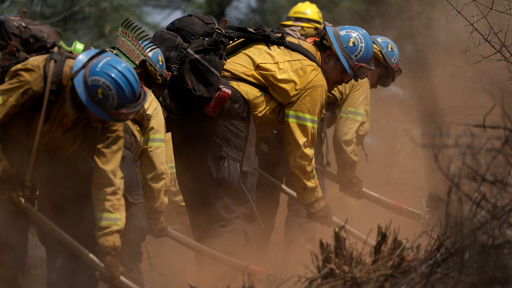
Two long years ago, it appeared that the much-anticipated American Climate Corps was finally happening. President Joe Biden had promised to build a green jobs workforce inspired by the Civilian Conservation Corps, one of Franklin D. Roosevelt’s most popular New Deal programs, ever since he was on the campaign trail. By September 2024, 15,000 young people had joined the American Climate Corps, according to the administration, working to restore landscapes and install solar panels around the country.
It didn’t even last a year. The Biden administration wound down the program last January ahead of President Donald Trump’s return to the White House, correctly anticipating that Trump would take a hammer to anything with “climate” in the name.
But even as climate change fell off the national agenda and the promise of federal funding vanished, some states have found ways to continue to support Climate Corps-style work over the past year. Their efforts show what’s still politically viable — and under what conditions these initiatives can still succeed — assuming local governments and nonprofits find the funds.
One of the survivors is, unsurprisingly, California, a state with many climate-friendly initiatives that have enough resources to survive a federal drought. “We’ve stayed the course and are moving forward full steam ahead, and our climate work hasn’t been impacted by the chaos at the federal level,” said Josh Fryday, who runs GO-Serve, Governor Gavin Newsom’s newly created office for service and civic engagement.
The “chaos” Fryday was referring to? Last spring, Elon Musk’s Department of Government Efficiency abruptly pulled 32,000 AmeriCorps members from their jobs tutoring children in low-income areas, working at food banks, and helping towns recover from weather disasters. It also put 85 percent of the federal service agency’s 500 staffers on leave. Though a court case eventually restored the $400 million in grant funding, much of the damage had already been done: Many programs had been disrupted, if not completely terminated, including some climate and conservation crews.
Thanks to its state funding, Fryday’s California Climate Action Corps was safe. The program now has roughly 400 members spread across the state working to make homes more fire-proof, divert food from landfills, and organize climate action days for the public. “Our hope is that over time, it continues to grow as there’s need and demand,” Fryday said.
Environmental service work has staying power in the state, with the 50-year-old California Conservation Corps still running strong with more than 1,500 members. But even with the state government’s support, other programs — environmental and otherwise — weren’t immune. After the cuts in April, AmeriCorps members helping residents of Los Angeles recover from the fires that had swept through the city were placed on leave, with many unable to finish their terms as they found other work or funding ran out.
It’s a story that played out across the country. Some service programs folded, while others steered clear of using the word “climate” to describe their work; many limped on despite uncertain funding. American Climate Corps jobs were in blue states and red states, in rural areas and cities, according to research published in November. “It speaks to the fact that this kind of work is needed everywhere,” said Dana Fisher, a professor at American University’s School of International Service whose team mapped the locations of Climate Corps positions.
“You can cancel the Climate Corps, but … a lot of what communities need right now has to do with responding to and preparing for climate change-exacerbated extreme events,” Fisher said.

A map shows the locations of 245 listings posted to the American Climate Corps jobs site. The true number of jobs was much higher, as many roles were not fully captured in the public dataset. Since the Climate Corps lacked congressional funding, the positions were largely from preexisting service programs that had been grouped under the Climate Corps umbrella. Center for Environment, Community, & Equity
These days, climate service work may be most likely to continue in response to very specific needs. In western North Carolina, AmeriCorps members are still helping with the recovery from Hurricane Helene, clearing storm debris and restoring access to trails and public lands, said Briles Johnson, the executive director of VolunteerNC, which oversees service programs in the state.
There may even be room for growth when local demands arise. In Colorado, Governor Jared Polis, a Democrat, recently created a task force to deal with an outbreak of the mountain pine beetle that’s killing the state’s ponderosa pines. Warming temperatures and drought allowed the beetle populations to take off, and all the dead trees they leave behind increase the risk of wildfires. Conservation crews with Serve Colorado are supposed to help address the outbreak, backed by proposed state funding, according to a spokesperson for the state’s climate corps service work.
State-specific funding seems to be the safest way forward, but it can be hard to scrape together the money for it. One model comes from Washington state, which is fueling its new Climate Corps Network with profits from the state’s “cap-and-invest” program that requires polluters to lower their carbon emissions or to buy permits for them at auctions. The Washington Climate Corps Network announced almost $1.5 million in grants in 2025 to 11 different projects across the state, including restoring degraded estuaries to help them sequester carbon and helping communities prepare for extreme heat and wildfire smoke.
Matt Glazewski, director of the Washington Climate Corps Network, described it as a “small program, but with lofty goals” to develop a climate workforce and introduce people of all ages to potential climate-friendly careers.
While the American Climate Corps quickly became bogged down in a partisan fight after Biden proposed billions of dollars for it, Glazewski has found that it’s possible to get Republicans on board with his state’s program. Some grants are flowing to rural parts of Washington where terms like “climate action” may not resonate. “I’m not out there waving that flag in a way that people would expect it to look like,” Glazewski said. A $200,000 grant from the program is going to the Port of Pend Oreille in the northeast corner of Washington along the Idaho border, where workers are converting diesel locomotives to run on cleaner engines.
“You have a community here that is deeply conservative, that is keen on doing this because they know that it makes sense,” Glazewski said. “They know they have a business model — and once they have the opportunity to actually install the infrastructure, are invested in doing that.” He said that a few Republican members of the state legislature support the Washington Climate Corps Network, including state Senator Shelley Short, who represents Pend Oreille County.
“In that, we are also building a broader coalition and showing that the Climate Corps Network is not maybe what everyone thinks it is,” Glazewski said. “We can show them it can be just about anything — if it’s meaningful in your community, it’s mobilizing people to gain exposure to a job that is more climate-friendly and part of this new green or blue economy, that it can be for you.”
This story was originally published by Grist with the headline After one year of Trump, is anything left of the American Climate Corps? on Jan 13, 2026.
From Grist via This RSS Feed.